
US Navy Enhances Defenses Amid Rising Tensions in the Strait of Hormuz
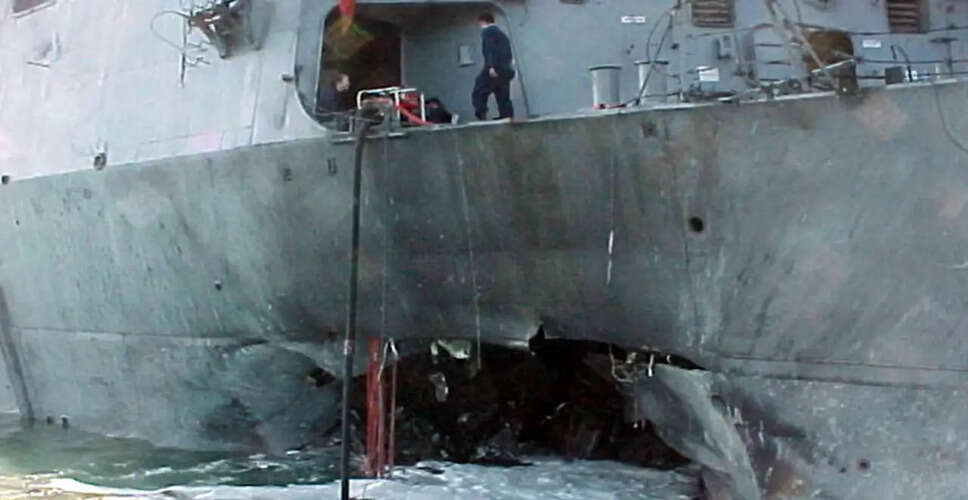

Lessons from the Past: The Cole Attack
In October 2000, a fiberglass vessel carrying two individuals approached the US destroyer Cole in Aden, Yemen. Before the crew could respond, the boat detonated, creating a massive 40-foot breach in the ship's hull, resulting in the deaths of 17 American sailors and injuring 39 others. The Cole was on the verge of sinking. The assailants were linked to Al Qaeda, a group that was relatively unknown to many Americans at that time. This low-cost, high-impact suicide attack nearly incapacitated a state-of-the-art warship valued at $789 million, serving as a crucial alert for the US Navy.
Fast forward over 25 years, and the Navy is now applying the lessons learned from that incident. Currently, US Navy destroyers are actively patrolling the waters south of the Strait of Hormuz as part of a blockade aimed at restricting Iran's oil exports amid escalating conflicts. According to a report, the enhanced defenses established post-Cole could be pivotal in determining the outcome of any potential confrontations.
Upgraded Naval Capabilities
Following the Cole bombing, the Navy established a specialized task force known as 'Hip Pocket' to address identified vulnerabilities. This initiative led to the rapid installation of additional machine guns, grenade launchers, and improved short-range weaponry on their vessels. The current Arleigh Burke-class destroyers, which are the same class as the Cole, are now equipped with advanced .50-caliber machine guns and 7.62mm guns for close-range defense. They also feature new 5-inch gun shells designed to effectively neutralize small boats from a distance using a shotgun-like spread of tungsten pellets.
Moreover, these destroyers have seen enhancements in the Seahawk helicopters stationed on board, which now boast upgraded sensors and armaments, including Hellfire missiles and laser-guided rockets. These helicopters can operate hundreds of nautical miles away from the ship, allowing for early detection and interception of potential threats. The Navy has also refined its training protocols and rules of engagement, enabling sailors to engage suspicious small boats more proactively.
Evolving Threats and Strategic Challenges
Despite these advancements, experts caution that the threat landscape has changed. Iran has analyzed the Cole attack and learned from its Houthi allies in Yemen, who have utilized remote-controlled explosive boats. Iran's 'mosquito fleet'—a collection of swift, nimble small boats—combined with swarms of unmanned drones and anti-ship missiles launched from coastal trucks, poses a significant challenge in the confined waters of the Strait of Hormuz.
A lead analyst from the Hudson Institute notes that while there are more effective anti-drone systems available, the overwhelming number of drones (30-40) could still surpass existing defense measures. Currently, the US has around 12 Burke-class destroyers stationed in the Gulf of Oman and Arabian Sea, positioned hundreds of miles away from Iranian waters, which allows for greater detection time before engagement with enemy vessels. Additionally, US reconnaissance and strike aircraft, including Reaper drones, can provide early warnings and potentially engage hostile forces before they launch an attack on US Navy ships.
In the Black Sea, Ukraine has demonstrated the effectiveness of inexpensive drones and missiles against a larger naval force, successfully sinking or repelling much of Russia's fleet. Iran is closely monitoring these developments and has been bolstering its own inventory of fast boats, mines, and drones.
The Cole incident illustrated that a determined adversary with a small boat could nearly incapacitate a high-tech warship. The enhancements made since then have equipped US vessels with better tools for defense. However, whether these upgrades will suffice against a modern Iranian swarm attack remains uncertain if the blockade escalates into active conflict.