
US Naval Blockade in the Strait of Hormuz: Key Developments

Overview of the US Naval Blockade
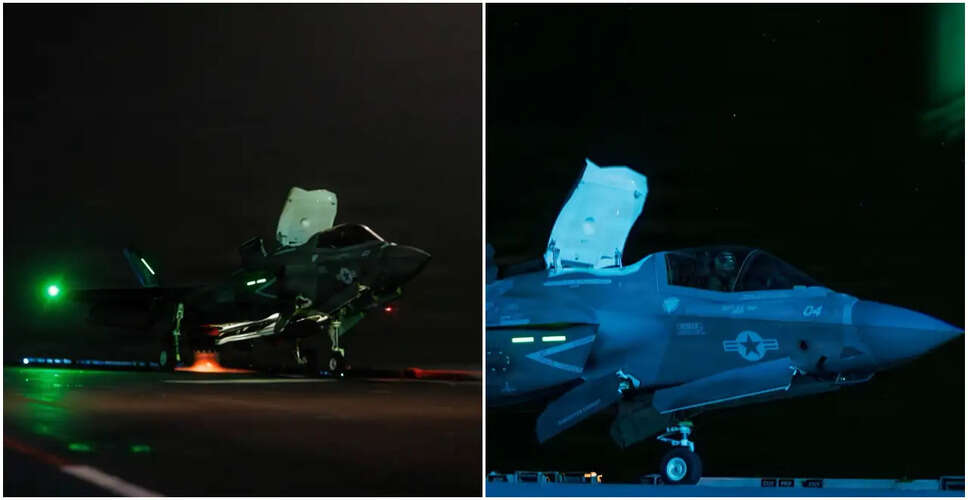
The United States has initiated a naval blockade in the Strait of Hormuz, deploying a fleet of at least 15 warships, including the amphibious assault ship USS Tripoli (LHA 7). This vessel is equipped with F-35B Lightning II stealth fighters and MV-22 Ospreys, actively operating in the Arabian Sea. The US Central Command confirmed that the blockade commenced at 1400 GMT on Monday. This blockade will affect all vessels entering or leaving Iranian ports, covering routes in the Arabian Gulf and the Gulf of Oman, while ships from non-Iranian ports will not face restrictions.
Images shared by the US Central Command showcased night operations conducted by naval forces, highlighting the USS Tripoli's capabilities. The ship is designed to accommodate more F-35B fighters and Ospreys, allowing it to support over 20 F-35Bs during peak operations.
CENTCOM
2043720308293771394
On the same day, the US military outlined the blockade's boundaries, which extend into the Gulf of Oman and Arabian Sea. Reports indicated that two vessels altered their course as the blockade took effect. The US Central Command warned that any ship entering or leaving the restricted area without authorization could be intercepted or captured. However, neutral vessels transiting through the Strait of Hormuz to non-Iranian destinations will not be obstructed.
President Donald Trump issued a stern warning regarding Iranian fast-attack ships, stating that they would be destroyed if they approached the blockade. He claimed that Iran's Navy had suffered significant losses, with 158 ships destroyed, and emphasized the effectiveness of US naval operations against drug trafficking at sea.
Background of the Naval Blockade
The announcement of the blockade followed the collapse of peace talks with Iran, where Trump cited Tehran's unwillingness to abandon its nuclear ambitions as a key reason. He suggested that other nations might also participate in the blockade, although he did not specify which ones.
The blockade is significant as the Strait of Hormuz is a vital passage for approximately 20% of the world's crude oil and liquefied natural gas. By restricting access, the US aims to diminish Iran's revenue from tolls on passing ships. The Iranian Revolutionary Guard Corps (IRGC) had previously blocked the strait following the onset of conflict on February 28, after US and Israeli airstrikes on Tehran. Although Iran agreed to reopen the strait after a ceasefire on April 7, vessels were warned they would be targeted if they attempted to cross without permission. The US blockade could exacerbate the ongoing energy crisis in the region.