
US Military Strikes Target Iran's Nuclear Facilities Amid Ongoing Conflict
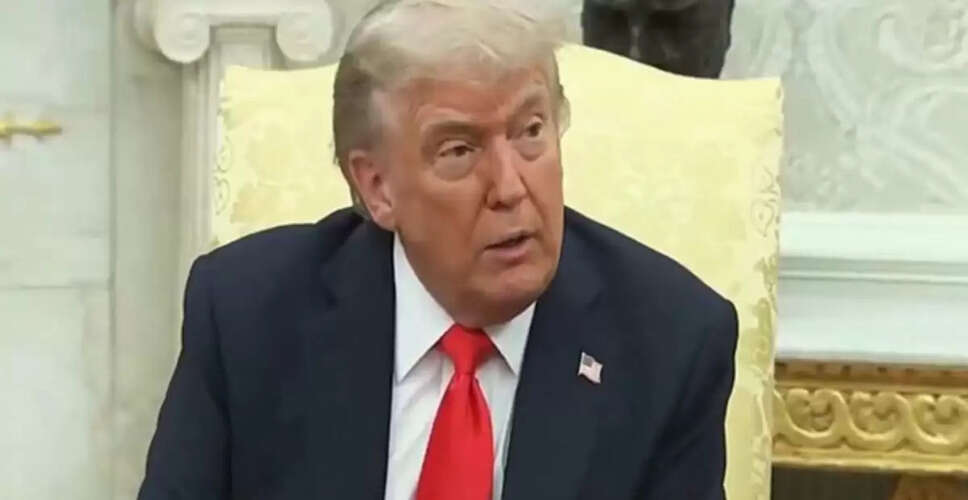
US Launches Attacks on Iranian Nuclear Sites
On Saturday, US President Donald Trump announced that the United States has executed strikes on three significant nuclear sites in Iran. This escalation occurs amidst the ongoing tensions between Israel and Iran, marking a notable shift in US involvement in the regional conflict.
In a post shared on Truth Social, Trump claimed that the US had successfully targeted key Iranian nuclear facilities, specifically Fordow, Natanz, and Esfahan, with a full payload of bombs primarily aimed at Fordow.
Trump stated, "We have completed our very successful attack on the three Nuclear sites in Iran, including Fordow, Natanz, and Esfahan. All planes are now outside of Iran air space. A full payload of BOMBS was dropped on the primary site, Fordow. All planes are safely on their way home."
He further congratulated the US military, asserting, "There is not another military in the World that could have done this. NOW IS THE TIME FOR PEACE! Thank you for your attention to this matter."
US President Donald Trump posts, "We have completed our very successful attack on the three Nuclear sites in Iran, including Fordow, Natanz, and Esfahan. All planes are now outside of Iran air space. A full payload of BOMBS was dropped on the primary site, Fordow. All planes are… pic.twitter.com/pNKQMt95U6
— Media Channel (@MediaChannel) June 21, 2025
The Fordow underground facility and the larger Natanz plant are Iran's primary uranium enrichment sites. Notably, Natanz had already been targeted by Israel earlier in the week, according to reports.
Earlier that day, several US B-2 stealth bombers departed from Whiteman Air Force Base in Missouri and were tracked heading westward, as reported by flight tracking data.
However, it remains unconfirmed whether these B-2 bombers were involved in the recent strikes on the nuclear sites.
As of Saturday, the aircraft were observed flying over the Pacific Ocean, seemingly on their way to Guam.
CNN noted that the B-2 bombers are specially designed to carry the Massive Ordnance Penetrator, a 30,000-pound bomb capable of penetrating deep underground, making it suitable for targeting Iran's Fordow site. Each B-2 can carry two of these powerful munitions.
This strategic military movement follows a week in which Trump was reportedly engaged in extensive discussions in the White House Situation Room, reviewing military strategies and seeking advice on potential outcomes.
He indicated that a decision regarding military action might be made sooner than the previously mentioned two-week timeframe.
According to reports, these strikes mark the first instance of US Air Force attacks on critical sites within Iran since the 1979 revolution, an act that is widely regarded as an act of war. This action signifies a direct involvement of the US military in an open conflict with Iran, a step that previous American presidents have avoided.
The third site, located near the historic city of Isfahan, is believed to house Iran's stockpile of near-weapons-grade enriched uranium.
The conflict between Israel and Iran has now entered its ninth day, with the US aligning itself in support of Israel. This conflict began after Israel launched a significant airstrike on Iranian military and nuclear facilities on June 13, referred to as 'Operation Rising Lion.'
In retaliation, the Islamic Revolutionary Guard Corps (IRGC) initiated a large-scale drone and missile operation, dubbed 'Operation True Promise 3,' targeting Israeli fuel production facilities and energy supply centers.