
US Military Strikes Key Iranian Nuclear Sites: A Strategic Move
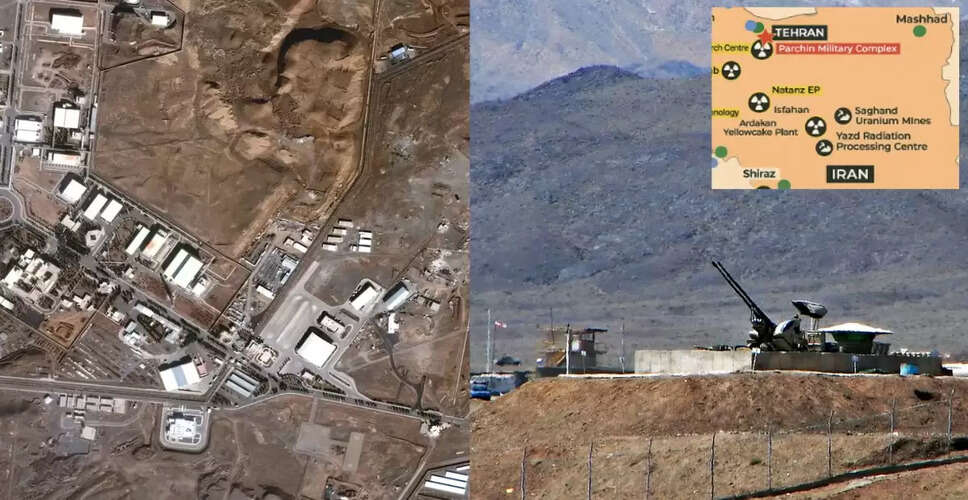
US Targets Iranian Nuclear Facilities
On Sunday, President Donald Trump announced military strikes on three significant Iranian nuclear sites. This decision came just two days after he indicated he would make a decision regarding the Israel-Iran conflict within a fortnight. Trump had been vocal about his demands for Iran's complete surrender since Israel initiated its strikes in Tehran. In his address to the nation, he declared, 'I can confirm that the military operations were a remarkable success. Iran's crucial nuclear enrichment sites have been entirely destroyed.'
Why Were These Iranian Sites Chosen?
The US military targeted the Fordow, Natanz, and Isfahan nuclear facilities, which are pivotal to Iran's nuclear ambitions. Natanz and Fordow are particularly significant as they are the only facilities where Iran has been enriching uranium to 60 percent purity. The Isfahan site is known for converting uranium. According to a 2022 report by the International Atomic Energy Agency (IAEA), 90 percent of Iran's highly enriched uranium was stored at Isfahan.
Details on the Natanz Facility
The Natanz facility, located approximately 250 kilometers south of Tehran, is Iran's largest uranium enrichment site and has been a focal point of international scrutiny due to its capability to produce both low- and high-enriched uranium. It consists of six above-ground buildings and three underground structures, with the potential to house around 50,000 centrifuges, according to the Nuclear Threat Initiative.
The Secretive Fordow Facility
Fordow is one of Iran's most clandestine nuclear sites, situated near Qom and built deep within a mountain. Construction began secretly in 2006-2007, and Iran only acknowledged its existence in 2009. The facility is located 80 to 90 meters underground, making it resilient to conventional attacks, requiring specialized bombs for effective strikes.
US Military's Advanced Bombing Capabilities
The US is currently the only nation equipped with bombs capable of penetrating deep underground. President Trump confirmed that B-2 bombers were deployed in the strikes against Iran's nuclear sites. The B-2 Spirit is the US Air Force's premier stealth bomber, with several aircraft taking off from Whiteman Air Force Base in Missouri, indicating a planned military operation.
Isfahan's Role in Iran's Nuclear Program
Isfahan, known as the Uranium Conversion Facility, is located in central Iran and is dedicated to nuclear fuel processing. It includes various facilities for manufacturing fuel, conducting research, and handling irradiated materials. Established with assistance from China in 1984, Isfahan does not enrich uranium but prepares feedstock for centrifuge sites like Natanz and Fordow.
Reactions and Implications
Despite the destruction of these three critical sites, Iranian officials claimed that there were no radioactive materials present at the locations, suggesting that enriched uranium may have been removed prior to the strikes. This development raises questions about the future of Iran's nuclear program and the ongoing tensions in the region.