
US Military Strategy Against Iran: Ongoing Tensions and Internal Dynamics
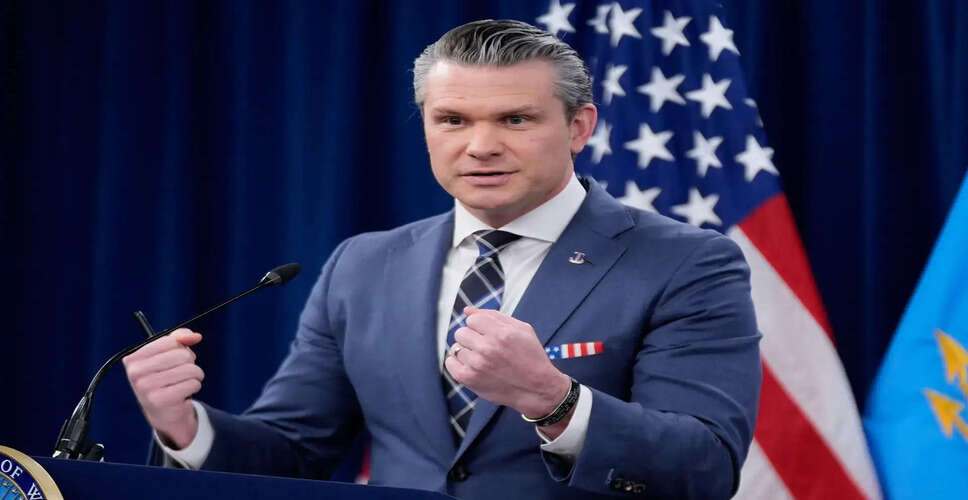

US Secretary of War Comments on Iran Conflict
As the second round of discussions approaches in Pakistan, US Secretary of War Pete Hegseth described the current conflict with Iran as "a gift to the world." Speaking to reporters at the Pentagon on Friday, he emphasized that the US blockade of Iranian maritime activities will continue indefinitely. He characterized these naval restrictions as crucial for executing a "bold and dangerous" mission aimed at mitigating Iran's perceived threats to global stability. While US officials claim that the blockade has intercepted 34 vessels, maritime data suggests that Iran is still managing to export sanctioned oil despite these efforts.
Current Situation of Vessels in the Persian Gulf
What's the status of vessels in Hormuz?
According to Lloyd's List Intelligence, there is a consistent flow of shadow fleet traffic in the Persian Gulf, with 11 tankers carrying Iranian oil reportedly leaving the Gulf of Oman since April 13. In response to the US position, Iranian state media quoted Defence Ministry spokesperson Brigadier General Reza Talaei-Nik, who cautioned that a significant portion of Iran's missile capabilities remains untapped. He asserted that the Armed Forces maintained control over the skies of the occupied territories until the ceasefire was declared.
Iran's Resilience and Military Posture
Talaei-Nik praised the domestic resilience, noting that public support following the ceasefire was a "social miracle," with over 30 million people participating in the 'Sacrifice' campaign, which he described as an extraordinary example of popular mobilization. He directly challenged the US strategy, claiming that "the enemy" aims to create internal discord. Nevertheless, he expressed confidence that public vigilance and security coordination have kept the nation secure and stable.
Iran's Control Over the Strait of Hormuz
The Brigadier General further claimed that Iran effectively manages the Strait of Hormuz, which he views as a "control lever" for fulfilling the aspirations of the Iranian people. He noted that Western forces in the Sea of Oman have often retreated in response to the decisive actions of the Armed Forces. This assertive stance from the Iranian military comes amid a new report from the Institute for the Study of War (ISW), which highlights divisions within Iranian leadership. The report indicates that Brigadier General Ahmad Vahidi of the Islamic Revolutionary Guards Corps (IRGC) has consistently obstructed efforts by Parliament Speaker Mohammad Bagher Ghalibaf and other pragmatic officials to adopt a more flexible negotiating stance.
Upcoming Talks in Pakistan
Despite these internal challenges, the United States has confirmed that Steve Witkoff and Jared Kushner are set to arrive in Pakistan on Saturday for a new round of discussions with Iranian representatives.
(With agency inputs)