
US Military Readies for Potential Operation in Iran Amid Rising Tensions

US Military Buildup in the Middle East
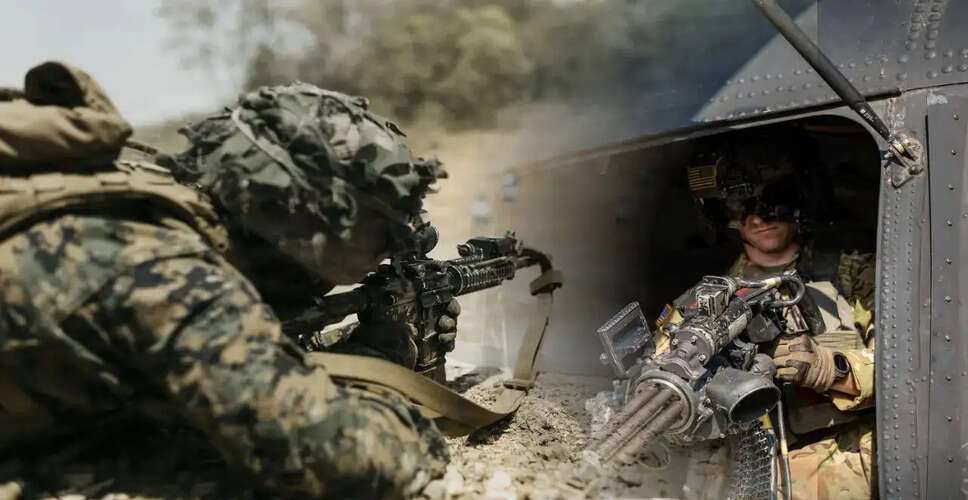
Recent reports indicate a significant increase in the deployment of United States military forces in the Middle East, suggesting preparations for a potentially risky operation within Iranian borders. In recent days, elite units such as Navy SEALs, Delta Force, Army Rangers, and DEVGRU have been seen alongside conventional troops. This buildup coincides with the arrival of approximately 2,500 Marines and nearly 2,000 paratroopers from the 82nd Airborne Division. Current estimates indicate that over 50,000 US personnel are now stationed in the region, marking a shift from limited military actions to a readiness for more complex ground operations.
Potential High-Risk Mission
High-Risk Objective Under Consideration
Discussions are emerging around a possible mission aimed at recovering highly enriched uranium from compromised Iranian nuclear sites. Retired Captain SB Tyagi emphasizes that such an operation would necessitate the deployment of special forces into hostile areas, establishing a secure perimeter under fire, and locating sensitive nuclear materials believed to be stored in various containment units. This approach mirrors principles found in the Indian Army's Cold Start Doctrine.
The operational challenges are immense. Open Source Intelligence indicates that teams would need to perform rapid excavations in contested environments, identify radioactive materials, and safely extract them, all while facing threats from Iranian forces and their proxies. Time is of the essence, as a mission of this nature could span several days, requiring continuous air support, intelligence coordination, and swift extraction capabilities.
Strategic Decisions: Strike or Diplomacy
Strategic Calculus: Strike Or Negotiate
The military options being considered are occurring alongside diplomatic efforts. Officials have expressed a preference for Iran to voluntarily surrender such materials through negotiations. However, Tehran has largely avoided direct talks with Washington, maintaining a focus on military strategies. This situation creates a narrow window for decision-making. While a full-scale occupation of Iran is improbable due to the country's size and complexity, limited, high-impact operations are viewed as more achievable within the current US strategy. Analysts suggest that these missions prioritize precision, speed, and extraction rather than territorial control.
Context of Operation Epic Fury
Operation Epic Fury Context
These developments are part of a broader initiative known as Operation Epic Fury. Recent updates from US Central Command reveal that over two-thirds of Iran's missile, drone, and naval production capabilities have been significantly impaired, along with considerable damage to its naval fleet. This degradation alters the battlefield dynamics, potentially creating opportunities for specialized missions, although risks remain high, especially in contested coastal and inland areas.
Geopolitical Shifts and Economic Implications
Global Signals Of War Economy Posture
On a larger scale, the geopolitical landscape is evolving. Numerous countries in the Middle East and beyond are implementing economic strategies typically associated with wartime, such as currency interventions, fiscal tightening, and restrictions on financial transactions. While not all actions are directly tied to the Iran situation, the timing suggests a broader expectation of ongoing instability. The effects are already apparent, with energy markets experiencing volatility, regional economies facing pressure, and global supply chains adapting to sustained disruptions in critical areas.
High Stakes for US Operations
High Stakes, Limited Margin For Error
For the United States, the stakes are high. A successful operation could mitigate a significant strategic threat by preventing sensitive nuclear materials from being weaponized or dispersed. Conversely, failure could lead to severe repercussions, including the loss of elite personnel, escalation of tensions with Iran, and potential regional fallout. Currently, there has been no official confirmation regarding the execution of such a mission, but military observers note that preparations appear to be underway.