
US Military Launches Operation Midnight Hammer Against Iranian Nuclear Sites
Overview of Operation Midnight Hammer
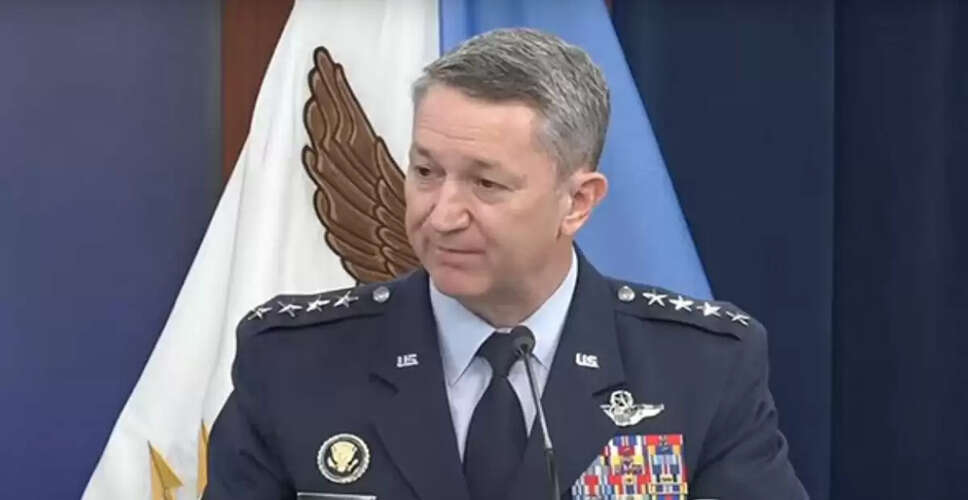
Following recent airstrikes on Iran's nuclear facilities, General Dan Caine, Chairman of the US Joint Chiefs of Staff, stated that Operation Midnight Hammer aimed to significantly undermine Iran's nuclear weapons capabilities. This announcement was made during a press briefing at the Pentagon on Sunday.
General Caine detailed that at around 6:40 PM EST (2:10 AM local time in Iran), the lead B-2 bomber released GBU 57 MOP (Massive Ordnance Penetrator) munitions on the initial target at Fordow.
He further explained that, as per the President's directives, the remaining bombers successfully struck their designated targets, totaling 14 MOPs deployed against two nuclear sites. All three Iranian nuclear targets were engaged between 6:40 PM and 7:05 PM EST, with the final strikes occurring in Isfahan, ensuring the element of surprise was maintained throughout the operation.
Tactical Execution and Support
Caine emphasized that the US military utilized various deception strategies, including the deployment of decoys, to preserve tactical surprise during the operation.
As the strike package entered Iranian airspace, advanced aircraft operated at high altitudes and speeds to divert enemy fighters and surface-to-air missile threats.
The operation was supported by multiple US military commands, including Strategic Command, Transportation Command, Cyber Command, Space Command, Space Force, and European Command.
Details of the Strike Package
Caine noted that a significant B-2 strike package was launched from the continental United States at midnight Friday into Saturday. To maintain tactical surprise, part of this package diverted westward into the Pacific as a decoy, a strategy known only to a select group of planners and leaders in Washington and Tampa.
The main strike force, consisting of seven B-2 Spirit bombers, proceeded quietly eastward with minimal communication.
Throughout the 18-hour mission, the aircraft underwent multiple in-flight refuelings. Upon reaching the target area, the B-2s coordinated with escort and support aircraft in a complex maneuver that required precise synchronization across various platforms, all executed with limited communication.
Operation's Strategic Importance
Operation Midnight Hammer was carried out by US Central Command under General Erik Kurilla's leadership. Caine remarked that this operation was a deliberate and precise strike against three Iranian nuclear facilities, aimed at severely degrading Iran's nuclear weapons infrastructure.
He highlighted the operation's planning and execution across multiple domains, showcasing the US's capability to project power globally with speed and precision.
This mission was classified, with very few individuals in Washington aware of its timing or specifics.
Reactions and Consequences
Earlier on Sunday, President Trump described the strikes as 'very successful,' confirming that they targeted the Natanz, Fordow, and Isfahan underground nuclear sites in Iran.
In a statement from the White House, Trump announced that the US had conducted 'massive precision' strikes on Iran, warning of further retaliation if peace was not achieved.
Iran condemned the attacks, labeling them a breach of international law and vowed to persist with its nuclear program. The Atomic Energy Organisation of Iran (AEOI) issued a statement denouncing the strikes as 'savage aggression' and a violation of international agreements, particularly the NPT.