
US Military Faces Setbacks with Two Aircraft Crashes in One Day
Challenging Day for US Air Operations
On Friday, US air operations encountered significant challenges as two military aircraft were lost in separate incidents within hours. The first incident involved an F-15E Strike Eagle, which was reportedly shot down over Iran by air defenses operated by the Islamic Revolutionary Guard Corps, as reported by Iranian state media. US officials later confirmed this information to a major news outlet. One of the two crew members has been rescued, while efforts continue to locate the second airman. Iranian television has urged civilians to assist in the search, with reports indicating a $60,000 reward offered for information leading to the missing individual.
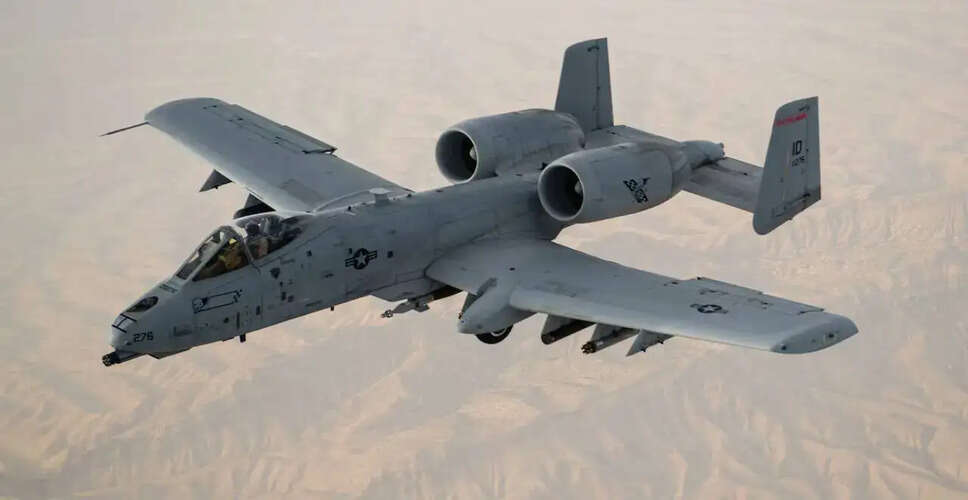
The second incident, as cited by another news source, involved an A-10 Warthog attack aircraft that crashed near the Strait of Hormuz around the same timeframe. Fortunately, the pilot was rescued without injury, but details regarding the crash's cause remain undisclosed.
Understanding the A-10 Warthog
What Is the A-10 Warthog?
The A-10 Thunderbolt II, commonly referred to as the Warthog, is a well-known aircraft within the US Air Force. Manufactured by Fairchild Republic, it was specifically designed for close air support of ground forces. Unlike the sleek, versatile jets that are prevalent in modern air forces, the A-10 is intentionally designed to be robust and functional. It features twin engines, heavy armor, and is built to operate at low altitudes, enduring damage while delivering powerful strikes against tanks and other ground targets. It is also capable of engaging light maritime attack aircraft.
The first production model was delivered to Davis-Monthan Air Force Base in Arizona in October 1975, with a total of 716 units produced between 1972 and 1984. The A-10C variant is the most current version actively in service.
A Proven Combat History
A Combat Record That Speaks for Itself
The Warthog has established a formidable reputation during its service, particularly noted during the Gulf War. A-10s conducted 8,100 sorties in that conflict, achieving a mission capable rate of 95.7% and launching 90% of all AGM-65 Maverick missiles used in the operation. Its ability to carry substantial weapon loads, remain over combat zones for extended periods, and operate over a wide radius has made it an invaluable asset, a role it continues to fulfill.
Cost of the A-10
How Much Does an A-10 Cost?
In comparison to other jets in service, the A-10 is relatively economical by military standards. When it was first produced in the 1970s, the flyaway cost per unit was approximately $9.8 million, which translates to about $18.8 million today. This makes it one of the more cost-effective combat aircraft in the Air Force, especially considering its critical role in close air support. The total program cost per aircraft, which includes research and development, was estimated at around $13 million in 1994 dollars. As production increased, costs per unit decreased due to enhanced manufacturing efficiency.
Significance of the Incidents
Two Aircraft Down in One Day
The loss of two US military aircraft in a single day is a notable event in the ongoing conflict. These incidents raise important questions regarding US air superiority in the region, especially after statements from senior officials, including Defense Secretary Pete Hegseth, asserting that the US had achieved dominance over Iranian airspace. Currently, the search for the unaccounted airman remains the top priority.