
US Military Buildup in the Middle East Amid Iran Tensions
Significant Military Deployment
On February 23-24, 2026, the United States has mobilized its largest naval and air forces in the Middle East since the Iraq invasion in 2003. This includes two aircraft carrier strike groups, namely the USS Gerald R. Ford and USS Abraham Lincoln, along with over 120 combat aircraft and various destroyers and cruisers. This military buildup is closely linked to the ongoing tensions surrounding Iran's nuclear program.
Details of the US Military Presence
Naval Forces: The US has deployed between 16 to 20 surface combatants in the Arabian Sea, Persian Gulf, and eastern Mediterranean, marking the largest concentration of naval power since 2003.
Air Power: Recently, the US has executed the most significant air power movement in the Middle East in over two decades, introducing more than 120 aircraft, including F-22s, F-35s, F-15s, and B-2 support aircraft.
Strategic Goals: The Pentagon has indicated that should diplomatic efforts fail, this deployment provides the President with the capability to conduct "highly kinetic" strikes targeting Iranian nuclear facilities and missile sites. Analysts note that this represents the most substantial US military presence in the region since the lead-up to the Iraq War.
Objectives Behind the Military Buildup
The primary aim of the US is to deter Iran from developing nuclear weapons. President Trump has consistently stated that Iran must agree to "zero enrichment" or face severe repercussions. Ongoing indirect negotiations, facilitated by Oman, are set to continue with the next round scheduled for February 26, 2026, in Geneva. This military posture serves as a form of "diplomacy backed by credible force," enhancing US leverage during discussions.
Evacuation Advisories Issued
In light of the escalating situation, the Indian Embassy in Tehran has advised all Indian nationals, including students and tourists, to leave Iran immediately using available commercial flights. Similarly, South Korea has issued a Level-3 advisory urging its citizens to exit Iran as soon as possible unless absolutely necessary. Additionally, the US Embassy in Beirut has reduced its staff to essential personnel only, following the State Department's directive for non-essential employees and their families to depart.
Challenges on the USS Gerald R. Ford
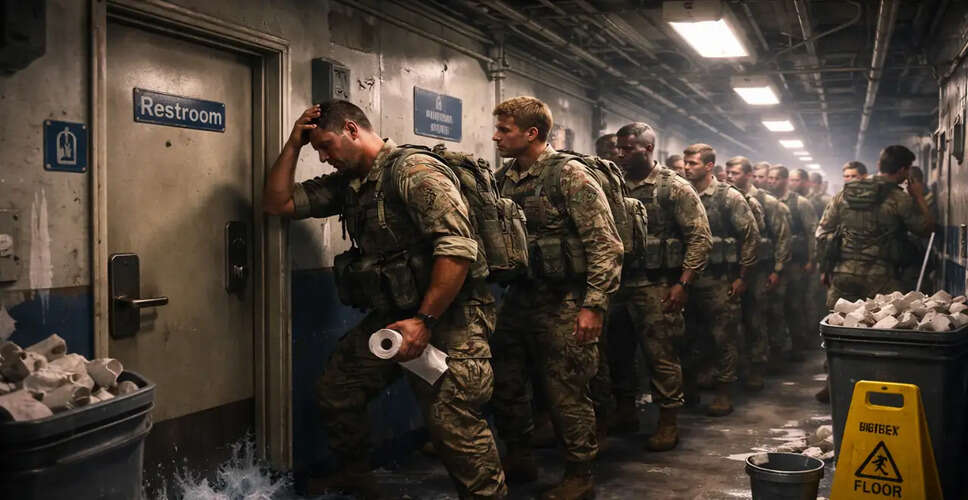
The USS Gerald R. Ford, the newest and most expensive aircraft carrier, has been facing significant plumbing issues, leading to the viral term "bathroom war." Commissioned in 2017 at a cost of approximately $13 billion, the carrier has experienced persistent sewage system failures since its service began.
With only around 650 toilets available for a crew of 4,600 to 5,000, the ship has encountered frequent breakdowns, resulting in long queues and overflows. Engineering teams have been working extensive hours to address these issues, which stem from design flaws in the vacuum toilet system and the challenges of maintaining operations during high-tempo deployments.
Potential Outcomes: Negotiation or Conflict
US and Omani officials have outlined two potential paths: a negotiated nuclear agreement in Geneva or a limited military campaign if talks fail. Analysts predict that if military action is taken, it would likely consist of 10 to 15 days of airstrikes rather than a full-scale invasion, which is deemed impractical due to Iran's fortified defenses.
Iran's Preparations
Recent satellite imagery has revealed that Iran has reinforced its military facilities, including constructing concrete shields over sensitive sites and burying tunnel entrances. These fortifications are designed to withstand potential airstrikes, complicating any military intervention by the US.
While the US aims for a diplomatic resolution, the military buildup reflects a serious commitment to preventing Iran from acquiring nuclear capabilities. The ongoing plumbing issues aboard the USS Gerald R. Ford highlight the operational challenges faced during this heightened state of alert.