
US Military Actions in Iran: A Defensive Stance Amid Tensions
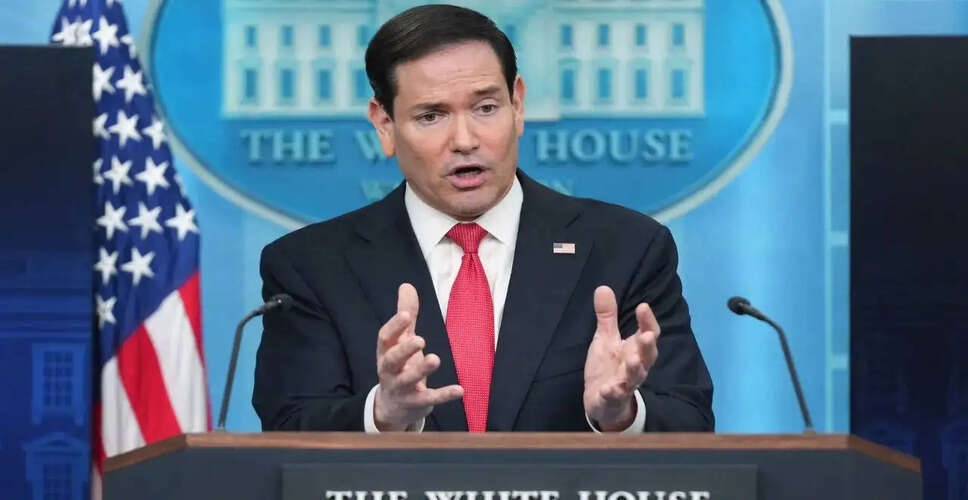

US Secretary of State's Remarks on Military Operations
On Tuesday, US Secretary of State Marco Rubio characterized the military activities of the United States in and around Iran during the ongoing ceasefire as "defensive". This statement comes as the US intensifies its efforts to secure shipping lanes in the Strait of Hormuz. Speaking from the White House, Rubio emphasized that US forces would only engage if provoked. He stated, "This is not an offensive operation. This is a defensive operation. What that means is very simple: There's no shooting unless we're shot at first." He further added, "You're not going to let some fast boat come up on the ship and shoot it up. We're going to respond to it. And we've been successful." Recently, the US reported intercepting several Iranian vessels as part of its naval operations.
'Project Freedom' and the Strait of Hormuz Situation
'Project Freedom' and Strait of Hormuz Tensions
Rubio introduced a US initiative called "Project Freedom", designed to ensure the safe passage of commercial ships through the Strait of Hormuz, which he described as a "protective bubble". He remarked, "This is the first step towards reopening the strait and bringing this regime's last-ditch, active economic arson, bringing that to a close." The strait, a vital global trade route, has seen a significant decline in traffic due to escalating conflicts. Rubio noted that several nations have urged the US to take action to restore safe navigation. "So already, many nations, privately and some publicly, have asked the United States to help free their ships and to restore freedom of navigation in the straits of Hormuz and this critical artery of global trade," he stated.
Concerns Over Stranded Vessels
Rubio expressed concern for vessels stranded in the region, highlighting the deteriorating conditions they face. "These ships, you know, you don't leave a ship out there for this long. You start running out of food. You start running out of potable water, essential supplies, and they're at the mercy of this piracy," he explained. He pointed out that even countries not directly involved in the conflict are experiencing economic and safety repercussions.
Criticism of Tehran's Actions
Maritime Focus
Rubio condemned Tehran's activities in the waterway, asserting that such actions should not be normalized. "They're trying to make this some new normal," he said. "Under no circumstances can we ever allow them to normalize the fact that they get to blow up commercial ships and put mines in the water." He reiterated the US's preference for the straits to operate as they traditionally have.
Conclusion of Previous Combat Operations
Rubio confirmed that a previous US combat operation against Iran has concluded. "The operation is over. Epic Fury, as the president notified Congress, we're done with that stage of it," he stated. He noted that the US's current focus is on maritime security through "Project Freedom".
Addressing Nuclear Concerns
Nuclear Concerns
On the topic of Iran's nuclear program, Rubio indicated that future discussions must address both uranium enrichment and existing stockpiles. "As far as a negotiation is concerned, I think the president's been clear that part of the negotiation process has to be not just the enrichment, but what happens to this material that's very deep somewhere," he remarked. He added that the US is seeking clarity on Tehran's willingness to negotiate. "We don't have to have the actual agreement written out," he said, "but we have to have a diplomatic solution that is very clear about the topics that they are willing to negotiate on and the extent and the concessions they're willing to make." Rubio also highlighted the broader risks associated with Iran's nuclear ambitions, stating, "They would do exactly to the world with a nuclear weapon what they're doing now with the [Strait of Hormuz]." He accused Iran of pursuing capabilities consistent with a nuclear weapons program, despite its denials, and urged Tehran to demonstrate otherwise. This briefing marked Rubio's first in his current role at the White House, with Press Secretary Karoline Leavitt on maternity leave.