
US-Iran Tensions Escalate: UN Security Council Meeting Sparks Heated Exchanges
Intense Confrontation at the UN Security Council
In a dramatic session of the United Nations Security Council, the United States and Iran exchanged fierce accusations following US military strikes on three significant Iranian nuclear facilities. This operation has raised global concerns regarding the potential for an expanded conflict.
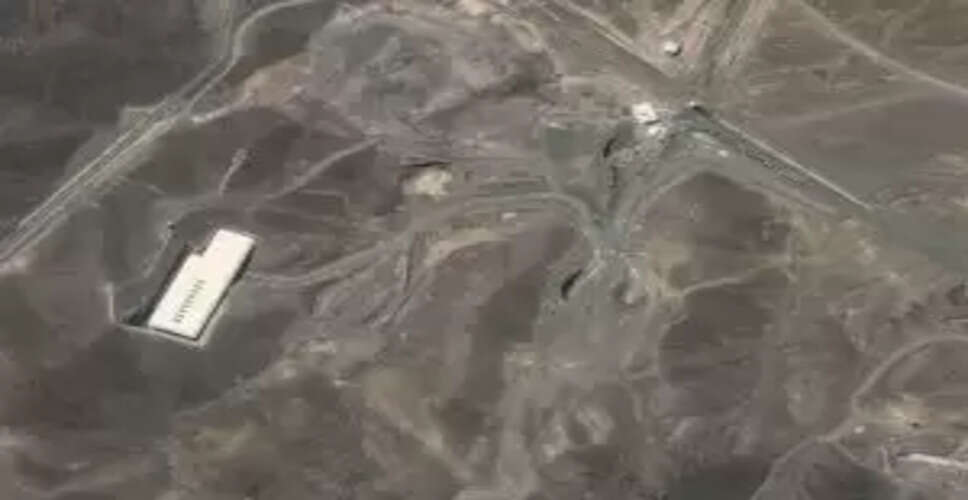
During the meeting, acting US Ambassador to the UN, Dorothy Camille Shea, stated that the strikes targeted the Fordow, Natanz, and Esfahan nuclear sites to dismantle Iran's nuclear enrichment capabilities and mitigate what she termed the 'nuclear threat' from the 'world's foremost state sponsor of terror.'
Shea emphasized that the operation aimed to eliminate a long-standing source of global insecurity and support Israel's right to collective self-defense as per the UN Charter.
She accused Iran of obstructing transparency in its nuclear endeavors, claiming it has consistently 'stonewalled good-faith efforts' in negotiations.
For four decades, she noted, the Iranian government has called for 'Death to America' and 'Death to Israel,' posing a continuous threat to regional and global peace.
She warned Tehran against further provocations, stating, 'As President Trump indicated, any Iranian attack—whether direct or indirect—against Americans or US bases will face severe retaliation.'
In response, Iran's UN envoy Amir Saeid Iravani condemned the US strikes as a 'blatant crime,' accusing Israeli Prime Minister Benjamin Netanyahu of instigating a conflict that began with an Israeli attack on Iranian nuclear sites and personnel.
'The US has chosen to sabotage diplomacy,' Iravani remarked, asserting that Iran's military would determine the 'timing, nature, and scale' of its response.
He directly blamed Netanyahu, labeling him an 'internationally wanted war criminal' who has manipulated US foreign policy into another unwarranted conflict.
Iravani described the strikes as 'deeply heartbreaking,' stating that they add another blemish to the political history of the US.
He reminded the Council that the US, a founding member of the UN and a signatory to the Nuclear Non-Proliferation Treaty (NPT), has once again resorted to military action despite its history of using nuclear weapons.
Iravani also criticized Israel as an 'outlaw nuclear-armed regime' that has perpetuated a 'false narrative' about Iran's nuclear ambitions without presenting any evidence.
'This is a critical test for the Council and the UN as a whole. If this Council fails to condemn this blatant aggression, it will bear the stain of complicity, just as it does with Gaza,' he warned.
Israel's Ambassador to the UN, Danny Danon, defended the US actions, claiming that 'history changed' with the strikes.
'The US, as the leader of the free world, has removed the greatest existential threat to global security. This was not a choice but a necessity,' he stated.
Danon commended American leadership during the crisis, asserting that when faced with a potential nuclear disaster, the US acted decisively.
He accused Iran of using negotiations as a facade while advancing its missile and uranium enrichment programs.
'The cost of inaction would have been catastrophic. A nuclear Iran would threaten not just us but everyone,' he warned.
Danon also highlighted Iran's influence beyond its borders, alleging that it arms militias in Iraq, funds the Houthis in Yemen, and poses threats to Europe and Western capitals with its missile capabilities.
UN Secretary-General Antonio Guterres expressed serious concern over the situation, indicating that the US bombing of Iran's nuclear facilities represents a 'dangerous turn' for an already strained region.
'We must act swiftly and decisively to cease hostilities and return to serious negotiations regarding Iran's nuclear program. A credible, comprehensive, and verifiable solution is essential to restore trust,' Guterres stated.
He underscored the critical juncture facing the international community: 'We face a stark choice amid escalating tensions in the Middle East. One path leads to wider conflict and suffering, while the other leads to de-escalation and dialogue. We know which path is right.'