
US-Iran Peace Talks End Without Agreement Amid Trust Issues

Stalled Negotiations Between the US and Iran
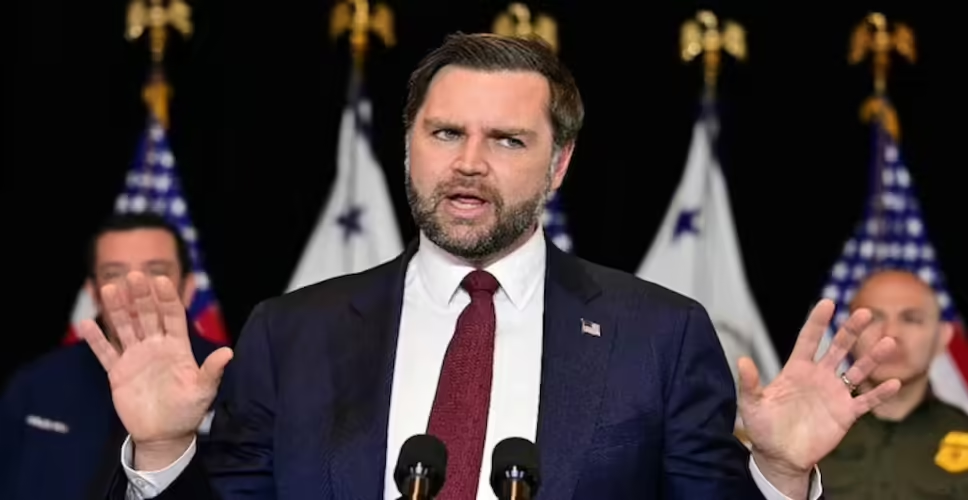
New Delhi/Islamabad: Recent peace discussions between the United States and Iran have concluded once again without yielding any substantial outcomes. US Vice President JD Vance emphasized that the significant barrier to progress is the deep-seated mistrust between the two nations, which cannot be resolved overnight.
The talks, mediated by Pakistan and held in Islamabad, lasted several hours but ultimately failed to reach any agreement. Vance noted that while the discussions were 'quite meaningful,' the lack of trust hindered the formation of a solid consensus.
A primary reason for the failure of these negotiations is Iran's firm stance on its nuclear program. The US is insisting that Iran explicitly commit to not developing nuclear weapons, a condition Iran has not accepted.
On the other hand, Iran has expressed its own concerns regarding the US, claiming that the demands are excessive and one-sided, complicating the possibility of a deal.
Experts suggest that decades of tension and political conflict between the two countries are at the root of this mistrust. Since 1979, US-Iran relations have deteriorated, making trust a significant challenge in every negotiation.
Nevertheless, Vance remains hopeful that the dialogue is not entirely over and that discussions may resume in the near future.
Currently, it is evident that without reducing the trust gap between the US and Iran, the prospect of a major agreement remains unlikely.