
US-Iran Peace Deal: Uncertainty Surrounds Israel's Involvement

Overview of the Upcoming Peace Agreement
On Saturday, President Donald Trump announced that a peace agreement between the United States and Iran is expected to be signed on Sunday. However, Israel has not yet confirmed its involvement in this deal. Trump stated on his social media platform, "The Deal is scheduled to get signed tomorrow, and immediately after it is signed, the Hormuz Strait is OPEN TO ALL." This announcement followed comments from Pakistan's Prime Minister, who indicated that the country was preparing for the electronic signing of the agreement, with technical discussions planned for the following week. Nevertheless, Iranian officials have expressed skepticism regarding this timeline. Esmaeil Baghaei, a spokesperson for the Iranian Foreign Ministry, mentioned that the signing would not occur on Sunday, urging caution regarding the process's timeline.
Israel's Reaction to the Agreement
Israel's Position on the Deal
Israel has yet to confirm its participation in any potential agreement between Washington and Tehran. Reports indicate that Israeli Prime Minister Benjamin Netanyahu was not informed in advance about Trump's announcement. However, a statement from Netanyahu's office revealed that he and Trump had discussed the evolving deal over the phone. Netanyahu reportedly expressed cautious optimism regarding the terms being negotiated. Although Israel is not a signatory to the memorandum of understanding, the prime minister acknowledged Trump's commitment to ensuring that the final agreement would involve the removal of enriched materials, dismantling enrichment infrastructure, restrictions on missile production, and halting Iran's support for terrorist groups in the region.
Ongoing Military Actions by Israel
Israeli Military Operations Continue
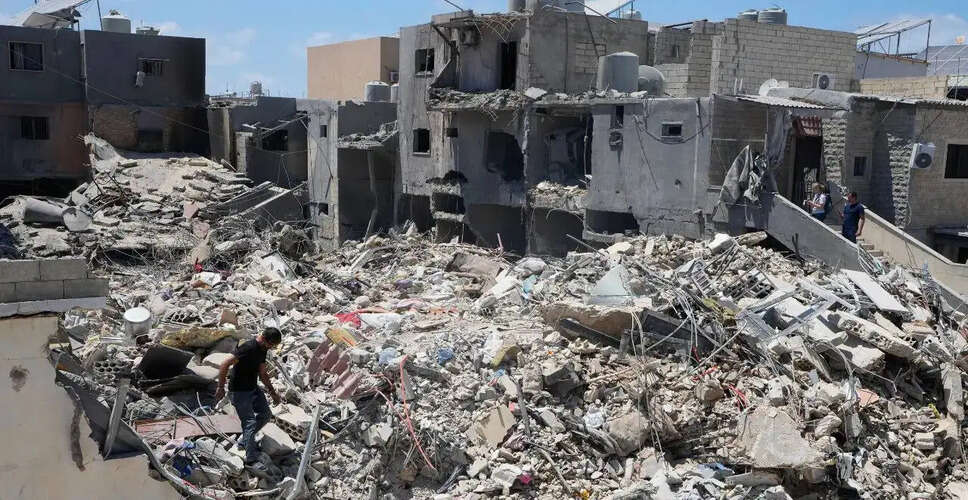
In a separate development, Israel has maintained its military operations against Hezbollah, the Iranian-backed Lebanese group. The Israel Defense Forces (IDF) reported targeting over 70 Hezbollah sites in southern Lebanon on Saturday, resulting in the deaths of several militants. Additionally, evacuation notices were issued for more than 20 towns in Lebanon ahead of these strikes. The IDF also stated that a soldier from the Lebanese Armed Forces was seriously injured in an Israeli drone attack. Israeli forces continue to target what they describe as a Hezbollah tunnel network near the historic Beaufort Castle, which the IDF claims to have seized on May 31. Several militants have been killed after emerging from these tunnels in recent days.
Concerns from Israeli Officials
Israel's Concerns over the Talks
Israeli officials have privately voiced concerns about being left out of the negotiations, warning that any agreement could impact their security operations in the region. A senior Israeli official expressed to Ynet, "No one is happy with this. We understand that it is not good for us and that it harms Israeli interests. What is troubling is that Israel cannot influence it. Its voice is not being heard." Defence Minister Israel Katz reiterated that Israel would maintain its military presence in Gaza, Lebanon, and Syria, stating, "Israel will not withdraw from the security zones in Lebanon, Syria, and Gaza." He emphasized that Israel's security strategy is clear: to act against both immediate and distant threats and to seek decisive outcomes rather than compromises. Katz also noted that Israel's policy is informed by lessons from the October 7 attacks, and forces will continue to operate from strategically important positions, including parts of southern Lebanon, the occupied West Bank, Gaza, and Mount Hermon. Israeli officials are concerned that the deal could restrict their operational freedom in Lebanon and potentially provide significant financial resources to the Iranian regime at a time when it is particularly vulnerable.