
US-Iran Nuclear Negotiations Fail to Reach Agreement in Islamabad
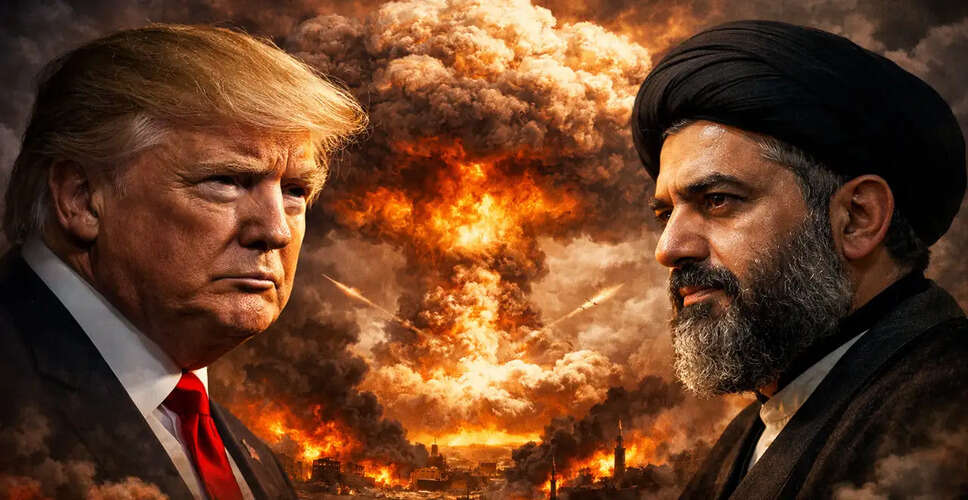

Failed Negotiations in Islamabad
Following a lengthy 21-hour negotiation session in Islamabad that did not yield any agreements, US Vice President JD Vance addressed the media regarding Iran's rejection of key proposals. During a press conference on Sunday, Vance highlighted that the primary expectation from Washington was a clear commitment from Iran to refrain from pursuing nuclear weapons, which was not provided by Tehran. He stated, “I won’t delve into all the specifics as I prefer not to negotiate publicly after such extensive discussions. However, it is crucial for us to obtain a definitive assurance that Iran will not pursue nuclear weapons or the means to quickly develop them. This is the fundamental objective of the President of the United States, and we have aimed to achieve this through our talks.” Vance further emphasized the need for a long-term commitment from Iran regarding its nuclear ambitions, expressing hope for future progress.
RapidResponse47
2043142505097482292
Iran, on the other hand, has indicated that the United States' 'excessive demands' hindered the establishment of a framework for negotiations. Reports from Iranian state media have pointed to various contentious issues, including the strategic Strait of Hormuz and Iran's nuclear rights.
Iran's Nuclear Program: A Non-Negotiable Stance
Iran's Nuclear Program is Its Red Line
For Iran, its nuclear program and the right to enrich uranium have always been non-negotiable. In its 10-point ceasefire proposal, Iran insisted on US acknowledgment of its uranium enrichment rights and the complete removal of sanctions. Notably, the phrase 'acceptance of enrichment' was included in the Farsi version of Iran's proposal but was missing from the English translation.
It seems unlikely that any agreement would allow for the acceptance of Iran's uranium enrichment, especially considering the contentious history surrounding its nuclear program.
Vance mentioned that the US had put forth its 'best and final offer' during the Islamabad talks. Although Vance has departed from Pakistan, discussions between Iranian and US delegations continued for an additional day at Pakistan's request, according to the semi-official Tasnim news agency.
Iran's Foreign Ministry spokesperson, Esmail Baghaei, noted that while some understanding was reached on various issues, significant differences remained on 2-3 critical points, preventing a consensus. He remarked, 'These negotiations occurred after 40 days of imposed conflict and were conducted in an atmosphere of distrust; thus, it was unrealistic to expect an agreement from a single meeting.' The Iranian leadership emphasized the importance of pursuing the rights and interests of the Iranian populace.