
US-Iran Negotiations in Islamabad: A Critical Turning Point
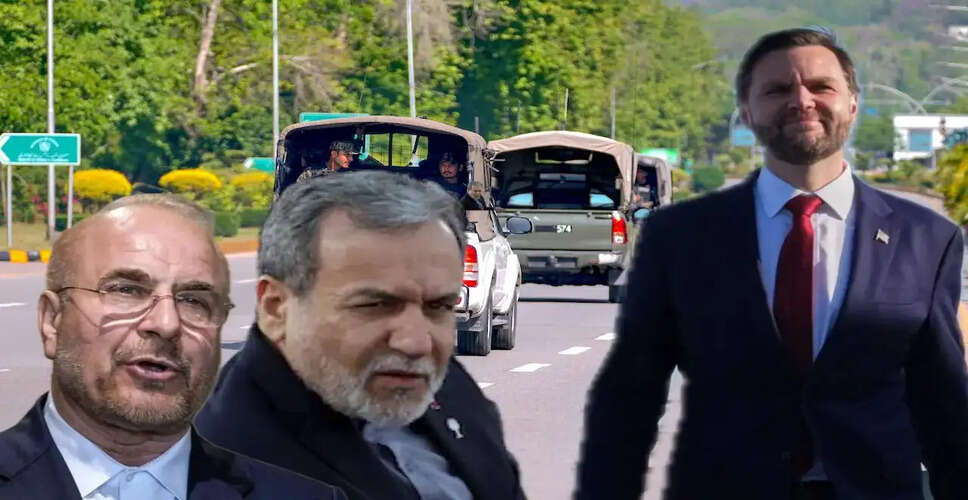

US Vice President's Visit Amid Tensions
As Islamabad remains under lockdown, US Vice President JD Vance is set to arrive in the Pakistani capital for discussions with Iran. This visit comes at a time when global focus is on the potential outcomes of these negotiations, especially given the ongoing tensions in the region. The fragile two-week ceasefire, which has been in place for six weeks, is already showing signs of strain, with Iran playing a crucial role in the shifting dynamics of power in the Gulf.
Vance, traveling aboard Air Force Two, expressed optimism about the negotiations, stating, “We’re looking forward to the negotiation. I think it’s gonna be positive. We’ll of course see.” However, he also issued a warning, referencing President Trump’s stance, saying, “If they’re gonna try and play us, then they’re gonna find that the negotiating team is not that receptive.”
Demands for Nuclear Program and Ceasefire Stability
Vance's visit coincides with a precarious US-Iran ceasefire, following one of the most severe Israeli attacks on Hezbollah in Lebanon. There are ongoing disputes regarding the terms of the agreement and Iran's nuclear ambitions. The US insists that Iran must abandon its uranium enrichment, while Iran's nuclear chief has emphasized that maintaining their right to enrich uranium is essential for any negotiations.
Strait of Hormuz and Oil Tanker Concerns
Additionally, the US has called for Iran to reopen the Strait of Hormuz, which has reportedly faced partial shutdowns. President Trump criticized Iran's handling of oil tanker passage, stating on social media, “That is not the agreement we have!”
Changing Dynamics in Iranian Leadership
As the high-stakes discussions approach, the US delegation, led by Vice President Vance, along with Trump's special envoy Steve Witkoff and Jared Kushner, will be pivotal. The Iranian team, expected to be led by Parliament Speaker Mohammad Bagher Ghalibaf, along with Foreign Minister Abbas Araghchi and Deputy Foreign Minister Majid Takht Ravanchi, represents a significant shift from previous negotiations.
While the exact format of the meeting remains unclear, whether it will be direct or indirect, Pakistani officials, including Prime Minister Shehbaz Sharif and Army Chief Asim Munir, are facilitating the arrangements. The outcome of these talks is uncertain, with the potential for either diplomatic progress or a resurgence of conflict.
Written by Abhinav Kumar