
US, Iran, and Qatar Engage in Peace Talks in Switzerland
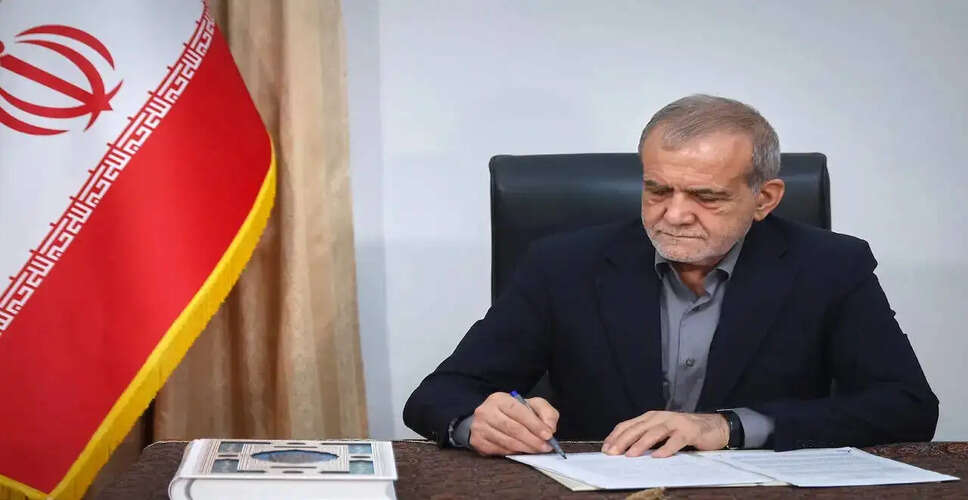

Diplomatic Discussions in Switzerland
Today, representatives from the US, Iran, and Qatar are convening in Switzerland to deliberate on the recently established Memorandum of Understanding (MoU) aimed at ceasing hostilities in the Middle East. Iranian President Masoud Pezeshkian announced that Iran's $6 billion in frozen assets, currently held in Qatar, will be returned as part of this initial agreement, according to reports from the Tasnim news agency. This announcement coincides with the gathering of the trilateral delegation at the picturesque Burgenstock resort.
The ongoing diplomatic efforts are rooted in the Islamabad MoU, which was finalized on June 17 by US President Donald Trump and Iranian President Masoud Pezeshkian. Pakistan is acting as a guarantor of this agreement, while Qatar serves as a mediator in the discussions.
Pezeshkian expressed optimism regarding the diplomatic framework, asserting that the terms of the MoU significantly favor Iran. He stated, "All provisions of the memorandum of understanding are in our favour, and the achievements of these talks and negotiations will become evident," as quoted by Tasnim.
Reflecting on the evolving stance of US leadership, Pezeshkian remarked on President Trump's recent speech, which he interpreted as a shift towards recognizing the rights of the Iranian people. He reiterated the financial aspects of the agreement, emphasizing, "Our $6 billion in Qatar will be returned."
Potential Uses for Unfrozen Funds
What Can Iran Do With Unfrozen Money
The Wall Street Journal has reported that Iran may be allowed to access $6 billion of its frozen assets in Qatar as part of a framework designed to end the conflict with the US. However, these funds can only be utilized for purchasing humanitarian goods and other items not subject to sanctions, primarily sourced from the US.
Originally derived from Iranian oil exports, these assets were previously held in South Korean banks before being transferred to restricted accounts in Qatar in 2023 as part of a prisoner exchange agreement. Access to these funds was halted following the October 7 Hamas attacks, which escalated regional tensions.
Phased Release of Funds
Iran To Retrieve Unfreezed Funds in Installments
Sources indicate that the proposed mechanism would allow Iran to access the $6 billion in phases over a 60-day ceasefire period linked to ongoing negotiations. The gradual release of these funds is contingent upon the reopening of the Strait of Hormuz and progress towards a comprehensive treaty.
An American official involved in the discussions mentioned that portions of Iran's blocked assets could be released if Tehran demonstrates what Washington considers "appropriate behavior," including cooperation regarding its enriched uranium inventory.
Looking ahead, Iranian Foreign Ministry spokesperson Esmaeil Baqaei stated that the US has committed to addressing the issue of frozen Iranian assets and providing reparations for damages incurred during recent conflicts. He emphasized that the release of these assets and reparations are critical components of the negotiations.
Iran's Nuclear Program and US Demands
Iranian President on Nuclear Program And US Demand
In addition to financial discussions, Pezeshkian criticized Israeli Prime Minister Benjamin Netanyahu, suggesting he would be displeased with the ongoing negotiations in Switzerland. He pointed out that the primary concern for the US remains Iran's nuclear capabilities, stating, "America's only point is that we not have an atomic bomb. This is something the martyred leader also repeatedly said, 'we do not want an atomic bomb.'"
Pezeshkian indicated that Tehran has formalized its commitments based on explicit directives from Washington, stating, "America said 'write this down and sign' - and we signed."