
US Intercepts Iranian Drones Amid Rising Tensions in the Strait of Hormuz
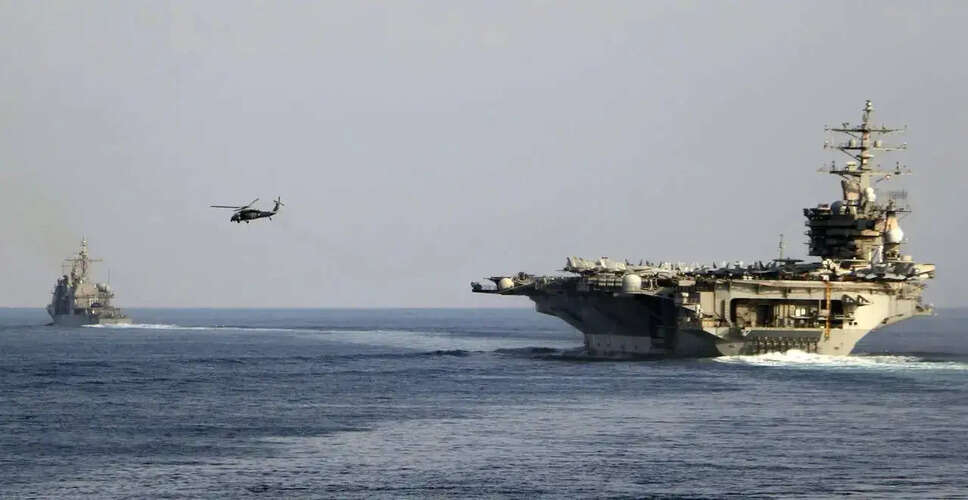

US Military Action Against Iranian Drones
On Saturday, the United States announced that it had successfully intercepted two Iranian attack drones over the Strait of Hormuz, citing a threat to international maritime operations. This incident highlights the escalating tensions that are straining a fragile ceasefire between Washington and Tehran, as negotiations for a peace agreement continue to stall. The US Central Command (CENTCOM) confirmed that American forces took action against the drones in this strategically vital waterway. In their statement, CENTCOM noted, "Earlier today, U.S. forces in the Middle East shot down two Iranian one-way attack drones that threatened international maritime traffic in the Strait of Hormuz." They emphasized that US forces are prepared to defend against any Iranian aggression.
This development follows a day after the US reported intercepting multiple Iranian ballistic missiles and drones aimed at the Strait of Hormuz and the Gulf. CENTCOM indicated that seven ballistic missiles were launched towards Kuwait and Bahrain late Friday, with six being intercepted while one failed to reach its target.
Kuwait and Bahrain condemned the Iranian missile and drone attacks, labeling them as violations of their sovereignty and threats to regional stability. Additionally, Egypt, Jordan, and Qatar expressed their disapproval on Saturday. The Iranian Islamic Revolutionary Guard Corps (IRGC) claimed responsibility for the attacks on US bases in the region, framing them as retaliation for previous US strikes. The US military reported targeting Iranian coastal surveillance radar sites in Goruk and on Qeshm Island.
In response, Iran's Foreign Ministry criticized the US actions as a blatant violation of the ceasefire established in April, asserting that the US's actions demonstrate a lack of intent to de-escalate tensions and pose a serious risk to regional security. Tehran further stated that the US is accountable for the repercussions of these unlawful actions and any potential escalation of conflict. The US military defended its operations, stating that the strikes on Iranian radar sites were necessary to prevent further attacks after the Iranian drones were launched towards the Strait of Hormuz. The IRGC contended that the conflict began when the US military attempted to escort oil tankers through the waterway, which Iran has largely restricted during the ongoing conflict.