
US Intensifies Economic Pressure on Iran Amid Rising Tensions
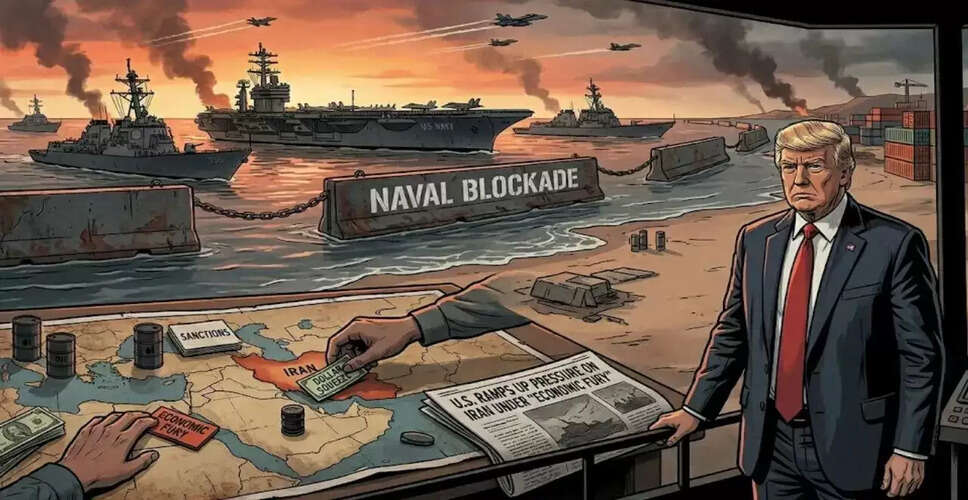

US Implements Comprehensive Economic Strategy Against Iran
The United States has ramped up its campaign against Iran, which officials are now referring to as a full-spectrum squeeze. This strategy targets Iran's maritime trade, financial systems, and oil supply simultaneously, aiming to create a comprehensive economic blockade that undermines Tehran's stability.
Details of the US Strategy
US Treasury Secretary Scott Bessent articulated the administration's strategy clearly, stating, "As @POTUS has made clear, the United States Navy will continue the blockade of Iranian ports. In a matter of days, Kharg Island storage will be full and the fragile Iranian oil wells will be shut in. Constraining Iran's maritime trade directly targets the regime's primary revenue lifelines. The @USTreasury will continue to apply maximum pressure through Economic Fury to systematically degrade Tehran's ability to generate, move, and repatriate funds. Any person or vessel facilitating these flows—through covert trade and finance—risks exposure to U.S. sanctions. We continue to freeze the funds stolen by the corrupt leadership on behalf of the people of Iran."
SecScottBessent
2046703137541837285
Expert Mario Nawfal simplified the implications, stating that the imminent filling of Kharg Island storage would force Iran to halt its oil production. He emphasized that shutting down oil wells is not a simple task; restarting them could take months and incur significant costs, with some wells potentially never returning to full capacity. This strategy threatens to inflict lasting damage on Iran's oil production capabilities without resorting to military action.
Wider Economic Distress in Iran
The economic pressure extends beyond oil production. Reports indicate that Iranian security forces and the IRGC are experiencing delays in salary payments. President Trump confirmed on Truth Social that Iran is facing severe financial difficulties, stating, "Iran is collapsing financially! They want the Strait of Hormuz opened immediately- Starving for cash! Losing 500 Million Dollars a day. Military and Police complaining that they are not getting paid. SOS!!!"
US Actions Beyond Iran
The US's economic squeeze also affects neighboring Iraq, where dollar shipments have been blocked to limit financial support for Iran-aligned militias. Reports indicate that the Trump administration has halted dollar shipments and frozen military cooperation with Iraq, increasing pressure on Baghdad to dismantle these militias. A recent incident involved the blocking of a nearly $500 million cash shipment due to concerns over militia activities.
Sanctions targeting networks associated with Iran's economy and military are also being enforced. A recent Treasury announcement highlighted sanctions against an oil smuggling network led by Iranian shipping magnate Mohammad Hossein Shamkhani and a complex gold scheme benefiting Iran's military.
Iran's Response to US Measures
In response, Iran has condemned the US actions, with its foreign ministry labeling the naval blockade as illegal. Spokesperson Esmail Baghaei stated, "Aggression towards maritime shipping and trading is a dangerous violation. If this becomes common, maritime freedom will be at risk. The actions taken by America are examples of piracy and state terrorism."
Uncertain Diplomatic Landscape
The ongoing confrontation occurs against a backdrop of fragile diplomacy. While the US has extended a two-week ceasefire indefinitely, negotiations with Iran remain uncertain. Trump announced this extension while awaiting a unified proposal from Tehran, despite indications that talks are stalling.
Efforts to arrange a second round of discussions, potentially in Pakistan, have faced challenges. US Vice President JD Vance, who was expected to lead the American delegation, has remained in Washington, and Pakistan is still waiting for confirmation from Iran. Tehran has expressed hesitance, with Baghaei noting that there has been "no final decision" on participation due to "unacceptable actions" by the US, likely referring to the blockade.
As tensions escalate, Iran's military has issued stern warnings, stating it would retaliate against US and Israeli targets if provoked. Spokesperson Ebrahim Zolfaghari indicated that Iran would respond more forcefully in any future confrontations. The situation reflects a high-stakes standoff where economic pressure, military posturing, and fragile diplomacy are all in play. The US appears intent on tightening its grip without engaging in direct conflict, while Iran shows both resilience and a willingness to escalate. The outcome of this full-spectrum squeeze remains uncertain, as it could either bring Tehran back to negotiations or lead to increased regional tensions.