
US Imposes Naval Blockade on Strait of Hormuz Following Failed Iran Talks

US Naval Blockade Announcement
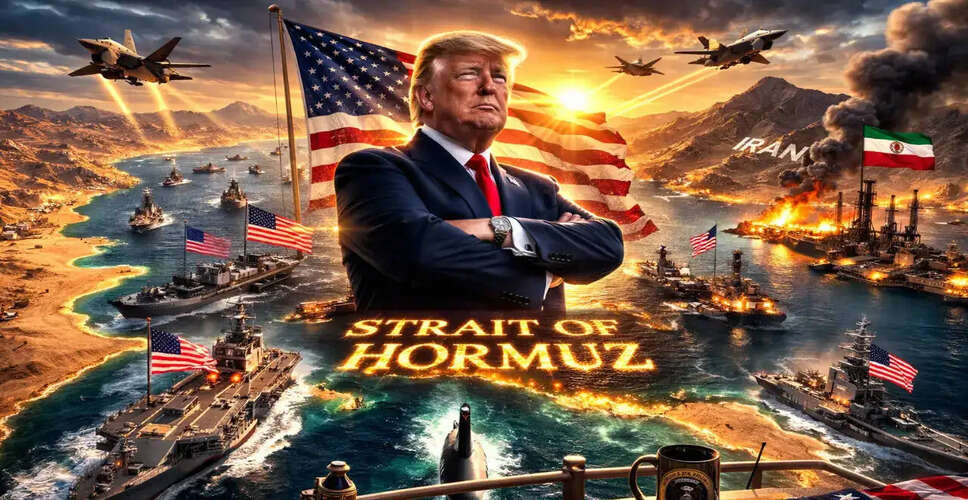
Shortly after the breakdown of peace negotiations with Iran, President Donald Trump declared a naval blockade of the Strait of Hormuz. In a post on Truth Social, Trump characterized the blockade as a necessary response, stating that discussions in Islamabad failed because Iran refused to abandon its "nuclear ambitions." He announced, "Effective immediately, the United States Navy, the Finest in the World, will begin the process of BLOCKADING any and all Ships trying to enter, or leave, the Strait of Hormuz." Trump further instructed the Navy to intercept any vessels in international waters that had paid tolls to Iran, asserting that no ship paying an illegal toll would be granted safe passage. He also mentioned that US forces would target mines laid by Iran's Islamic Revolutionary Guard Corps in the vital waterway, warning, "Any Iranian who fires at us, or at peaceful vessels, will be BLOWN TO HELL!"
Details of the Naval Blockade
The United States plans to restrict all maritime traffic entering and exiting Iranian ports, including those in the Arabian Gulf and Gulf of Oman. CENTCOM confirmed that the blockade would be enforced fairly against vessels from all nations, while ensuring that ships traveling to and from non-Iranian ports would not be obstructed. The blockade is set to commence at 7:30 PM IST on Monday, according to a CENTCOM announcement. The US has advised commercial mariners to stay updated with official navigation warnings and maintain communication with US naval forces while operating in the area.
International Involvement
Trump indicated that other nations might join in enforcing the blockade, although he did not specify which ones. He mentioned to a media outlet that NATO had offered assistance to the US in "cleaning out" the Strait of Hormuz. Trump accused Tehran of engaging in "world extortion" and reiterated that vessels paying an "illegal toll" would be barred from passing through the strait.
Iran's Reaction
In response, Iranian Foreign Minister Seyed Abbas Araghchi claimed that Iran had been negotiating in good faith and was close to reaching an agreement. He criticized the US for its "maximalism, shifting goalposts, and blockade," stating, "Good will begets good will. Enmity begets enmity."
Reasons Behind the Blockade
The blockade of the Strait of Hormuz is significant as it allows Iran to exert influence over a critical route through which approximately 20% of the world's crude oil and liquefied natural gas (LNG) passes daily. By implementing this blockade, the US aims to diminish Iran's revenue derived from tolls imposed on passing ships.
Current Situation in the Strait of Hormuz
Since the onset of the Iran war on February 28, the IRGC has blocked the strait following US and Israeli airstrikes on Tehran. On April 7, Iran agreed to reopen the strait after a two-week ceasefire with the US. However, vessels attempting to cross without permission received warnings that they would be "targeted and destroyed." Reports indicated that by April 10, only 19 ships had successfully navigated the strait. The blockade is expected to drive up oil prices, exacerbating the energy crisis in the region, although some analysts believe the impact may be limited since the waterway has already faced restrictions since the war began.