
US Imposes Ban on Foreign-Made Humanoid Robots: A Move Against China?

New Restrictions on Humanoid Robots and Power Inverters
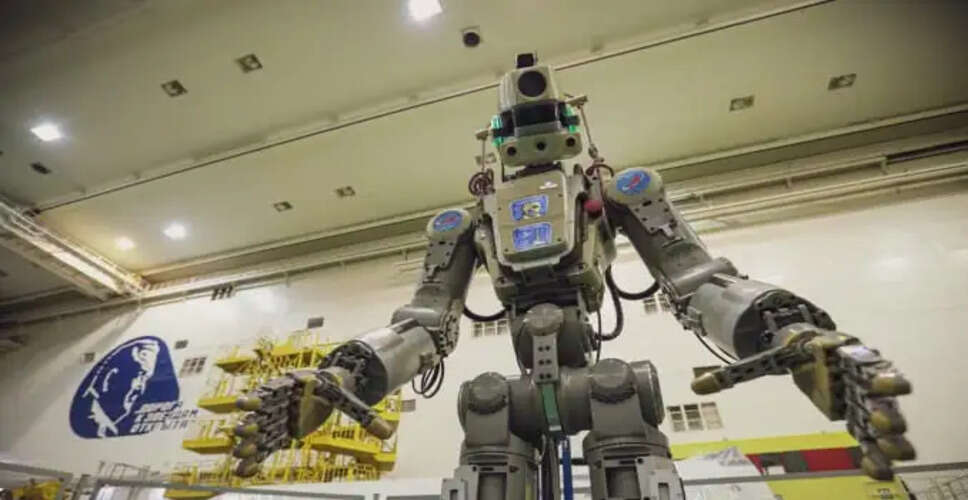
Hong Kong: The Federal Communications Commission (FCC) of the United States has announced a ban on the import of new humanoid robots and power inverters, citing concerns over national security, particularly aimed at China.
This decision is poised to strain US-China relations, especially with a scheduled meeting between Chinese leader Xi Jinping and US President Donald Trump in September. China currently holds a commanding 85% share of the global humanoid robot market.
The FCC's restrictions also extend to quadruped robots, commonly known as robotic dogs. The agency expressed that these advanced robots could pose cybersecurity threats and other national security issues, while also highlighting the vulnerabilities in US supply chains due to offshore production.
The prohibition on power inverters, which convert direct current (DC) to alternating current (AC) and are essential for renewable energy systems, data centers, and household devices, could have extensive implications.
Brendan Carr, the chairperson of the FCC, stated that the intention behind this move is to 'secure America’s critical supply chains,' emphasizing that the bans specifically target 'new versions' of these imports.
These actions are part of a broader trend of US restrictions on Chinese imports, including drones, and limitations on the export of advanced technologies to China.
Additionally, the US is contemplating regulations on the use of Chinese open-source artificial intelligence models, as Chinese AI technology continues to advance rapidly.
Samm Sacks, a senior fellow at the New America think tank, noted that these developments could lead to potential conflicts as the Trump-Xi summit approaches.
China has been aggressively increasing its use of robotics, supported by policies that bolster its tech sector. Analysts from Morgan Stanley predict that the humanoid robot market in China could reach USD 15 billion by 2030.
According to Kangyuxiao Li, an analyst at Morningstar, Chinese manufacturers are outpacing their international competitors in production and cost reduction.
He added that limiting their access to the US market removes a significant opportunity and shields US developers from price competition. However, this will not significantly hinder China's overall humanoid robot development due to its vast domestic manufacturing capabilities and other export opportunities.
In 2025, approximately 15,000 humanoid robots are expected to be shipped globally, with China's Unitree and AGIBOT each shipping over 5,000 units, while US companies like Tesla and Figure AI shipped only a few hundred, according to Omdia.
In response, China's Foreign Ministry criticized the US for misusing national security to suppress Chinese enterprises, asserting that China will take 'all necessary measures' to protect the rights of its businesses.
Mao Ning, a spokesperson for the ministry, remarked that protectionism does not enhance US competitiveness and ultimately harms American companies and consumers.
The new restrictions may also disrupt collaborations between US and Chinese tech firms, as noted by Lian Jye Su, a chief analyst at Omdia.
For instance, NVIDIA recently unveiled a humanoid robot reference design utilizing the chassis from China's Unitree.
The Pentagon has also listed Unitree and several other prominent Chinese tech firms as having connections to the Chinese military.