
US Financial Strength on Display Amid Ongoing Iran Conflict
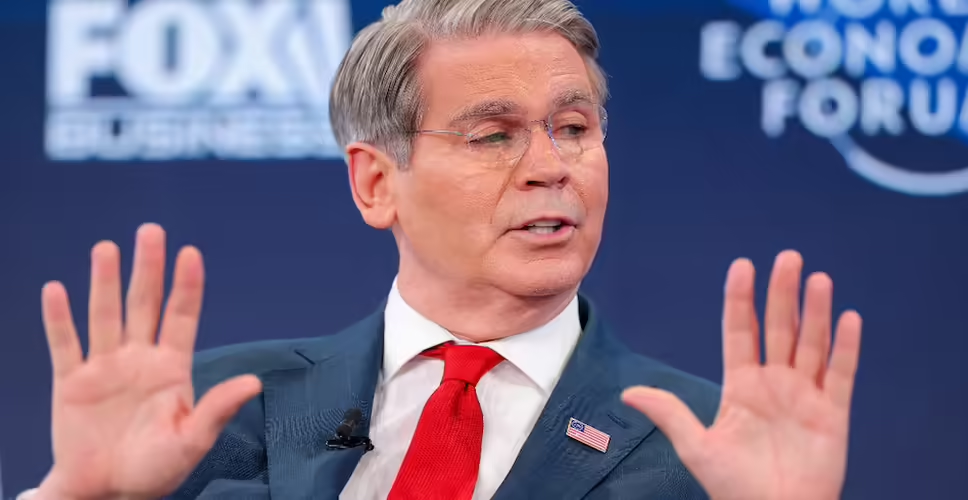
US Treasury Secretary Affirms Financial Readiness
In Washington, as the conflict with Iran enters its 24th day, the United States has once again showcased its financial capabilities. On Sunday, US Treasury Secretary Scott Basset stated during an NBC program that the nation possesses "plenty of money" to sustain the war for an extended period. He dismissed any potential tax increases, assuring that American citizens would not bear any additional financial burden due to the war.
High Costs of War, Yet No Shortage of Funds
The US-Iran conflict has now progressed into its fourth week. Initial estimates from the Pentagon indicated that approximately $11.3 billion (around ₹1 lakh crore) was spent within the first six days of the war. The total expenses have now escalated into billions, covering ammunition, missiles, air operations, naval deployments, and operations in the Strait of Hormuz.
Request for Additional Funding
The Pentagon has requested Congress for an additional $200 billion (approximately ₹17 lakh crore) in what is termed 'supplemental funding.' However, Basset emphasized that "we have plenty of money for this war. This supplemental funding is not essential but is aimed at strengthening the military in the future."
Denial of Tax Increases Amid Ongoing Debate
Basset clarified that under President Donald Trump's leadership, the US is in a strong financial position. He asserted that the costs of the war would not be passed on to American taxpayers. Nevertheless, he did not specify where the additional funding would originate from—whether through bond issuance, cuts to the defense budget, or other sources.
Congressional Debate on Funding
Debate in Congress regarding the $200 billion request is intensifying. Some Republican and Democratic lawmakers are questioning the source of such a substantial amount, especially since domestic programs like healthcare, education, and infrastructure have already faced cuts. Opposition leaders are criticizing the notion that "the cost of war will be borne by the average American."
Tensions Escalate in the Middle East
The conflict with Iran has now reached the Strait of Hormuz, where Iran has imposed heavy transit fees on certain vessels. The surge in oil prices is impacting the global economy. The US has targeted Iran's nuclear program, while Iran has threatened retaliatory attacks.
Potential Long-Term Economic Implications
The Trump administration argues that this conflict presents an opportunity to eliminate the "nuclear threat from Iran for 50 years" in exchange for "50 days of high prices." However, experts warn that if the war drags on, the economic burden could increase significantly.
Concerns Over Financial Sustainability
The Treasury Secretary's remarks aim to reassure citizens during the ongoing conflict, but the critical question remains: how long can the US sustain this financial commitment, and is it truly feasible without incurring costs? The end of the war seems distant, and such claims from Washington are drawing global attention.