
US Embassy Issues Urgent Warning Amid Rising Tensions in Baghdad
The US Embassy in Baghdad has raised alarms about possible attacks by Iran-affiliated militias, urging American citizens to exercise caution. This warning comes amid rising tensions in the region, particularly following the abduction of journalist Shelly Kittleson. Meanwhile, South Korea is collaborating with the US to address Iran's control over the Strait of Hormuz and is proposing a significant budget to combat the energy crisis exacerbated by the Middle Eastern conflict. The situation remains fluid, with implications for both regional security and energy supply chains.
| Apr 2, 2026, 16:17 IST
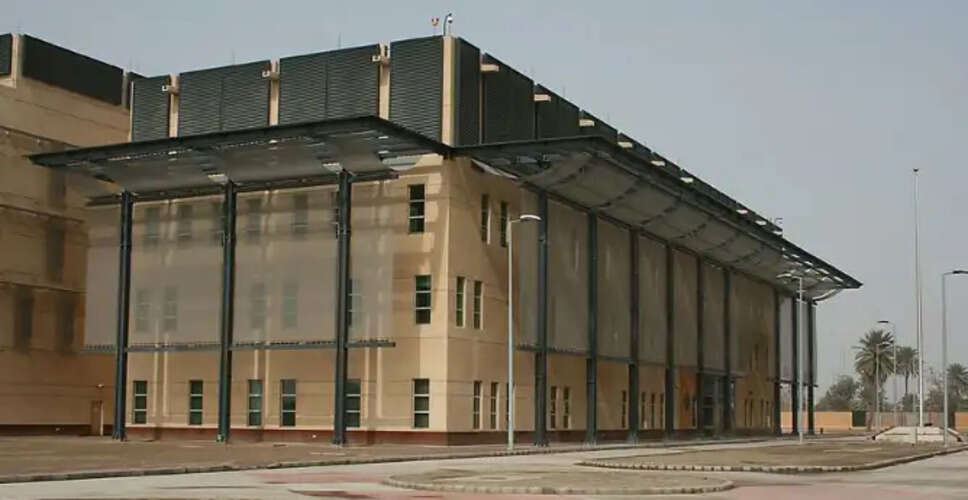
Heightened Security Alert in Baghdad
Washington: On Thursday, the US Embassy in Baghdad alerted its citizens about potential attacks by Iran-affiliated militias in central Baghdad within the next 24 to 48 hours.
The embassy indicated that these assaults could target American citizens, businesses, educational institutions, diplomatic sites, energy facilities, hotels, airports, and other locations linked to the United States, as well as Iraqi entities and civilian areas.
This warning marks another instance of the embassy advising US nationals to exit Iraq, but the specificity regarding potential attacks is notably alarming.
In a related incident, American freelance journalist Shelly Kittleson was abducted in Baghdad on Tuesday and is still unaccounted for. While no group has taken responsibility, US officials suspect the Iran-backed Kataib Hezbollah militia is involved.
South Korea Collaborates with Washington on Strait of Hormuz
South Korea: On Thursday, South Korea announced it is maintaining close communication with Washington regarding Iran's influence over the Strait of Hormuz.
Park Il, a spokesperson for the South Korean Foreign Ministry, stated that Seoul is committed to the rapid normalization of this vital shipping route and is considering various strategies to safeguard its citizens and ensure the uninterrupted flow of energy supplies.
However, Park refrained from detailing the specific options South Korea might pursue.
US President Donald Trump has called on South Korea and other Asian nations to assist in reopening the waterway, expressing his dissatisfaction with some countries for not participating in efforts to restore access during an Easter event at the White House.
South Korean President Proposes Major Budget to Tackle Energy Crisis
Seoul: On Thursday, President Lee Jae Myung of South Korea urged the legislature to approve a supplementary budget of 26.2 trillion won (approximately $17.2 billion) to address what he termed an extraordinary energy crisis stemming from the ongoing conflict in the Middle East.
During his address to lawmakers, Lee suggested utilizing these funds to support government-imposed price caps on oil, a measure not seen in three decades, and to provide tiered subsidies ranging from 100,000 won to 600,000 won ($65.7 to $394) for low- and middle-income families facing rising fuel costs.
He emphasized that the funds would also be allocated to ensure stable supply chains for oil and other essential resources, as well as to bolster export industries.
Lee warned that the current energy crisis is not a fleeting issue but rather a significant storm with an uncertain duration, noting that even if the conflict were to cease immediately, it would take considerable time to rebuild the damaged infrastructure in the Middle East and restore supply levels to what they were before.