
US Deploys Additional Troops Amid Rising Tensions in West Asia
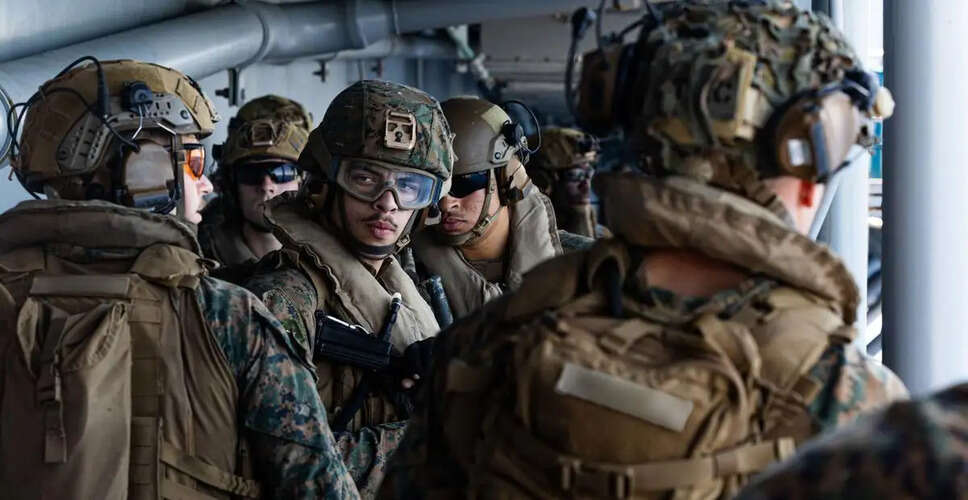
US Military Reinforcements Arrive
On Saturday, the United States military announced the arrival of an additional 3,500 marines and sailors in West Asia as tensions escalate in the region.
According to a report from a major news outlet, unnamed officials indicated that the US Department of Defense is gearing up for potential “weeks of ground operations” in Iran.
Key Updates on the West Asia Conflict:
- The newly arrived US forces are stationed in the US Central Command area aboard the USS Tripoli, an America-class amphibious assault ship. This vessel serves as the flagship for the Tripoli Amphibious Ready Group and the 31st Marine Expeditionary Unit, which includes around 3,500 personnel along with various aircraft and tactical assets.
- While ground operations are being considered, they are not expected to lead to a full-scale invasion. Instead, they may involve targeted raids by infantry or special forces, as reported by unnamed officials. The White House clarified that preparations are being made to provide the president with various options, but no final decision has been reached regarding ground operations.
- Recently, President Donald Trump has expressed a desire to conclude the ongoing conflict, although he has also threatened to expand military actions against Iran.
- In a tragic incident, three journalists were killed in southern Lebanon during an Israeli airstrike, as reported by another news outlet. The attack targeted a clearly marked press vehicle, resulting in the deaths of Fatima Ftouni and her brother, Mohammed, along with Ali Shuaib from Al Mayadeen and Al-Manar. Several others sustained injuries in the strike.
- The Israeli Defense Forces claimed that Shuaib was affiliated with Hezbollah, alleging he had been operating under the guise of a journalist while revealing IDF troop positions and maintaining contact with Hezbollah operatives.
- Lebanon's Information Minister Paul Morcos condemned the killings, labeling them a deliberate war crime against journalists and the integrity of the media.
- The World Health Organization reported that nine paramedics were killed in five separate attacks on healthcare facilities in Lebanon.
Overview of the Ongoing Conflict
The conflict escalated on February 28 when the US and Israel launched an attack on Iran, citing Tehran's actions as a significant threat to Israel's security. The US has positioned itself as a protector of Israel.
In retaliation, Iran has targeted Israeli and US military installations in the region, as well as major cities in Gulf nations.
Additionally, Iran has effectively restricted access to the Strait of Hormuz, a crucial maritime route for international trade, leading to a global energy crisis as approximately 20% of the world's oil supply passes through this narrow passage.
Israel has raised concerns that Iran is nearing the capability to develop a nuclear weapon, which could disrupt the regional security landscape. Iran, however, insists that its nuclear program is intended solely for peaceful purposes.