
US Defense Secretary Proposes Major Shift in NATO Strategy
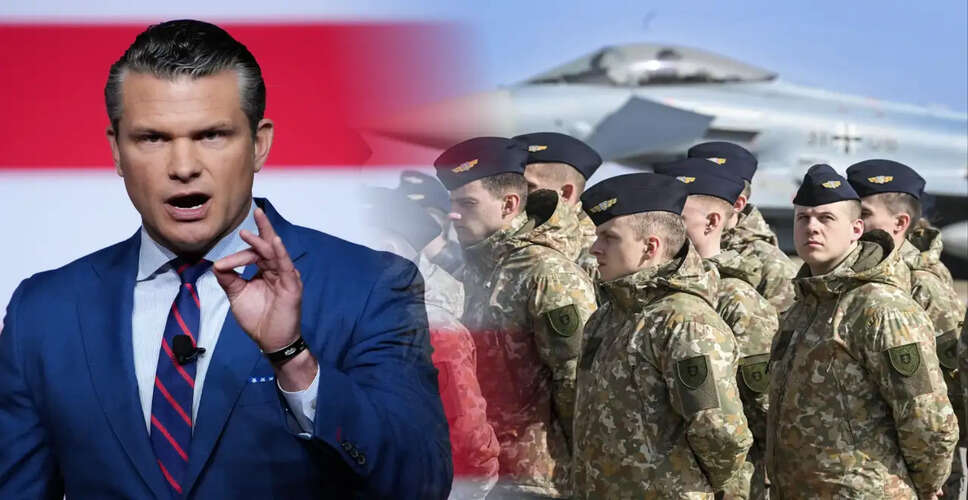

Significant Changes in NATO's Military Strategy
In a notable shift in the United States' approach to NATO, Defense Secretary Pete Hegseth announced a comprehensive six-month review of American military forces stationed in Europe. This announcement was made during a NATO defense ministers' meeting in Brussels, where he emphasized the need for European allies to take on greater responsibility for their own security. Hegseth stated that the review aims to assess the future positioning of US forces in Europe and evaluate whether NATO is progressing swiftly enough towards a new phase of shared responsibilities.
"This will be a thorough review," Hegseth assured allies. "It is intended to ensure that NATO is rapidly and irrevocably moving towards Europe taking the lead and assuming primary responsibility for its defense." His comments signal a significant reassessment of America's long-standing military commitments in Europe, as the Trump administration seeks to prioritize resources for potential challenges in other regions, particularly the Indo-Pacific.
Pete Hegseth: After the Cold War ended, no longer focused on defending Europe, NATO 2.0 drifted toward out-of-area operations and things that had nothing to do with warfighting at all. Instead of tanks, fighters, and air defenses, the focus shifted to gender equity, climate… pic.twitter.com/oEBMbe8pdD
— Clash Report (@clashreport) June 18, 2026
Hegseth's remarks reflect a growing frustration in Washington regarding Europe's reliance on American military support, despite recent increases in defense budgets among NATO member nations.
Criticism of NATO Allies and Their Defense Strategies
In addition to discussing force posture, Hegseth criticized several NATO allies for denying access to bases, airspace, and logistical support during recent military operations targeting Iran. He argued that these restrictions unnecessarily endangered American personnel and weakened alliance unity amid rising tensions in the Middle East. "These allies jeopardize the safety of American service members by denying them the access and support that should never have been in question," he stated.
Furthermore, Hegseth expressed concern over what he described as misplaced policy priorities among some European governments. Echoing sentiments often voiced by Vice President JD Vance, he noted that certain nations have focused too heavily on climate policies and social initiatives at the expense of military readiness. His comments reignited discussions about the future direction of NATO, especially as member states are experiencing some of the largest defense spending increases since the Cold War's conclusion. NATO Secretary-General Mark Rutte highlighted that European allies and Canada raised defense spending by approximately $90 billion last year, marking a significant increase compared to previous years.
NATO's Nuclear Planning Group Takes Action
The meeting also yielded a rare update regarding NATO's nuclear strategy. The Nuclear Planning Group issued its first formal statement in 19 years, reaffirming that NATO's nuclear forces are the ultimate guarantee of the alliance's security. The statement confirmed ongoing plans to modernize deterrence capabilities.
The group agreed to enhance nuclear planning mechanisms, modernize delivery systems, and adapt NATO's deterrence framework to address evolving security challenges. This announcement comes amid broader strategic uncertainties within the alliance. Earlier this month, the United States informed its allies that certain military assets typically expected during a major NATO crisis—such as aircraft carriers, aerial refueling aircraft, and additional fighter squadrons—might not be readily available. This shift reflects Washington's increasing focus on preparing for simultaneous crises in various regions, particularly concerning potential confrontations with China in the Indo-Pacific. While the Pentagon review does not currently plan to withdraw US nuclear weapons from Europe, it underscores a crucial message from Washington: future NATO security arrangements may increasingly rely on Europe to shoulder a larger share of military responsibilities.