
US Court Overturns Trump's Tariff Strategy, Major Blow to Administration
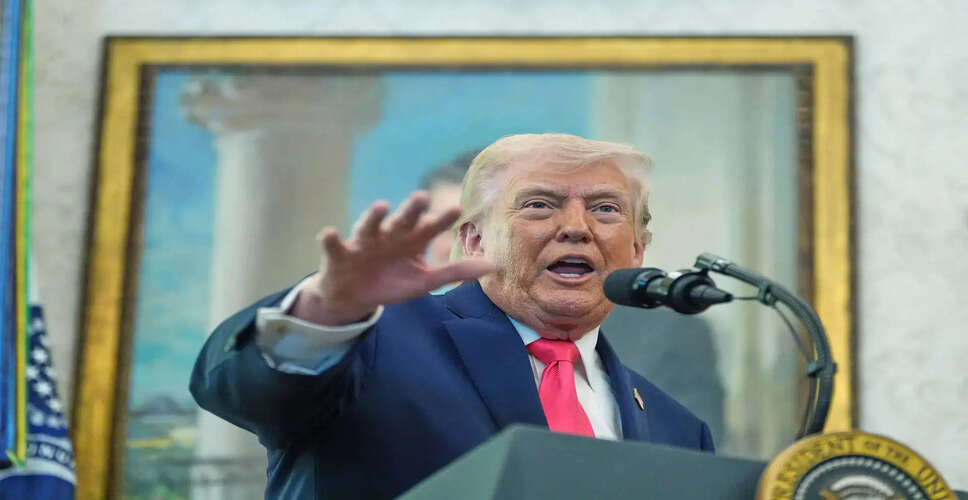

Court Ruling Challenges Trump's Tariff Authority
A significant blow to the Trump administration occurred when a federal trade court in the United States invalidated the President's recent global tariff initiative. The court determined that the administration overstepped its legal boundaries under a 1974 trade statute while attempting to impose a 10% surcharge on imports entering the country. In a decision rendered by a 2-1 vote, the US Court of International Trade concluded that the administration could not justify the tariffs based on broad trade and current account deficits as outlined in Section 122 of the Trade Act of 1974.
The judges emphasized that the law was intended to address specific 'balance-of-payments' crises related to the international monetary system of the 1970s, rather than contemporary trade deficits. Judges Mark A. Barnett and Claire R. Kelly noted that Trump's proclamation did not demonstrate that the necessary conditions for imposing such tariffs had been met.
This ruling poses a challenge to Trump's global tariff plans just days before he is set to engage in trade discussions with Chinese President Xi Jinping in Beijing. The tariffs were initially enacted in February after the Supreme Court invalidated his previous tariff strategy under emergency powers. The new tariffs were introduced under Section 122, which permits temporary import surcharges of up to 15% for a duration of 150 days.
The court criticized the administration for relying on current account and trade deficits instead of the more specific 'balance-of-payments deficits' that Congress intended when the law was enacted in 1974. The majority opinion stated, 'Instead of identifying balance-of-payments deficits as originally intended, the Proclamation depends on current account deficits and references a significant trade deficit.'
The judges cautioned that accepting such a broad interpretation of the statute could grant presidents unchecked tariff powers, raising potential constitutional concerns. 'Such an expansive interpretation would lead to a non-delegation issue, which could prompt constitutional questions,' the ruling indicated.
Future Implications
The ruling is anticipated to be contested in the US Court of Appeals for the Federal Circuit and may eventually reach the Supreme Court. Following the Supreme Court's earlier decision to strike down his previous tariffs under the International Emergency Economic Powers Act, Trump expressed his determination to proceed with his plans during a White House briefing. 'We’re moving ahead,' he stated. 'We will be able to generate more revenue.'
Trump has defended Section 122 as one of several 'very powerful alternatives' available to him after the Supreme Court's rejection of his earlier tariff strategy.