
US Considers Legal Action Against Raúl Castro Amid Military Speculations
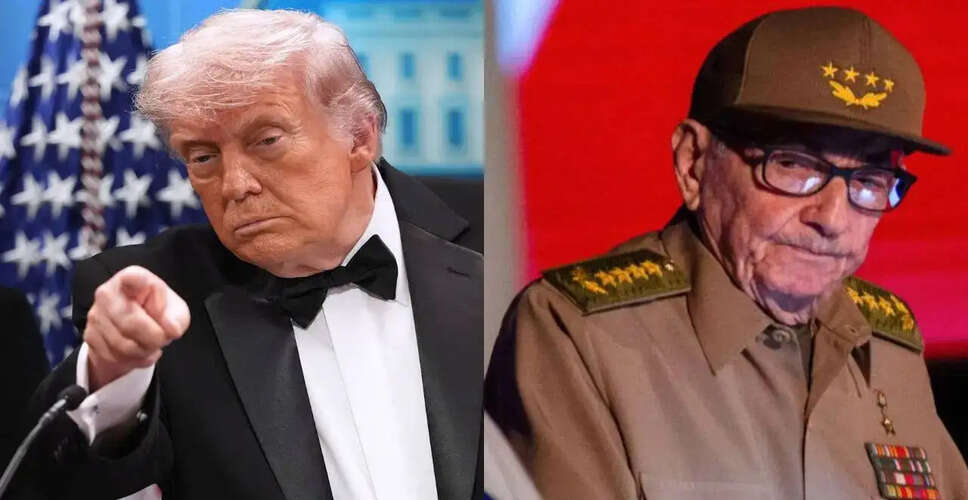

Rising Speculations on US Military Action in Cuba
Recent reports indicate that the Trump administration may be contemplating criminal charges against former Cuban leader Raúl Castro, which has sparked discussions about potential US military interventions in Cuba. This speculation follows a recent operation targeting Venezuelan President Nicolás Maduro. Legal analysts suggest that an indictment could serve as a pretext for a military operation aimed at detaining Castro, mirroring actions taken in Venezuela earlier this year. However, some experts raise concerns regarding the legality of such actions under US and international law. Former federal prosecutor Mitchell Epner expressed that the Cuban government should be wary, interpreting the situation as a potential cover for an invasion.
Potential Charges Against Castro
What Charges Could Castro Face?
The focus of the reported legal efforts revolves around a tragic incident from 1996 involving the humanitarian group Brothers to the Rescue. During this event, Cuban fighter jets shot down two civilian aircraft associated with the group, resulting in the deaths of four individuals, including three US citizens and one Cuban-born US resident. At the time, Cuba's foreign ministry claimed that the aircraft had breached Cuban airspace after taking off from Florida. However, the International Civil Aviation Organization later determined that the planes were in international airspace, rendering the attack illegal.
Reports suggest that prosecutors are investigating whether Castro, who was in charge of Cuba's armed forces at the time, directly ordered the attack. A decade later, recordings obtained by the Florida-based Spanish-language newspaper el Nuevo Herald allegedly captured Castro discussing plans with military officials to shoot down the aircraft, as reported by the Miami Herald.
Concerns in Havana Following Venezuela Operation
Venezuela Operation Raises Fears in Havana
Analysts believe that the Trump administration's successful operation against Nicolás Maduro has increased fears in Cuba of facing similar pressure. When announcing Maduro's capture, President Trump referenced longstanding US criminal charges against the Venezuelan leader for drug trafficking. Following this operation, four Republican lawmakers urged the administration to consider indicting Castro for the 1996 incident. Aronberg noted that the model of Maduro is significant in this context. Historically, the US has justified military actions against foreign leaders based on criminal indictments, such as the 1990 capture of Panamanian leader Manuel Noriega on drug charges.
In recent months, Trump has frequently mentioned a potential "takeover" of Cuba, and recent US military actions against Venezuela and Iran have further fueled speculation about possible force against Havana. Florida Governor Ron DeSantis expressed support for the potential indictment, stating that Castro should be held accountable and that the Cuban regime is outdated.
Legal Challenges Surrounding US Military Action
Legal Questions Over US Action
Legal experts caution that any military action by the US in Cuba would likely encounter significant constitutional and international legal hurdles. The United Nations Charter allows for military force without Security Council approval only in self-defense situations following an armed attack. According to the US Constitution, Congress holds the power to declare war, not the president. Nevertheless, experts suggest that these legal arguments may not prevent prosecution if Castro were to be brought to the US. Epner noted the ongoing tension in US law regarding the legality of detaining individuals through illegal means. Maduro is currently contesting the legality of his capture in US courts. Epner indicated that Castro could argue for dismissal of charges based on the US government's unconstitutional actions if criminal charges were used as a pretext for political objectives. However, Aronberg pointed out that Castro might have a weaker defense compared to Maduro, as he is no longer the head of state, making it more challenging for his legal team to secure his release.