
US Confirms Deployment of Space Weapons: A New Era in Military Strategy?

US Military's Bold Move into Space
Washington: In a groundbreaking announcement, the United States has acknowledged the deployment of weapons in space, marking a significant shift in military strategy. This revelation comes amidst ongoing concerns regarding the potential militarization of space by nations like Russia, which has long been a topic of international treaties aimed at preserving space for peaceful endeavors.
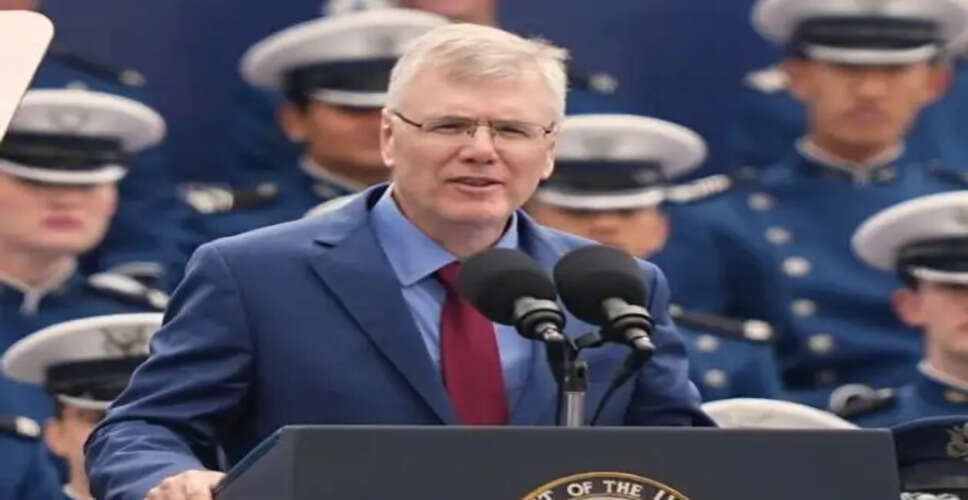
Air Force Secretary Troy Meink disclosed on Monday that the US has introduced "on-orbit space control weapons" designed to protect the Joint Force from hostile actions. However, he refrained from providing specifics about the nature of these weapons or their operational mechanisms.
Two years prior, the US had raised alarms about Russia's development of a space-based anti-satellite weapon, although officials indicated that the threat was not immediate. This concern reflects a broader anxiety regarding space security, particularly given the reliance of US infrastructure on satellite technology.
During his address at the Air and Space Forces Association's Air, Space & Cyber Conference, Meink also highlighted the Air Force's plans to enhance its capabilities with more autonomous systems, predicting a significant transformation by 2032. He suggested that one-way attack drones could eventually replace traditional artillery as the primary offensive tool.
"We are enhancing our readiness against current threats," he stated.
This announcement coincides with the Trump administration's increasing emphasis on space as a strategic domain. In 2019, Trump established the Space Force as an independent military branch, and during his second term, he introduced the "Golden Dome" missile defense initiative, which includes plans for weapon deployment in space.
Trump expressed confidence that the system would be operational before the conclusion of his term in January 2029, capable of intercepting missiles launched from space.
The Congressional Budget Office has projected that the space-based elements of the Golden Dome could incur costs of up to USD 542 billion over the next two decades.
In 2024, the Biden administration revealed that Russia was working on a space-based nuclear weapon capable of remaining in orbit for extended periods before targeting satellites.
This development reignited discussions about space weaponization at the United Nations. In April 2024, Russia vetoed a US-Japanese resolution aimed at preventing the development of nuclear arms in space, citing hypocrisy and proposing an alternative resolution to ban all weapons in space permanently, which ultimately did not pass.
Russia contended that the US and its allies resisted a comprehensive ban on space weapons due to their intentions to deploy such systems.