
US Commerce Secretary Claims India-US Trade Deal Stalled Due to Lack of Communication
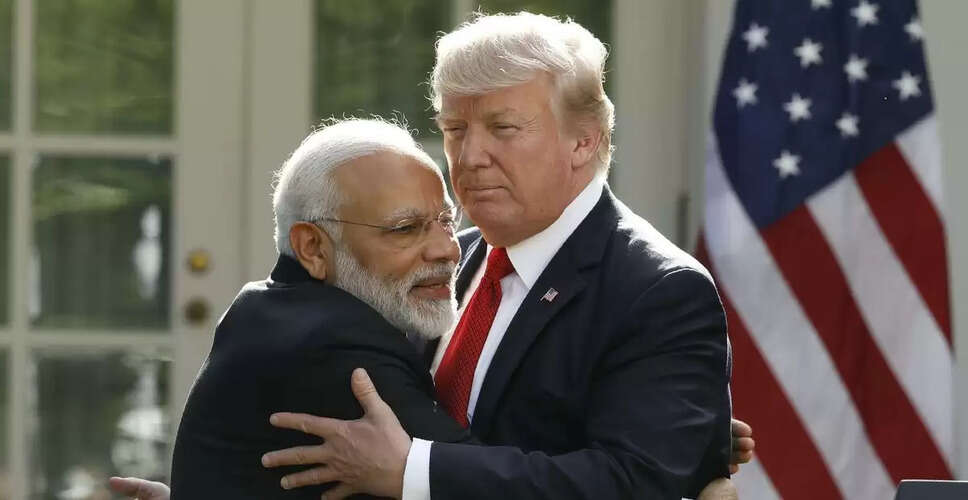
Trade Deal Between India and the US Remains Unresolved
According to US Commerce Secretary Howard Lutnick, the anticipated trade agreement between India and the United States fell through because Prime Minister Narendra Modi did not reach out to President Donald Trump. This assertion was made during a podcast hosted by American venture capitalist Chamath Palihapitiya.
Lutnick explained that he had facilitated the groundwork for the deal, but its completion hinged on a direct call from Modi to Trump, which never occurred due to India's discomfort with the situation. As a result, the US shifted its focus and finalized trade agreements with other nations.
“I set the deal up,” Lutnick stated. “But you had to have Modi call President Trump. They were uncomfortable with it. So, Modi didn’t call.” He noted that the US had expected to finalize the agreement with India before engaging with Indonesia, the Philippines, and Vietnam, which influenced negotiations with those countries.
“Now the issue is that the deals were concluded at a higher rate, and then India comes back and says they are ready,” Lutnick remarked. “I asked, ready for what?”
He further clarified that the circumstances that had previously made a deal seem imminent were no longer applicable, but expressed confidence that “India will work it out.”
BIG BREAKING: India trade deal isn't done because PM Modi did not call Trump, claims US Commerce Secretary Lutnick
— Shashank Mattoo (@MattooShashank) January 9, 2026
"I set the deal up. But you had to have Modi call President Trump. They (India) were uncomfortable with it. So Modi didn't call." pic.twitter.com/gFiUGGaJRl
As of now, New Delhi has not issued a response to Lutnick’s comments, which arise amid ongoing trade tensions between the two nations.
In the absence of a trade agreement with the US, Indian exports are currently subject to a combined tariff rate of 50%. This includes a 25% reciprocal duty imposed on August 7, followed by an additional 25% punitive tariff introduced on August 27.
These punitive tariffs were part of Trump's strategy to exert pressure on countries purchasing discounted oil from Russia amid the ongoing conflict in Ukraine.
On November 10, Trump indicated that the US would eventually reduce the tariffs on India and claimed that New Delhi had significantly decreased its imports of Russian oil. He also mentioned that a “fair deal” with India was nearing completion.
India’s Ministry of External Affairs did not confirm or deny Trump’s statements but emphasized that maintaining stable energy prices and secure supplies is a priority in its energy policy.
Following the announcement of the punitive tariffs, New Delhi expressed that it was “extremely unfortunate” for the US to impose additional tariffs on India for actions that other nations are also undertaking in their national interests.
So far, six rounds of negotiations have taken place regarding the proposed bilateral trade agreement. On December 15, Commerce Secretary Rajesh Agrawal stated that India and the US were “very close” to finalizing an initial agreement on tariffs, although no deadline was provided.
A team of Indian officials led by Agarwal visited Washington DC in October for trade discussions with the US. Additionally, Union Commerce Minister Piyush Goyal had previously led a delegation to New York for trade negotiations.
Lutnick’s comments also follow Trump’s endorsement of a bipartisan sanctions bill against Russia, which would empower the US to impose tariffs of up to 500% on countries that continue to purchase Russian oil.