
US-China Summit: The Crucial Taiwan Issue Takes Center Stage
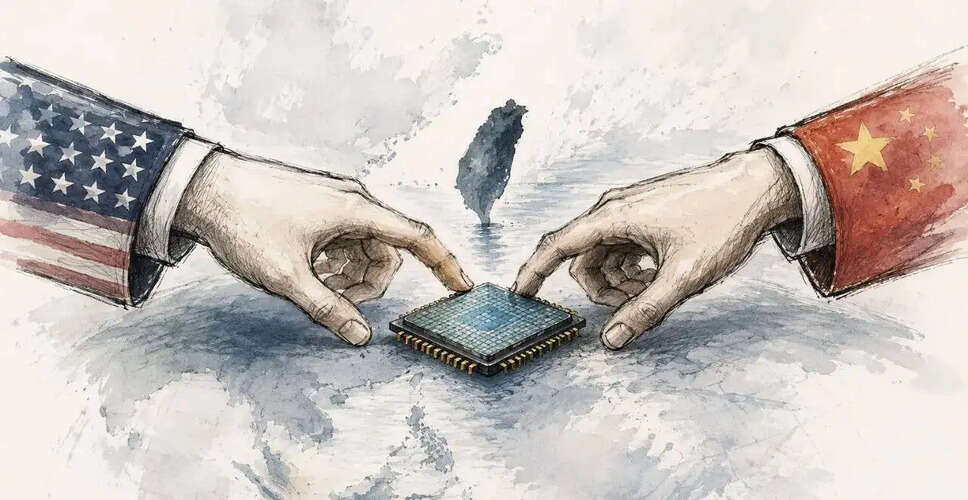

A Dramatic Encounter
The meeting between US President Donald Trump and China's Xi Jinping had an almost theatrical flair. With military bands playing and children waving flags, the two leaders exchanged friendly remarks about stability and friendship before the media was ushered out. However, the real discussions behind closed doors were far less ceremonial and more transactional. On May 14, 2026, in Beijing's Great Hall of the People, Trump and Xi faced a multitude of topics, including soybeans, semiconductors, rare earths, and the ongoing conflict in Iran. Yet, a singular issue loomed large: the Taiwan question. Xi made it clear that this matter is pivotal to US-China relations, warning that mishandling it could jeopardize the entire relationship.
Taiwan as a Bargaining Chip
Before arriving in Beijing, Trump indicated to reporters, "I'm going to have that discussion with President Xi. President Xi would prefer we not discuss it, but I will." This statement should have raised alarms in Taipei, as it suggested that Taiwan might be used as a bargaining chip in negotiations, overshadowing the $14 billion arms package at stake.
The Stakes of the Taiwan Issue
Adding to the complexity, US Secretary of State Marco Rubio remarked that China likely desires Taiwan to join them voluntarily, ideally through a referendum. He emphasized that Xi's mandate includes the goal of reunification, warning against any forceful attempts to achieve this. The world is observing what appears to be a trade summit, but at its core, it may be a negotiation over Taiwan's future.
China's Firm Stance
China's position on Taiwan has always been clear: it views the island as a breakaway province that must eventually reunite with the mainland, either through persuasion or force. Xi directly communicated to Trump that the Taiwan issue is the most critical aspect of US-China relations, asserting that Taiwan's independence and peace across the strait are fundamentally incompatible. Beijing had previously indicated that the Taiwan issue would be a primary focus of the summit, not a secondary concern.
The US's Strategic Ambiguity
The United States maintains a more nuanced stance, known as strategic ambiguity. While it acknowledges China's claim over Taiwan, it does not endorse it. The US has no formal diplomatic ties with Taipei but is bound by the Taiwan Relations Act of 1979 to assist the island in its defense. The US has never explicitly committed to military intervention in the event of a Chinese attack, yet it has not ruled it out either. This delicate balance has persisted for nearly fifty years, and analysts suggest that any shift in language from Trump regarding Taiwan is closely monitored by Beijing.
China's Leverage in Negotiations
Xi Jinping entered the summit with a newfound confidence compared to 2017, having learned from the 2025 trade war that China possesses significant leverage. When China threatened to limit rare earth exports, the US had to reconsider its position. The escalating tariffs became unsustainable for both sides, leading to a reduction in tensions. Analysts note that China's prolonged conflict with Iran has further strengthened its negotiating position, as US military resources are stretched thin. If China were to consider military action against Taiwan, this might be an opportune moment.
Taiwan's Role in the Negotiations
Despite being the focal point of these discussions, Taiwan is not directly involved in the negotiations. The island's Foreign Minister, Lin Chia-lung, expressed confidence in US support but acknowledged the anxiety surrounding the summit, hoping for no unexpected developments regarding Taiwan. Taiwan has responded to Trump's requests by increasing its defense spending to 3.32% of GDP, the highest since 2009, with plans to reach 5% by 2030. The Taiwanese legislature has approved a $25 billion defense budget, primarily for American arms, which benefits the US by reducing its own financial commitments.
The Economic Argument for Taiwan's Security
One compelling argument for Taiwan's security is its economic strength, particularly in the semiconductor industry, which generated over $165 billion in revenue in 2024, accounting for about 20% of its GDP. TSMC, Taiwan's leading foundry, reported a significant increase in revenue, producing over 90% of the world's advanced chips. A conflict over Taiwan would not only be a political crisis but would also disrupt the global technology supply chain. Taiwan's economy has shown remarkable growth, further solidifying its position as a critical player in the global market.
Looking Ahead
Graham Allison, a Harvard professor and former US assistant secretary of defense, anticipates that the trade truce may evolve into a formal agreement, emphasizing the need for stabilization. During the summit, Xi even asked Trump if the US and China could avoid the historical conflicts that often arise between a rising power and an established one. The answer to this question may hinge on the Taiwan issue. As Trump and Xi concluded their meeting with smiles and friendly gestures, the world remained watchful, particularly in Taipei, where officials are acutely aware of the stakes involved.