
US Army's Hantavirus Vaccine Patent: A Historical Overview
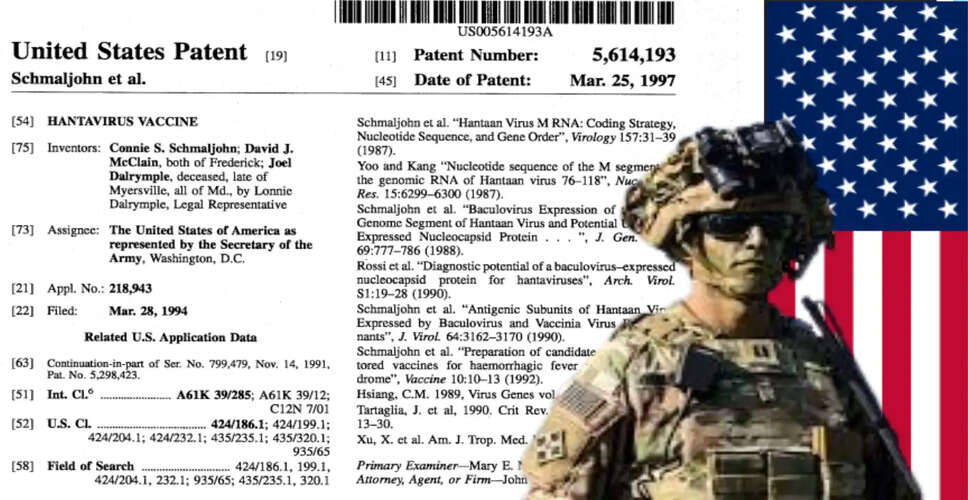

Background on the Hantavirus Vaccine Patent
In March 1997, the US Army secured a patent for a vaccine targeting hantavirus (US Patent 5,614,193). This development has gained renewed interest due to a recent hantavirus outbreak aboard the MV Hondius cruise ship. It's important to note that this patent was not the result of a sudden initiative but rather a culmination of extensive military medical research that has been ongoing for nearly fifty years.
Reasons Behind the Development of the Vaccine
During the Korean War (1950–1953), American and United Nations forces reported over 3,000 cases of an unidentified illness, later identified as Hemorrhagic Fever with Renal Syndrome (HFRS), caused by the Hantaan virus. This virus is one of several hantaviruses transmitted to humans through infected rodents. The symptoms of HFRS, which include high fevers, renal failure, internal bleeding, and shock, led to a significant number of fatalities and hospitalizations among soldiers. This experience sparked the US military's interest in researching hantaviruses.
Key Facts About the Patent
Here are some verified details regarding the patent:
- The patent (US5614193A) was filed in 1994 and officially granted on March 25, 1997.
- It outlines a vaccine utilizing an attenuated vaccinia virus vector that incorporates genes from the Hantaan virus, specifically the nucleocapsid N protein and glycoproteins G1 and G2.
- Connie Schmaljohn, a distinguished virologist at the US Army Medical Research Institute of Infectious Diseases (USAMRIID) in Fort Detrick, Maryland, is the lead inventor.
- The assignee is the United States of America, represented by the Secretary of the Army.
Strategic Motivations for Research
The research into hantavirus vaccines was driven by several strategic factors:
- Force Protection: US troops are often deployed to areas where hantaviruses are prevalent, including Korea, Asia, Europe, and parts of the Americas.
- Biodefense: Hantaviruses are viewed as potential biological warfare agents due to their ability to be aerosolized from rodent droppings.
- Lack of Commercial Interest: The rarity of natural outbreaks led to minimal interest from private pharmaceutical companies in vaccine development, prompting military involvement.
Conclusion
USAMRIID has been engaged in this research for decades, creating DNA-based vaccines and other candidates, some of which have progressed to clinical trials. The 1997 patent represents a standard effort in biodefense and force protection by the US Army, rooted in the lessons learned from the Korean War and the necessity to safeguard service members against this hazardous, rodent-borne virus. This type of research is commonplace at USAMRIID, which also focuses on other high-priority pathogens such as Ebola, anthrax, and plague.
Current discussions surrounding this long-established patent are likely linked to the recent hantavirus reports associated with the MV Hondius cruise ship. However, the Army's research on this vaccine has been documented for many years and is accessible in public scientific records.