
US and Israel Target Iran's Oil Infrastructure Amid Rising Tensions
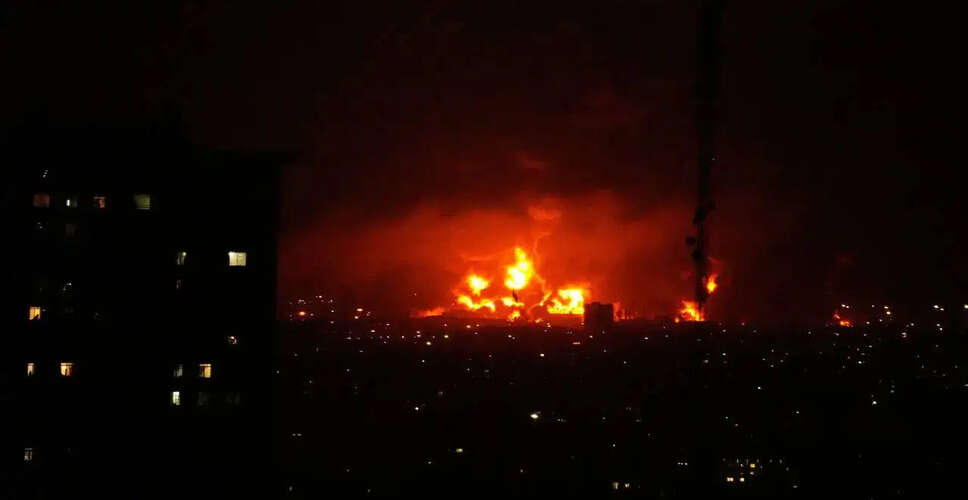
Airstrikes on Iranian Oil Facilities
Recent reports indicate that the United States and Israel have launched airstrikes against Iran's oil infrastructure, specifically targeting the Tondgouyan Oil Refinery located south of Tehran. Israeli media has highlighted the attacks, with online footage showing significant explosions and flames. According to Iran's state-affiliated Fars News Agency, the refinery in southern Tehran was indeed struck. These military actions come amid escalating tensions involving Israel, the US, and Iran, which have increasingly impacted the energy sector in the region. Iran possesses approximately 209 billion barrels of proven crude oil reserves, making up about 12% of the world's total reserves. In response to the recent US-Israeli strikes that resulted in the death of Iran's supreme leader, Ali Khamenei, Iran has reportedly restricted access to the Strait of Hormuz, further straining global oil and gas markets as nations seek alternative supply routes.
Video: U.S. and Israel conducts airstrikes on Iranian Tondgouyan oil Refinery south of Tehran. pic.twitter.com/aqUFV2jltY
— AZ Intel (@AZ_Intel_) March 7, 2026
The ongoing disruptions have already begun to affect oil production in neighboring countries. Iraq's Ministry of Oil announced on Tuesday that it would cease operations at a significant oil field due to the impact of the closure on regional shipping. Consequently, global oil prices have surged, with the international benchmark Brent crude reaching approximately $92 per barrel. In a statement made on Friday, former President Donald Trump attempted to reassure consumers regarding the rising fuel costs, stating, “They'll drop very rapidly when this is over, and if they rise, they rise, but this is far more important than having gasoline prices go up a little bit.”
The White House has emphasized that the overarching aim of the military operation, dubbed Operation Epic Fury, is to stabilize global energy markets in the long run. White House press secretary Karoline Leavitt conveyed to a media outlet that eliminating what she referred to as a “terrorist regime” from controlling energy routes would ultimately benefit global markets. She stated, “The goals of Operation Epic Fury will be a very good thing for the energy, and oil markets, and oil prices across the globe in the long-term, when you no longer have a terrorist regime that is restricting the free flow of energy through the Strait of Hormuz and to the rest of the world.”
Additionally, US officials have suggested that the military may assist in stabilizing shipping through this crucial waterway. Energy Secretary Chris Wright mentioned on Friday that the US military is ready to escort commercial vessels through the Strait of Hormuz once conditions are deemed “reasonable.” Meanwhile, efforts are being made to secure alternative energy supplies. Doug Burgum, president of the National Energy Domain Council (NEDC), visited Venezuela earlier this week to discuss the potential restoration of diplomatic relations following the removal of Venezuelan president Nicolás Maduro in January. Officials believe these discussions could be part of a broader strategy to mitigate disruptions in global oil markets.
“This is a long-term game, because what we want to do is get such massive oil reserves in Iran out of the hands of terrorists,” Burgum stated during an interview. “And so, what we're going to experience here in the short term is highly outweighed by the long-term benefit.” In the interim, the US has taken measures to alleviate pressure on oil supplies, granting India a 30-day waiver to purchase Russian oil currently stranded near the Strait of Hormuz. US Treasury Secretary Scott Bessent characterized this action as a “deliberate short-term measure” aimed at preventing further strain on global markets. “There are hundreds of millions of sanctioned barrels of crude on the water, and, in essence, by unsanctioning them, the Treasury can create supply, and we are looking at that,” Bessent explained. “We're going to keep a cadence of announcing measures to bring relief to the market during this conflict.”