
US and Iran Reach Preliminary Agreement to Reopen Strait of Hormuz

Significant Agreement Announced
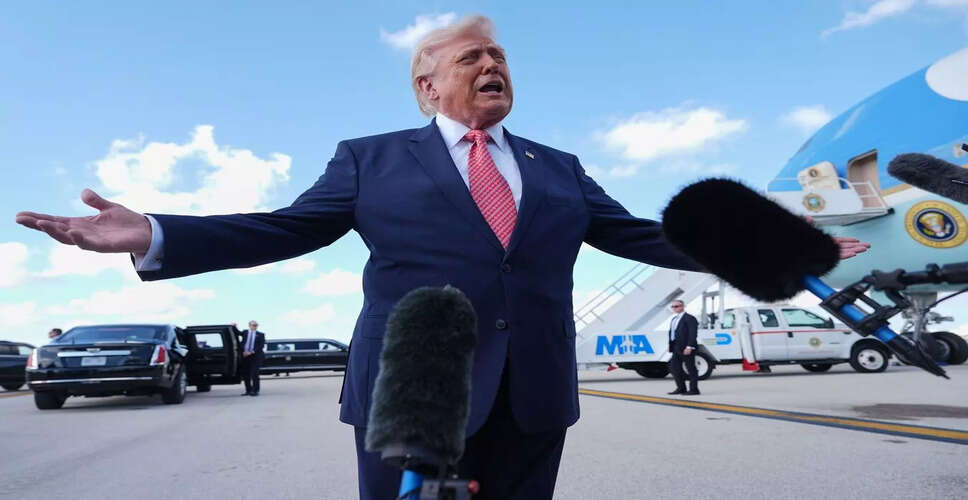
A file image of US President Trump speaking to the press. (Photo:PTI)
Washington/Tehran, June 15: A preliminary agreement has been established between the United States and Iran to reopen the strategically crucial Strait of Hormuz and extend a fragile ceasefire, which raises hopes for reducing regional tensions and restoring oil and natural gas supplies to global markets.
This agreement was announced early on Monday and is pending formal signing, which is set for June 19 in Switzerland.
While the specifics of the deal remain undisclosed, Iranian officials have indicated that the implementation will commence only after the formal signing.
US President Donald Trump took to social media on Sunday to announce the breakthrough, stating, "Congratulations to all!"
He mentioned that he had "fully authorized the toll-free opening of the Strait of Hormuz" and the immediate lifting of the US naval blockade that was imposed due to Iran's control over this vital shipping route.
However, he later clarified that the reopening would only take effect following the signing ceremony on Friday.
It is still uncertain who will represent Iran during the signing. US Vice President JD Vance informed a media channel that the White House is finalizing its delegation.
"I certainly plan to be there, but it's possible the president himself could be there," Vance remarked.
Iran's Deputy Foreign Minister Kazem Gharibabadi confirmed the agreement on state television, stating that Tehran would initiate implementation only after the signing on Friday. He noted that the deal followed consultations with Qatar.
According to Iranian state television, military operations "will end immediately and permanently starting tonight," and the US naval blockade will be lifted "immediately and in full."
The agreement also sets a 60-day period for negotiations regarding Iran's nuclear program, including discussions on uranium enrichment and the management of Tehran's stockpile of highly enriched uranium.
The involvement of Israel in this agreement remains ambiguous, as Israeli authorities have not commented on the reported terms, which include provisions related to military operations in Lebanon.
This agreement was facilitated by mediators, including Pakistan and Qatar, who previously helped secure a two-week ceasefire on April 8, which was later extended to allow for negotiations.
Pakistan was the first to announce the deal, with Prime Minister Shehbaz Sharif stating that "both sides have declared the immediate and permanent termination of military operations on all fronts, including in Lebanon."
Concerns regarding the implementation of the deal have also surfaced in Washington. Republican Senator Lindsey Graham of South Carolina, who referred to Vance as "the architect of the deal," expressed worries about differing interpretations of the agreement.
"I am somewhat concerned that Iran's view of the agreement seems different than what the American negotiating team is claiming," Graham stated on social media.
Meanwhile, United Nations Secretary-General Antonio Guterres welcomed the announcement, describing it as a crucial step towards a peaceful resolution of the conflict.
In a statement from his spokesperson, Stephane Dujarric, Guterres noted that the agreement provides for "an immediate and permanent ceasefire, the reopening of the Strait of Hormuz, as well as a framework for further negotiations."
The Strait of Hormuz is one of the most significant energy corridors globally, handling a large portion of the world's oil and liquefied natural gas shipments.
A sustained reopening of this waterway is anticipated to have substantial implications for international energy markets and regional stability.