
US and China Extend Trade Truce: What’s Next for Global Economics?
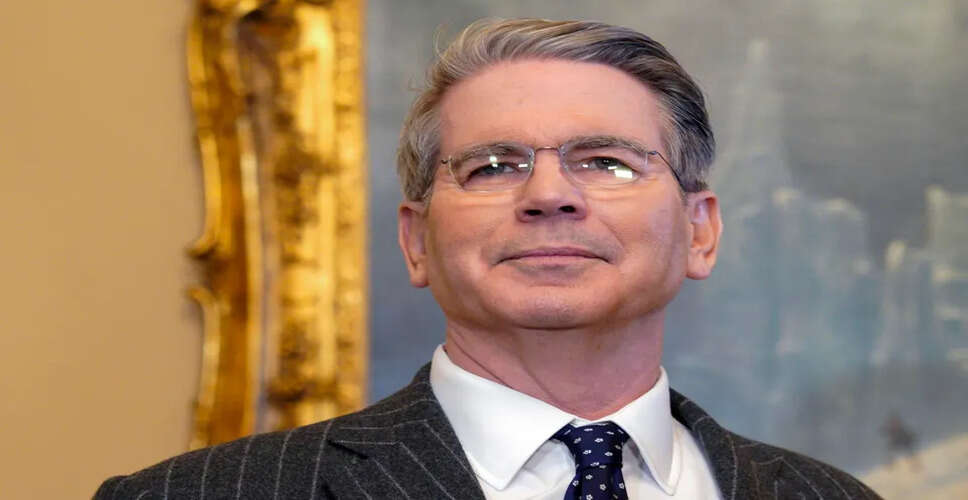

Trade Truce Extended Amid High-Stakes Talks
Washington: The United States and China have decided to prolong their trade truce by an additional two months, allowing more time for negotiations on a potentially more comprehensive agreement, according to US Treasury Secretary Scott Bessent.
Bessent made this announcement on Wednesday, coinciding with Chinese leader Xi Jinping's arrival in Washington.
Last October, during a meeting in South Korea, Xi and US President Donald Trump had established a one-year truce to halt their escalating tariff conflict.
Originally set to conclude in November, this agreement has now been extended to January 10, as confirmed by Bessent in an interview with a news media outlet.
He stated, "We will extend what we call the 'Busan Agreement' – the economic detente between the two nations that was scheduled to end November 10 – until January 10," while noting that both countries are still exploring a potentially larger deal.
However, officials from China have yet to verify the extension of this trade truce.
Bessent mentioned that there is a possibility of reaching a broader economic agreement by January, but it may also be feasible to simply continue the existing arrangement.
His remarks followed Xi's arrival at Joint Base Andrews, where Trump greeted him on the tarmac. The two leaders are scheduled to meet at the White House on Thursday, followed by a state dinner. This marks Xi's first visit to the US in over ten years.
Bessent expressed that there are certain expectations from the Chinese side that have not been fully met, and they hope to see improvements in the implementation of the agreement in the coming months.
During his discussions with Trump, Xi is anticipated to address various topics, including trade tariffs, technology, artificial intelligence, military relations, conflicts in West Asia, and the ongoing Russia-Ukraine war.
Trump commented on the agenda, stating, "I will be talking about that and many other subjects, but it’s all coming along, including that," when asked about the potential inclusion of the Iran conflict in their discussions.
The initial agreement was established last year in Busan, South Korea, where both parties agreed to reduce restrictions on essential minerals and high-tech exports, as well as to maintain a pause on their significant tariffs.
Since Sunday, Bessent and US Trade Representative Jamieson Greer have been engaged in discussions with Chinese Vice Premier He Lifeng and other officials to prepare for this significant state visit.
Bessent and He met at the World Bank in Washington on Wednesday to discuss the extension of the truce.
Additionally, Bessent and Greer announced a proposal for the US and China to exchange alerts regarding AI-related hacking incidents, particularly those that pose a threat to national security.