
Upper Assam Flood Survivors Face Ongoing Struggles Three Months Later

The Aftermath of the July Floods
Over 2,700 homes were completely destroyed, with an additional 11,000 suffering partial damage during the floods in Upper Assam this July.
Nepali Khuti (Bihubar), Oct 29: Gopal Sharma, a 60-year-old resident, still feels the impact of the catastrophic floods that hit his village in July. Sitting on a raised platform outside his temporary shelter by the Dikhow River, he recalls the harrowing experience of enduring 36 hours without drinking water as floodwaters devastated their homes.
“We managed to survive without water for 36 hours. About 20 families took refuge in a nearby tea garden clubhouse, where we stayed for over a month, relying on aid from various organizations,” Sharma shared.
Three months post-flood, life in Nepali Khuti, located near the Sivasagar-Nagaland border, is still far from normal. Amid the wreckage and temporary shelters, residents are not only trying to rebuild their homes but also seeking ways to sustain their livelihoods and remain in their beloved village.
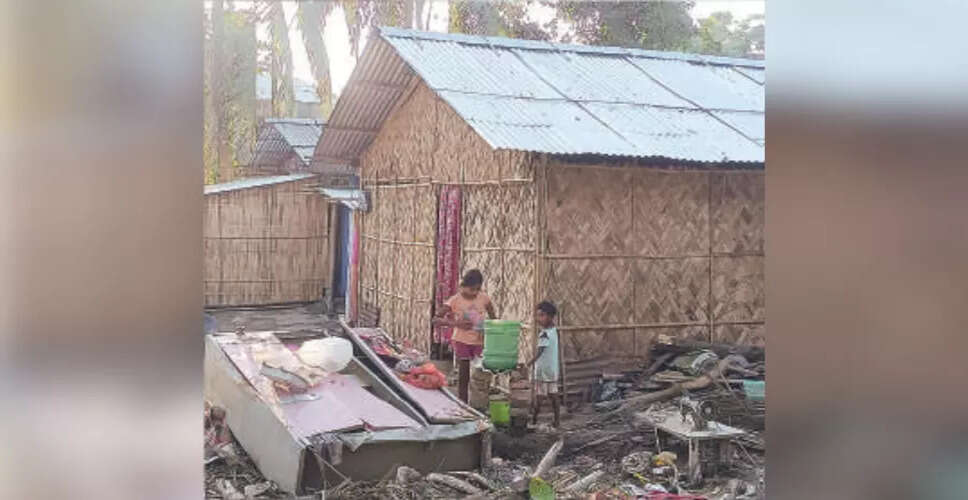
Displaced families are living in cramped, single-room shelters constructed from bamboo and tin sheets, primarily built with assistance from NGOs and charitable individuals. For many, the relief supplies continue to be their main source of food.
Out of the 60 to 70 homes in the most affected area, only a few managed to withstand the flood's wrath. Today, amidst uprooted trees and layers of silt, makeshift huts are slowly taking shape as villagers strive to restore their lives.
A local Gorkha organization has erected around 25 huts for those displaced, while various groups and individuals from across the country, including Nepal and Mizoram, are providing ongoing support. Relief efforts have expanded beyond just food and shelter, with some organizations supplying refrigerators, bicycles, beds, and other essential household items.
However, beneath the signs of recovery lies a profound uncertainty about the future.
“We still have rice and some other food that might last us another 20 to 25 days. I’m unsure how we will manage once it runs out,” Sharma expressed.
Before the floods, Sharma operated a grocery store and a small dairy business. Like many others in the village, he has lost his means of income and is now reliant on limited relief and government support.
The affected families have received a one-time financial aid of Rs 15,000 from the state government, along with a few tin sheets and promises of new homes and assistance to revive dairy farming. Yet, for many, this support is insufficient to cover the extensive costs of rebuilding their lives.
For villager Prasad Barhoi, the financial aid was depleted almost immediately.
“We received some bamboo from others and had to rebuild our house using that along with old tin sheets. Laborers charged Rs 500 a day, and we spent around Rs 1,500 per room just to clear the silt and debris. The government’s aid was gone within days,” Barhoi recounted.
Like Sharma, Barhoi noted that the relief supplies would only sustain his family for another 20 to 30 days. A painter by trade, he hopes to return to work once his family is settled.
“I was a painter. I will need to find work soon, once we get settled,” he stated.
For the flood-affected residents, rebuilding their homes is just one aspect of their struggle. The more significant challenge lies in restoring their livelihoods after losing homes, livestock, and small businesses. Agricultural land remains buried under silt and littered with broken trees, making farming uncertain.
With little clarity on when life might return to normal, some villagers are beginning to consider leaving Nepali Khuti for better opportunities.
Barhoi mentioned that some young individuals who previously relied on small dairy operations and farming are contemplating migration to cities like Bengaluru and Chennai in search of jobs.
“A couple of them have already left. Others are planning to move after the festive season. They are uncertain about their survival if they stay here,” he said.
The thought of migration adds another layer of distress to a community still reeling from the physical and economic devastation caused by the floods. For families who have depended on external assistance for months, the fear of running out of relief supplies leaves them with few options.
The floods in July affected 27 districts across Assam, resulting in 106 fatalities, including 17 children, with 10 individuals still unaccounted for, according to official reports. Over 2,700 homes were completely destroyed, and another 11,000 were partially damaged.
The state government is currently conducting a damage assessment survey to determine the compensation needed for the affected families. Once completed, the final report will be submitted to the central government to facilitate the release of necessary funds.
Additionally, the Assam government has proposed a long-term rehabilitation plan aimed at transforming Nepali Khuti into a modern dairy hub in collaboration with the National Dairy Development Board (NDDB).
However, until these proposals are put into action, the villagers remain caught in a cycle of uncertainty and hope, waiting for relief, rehabilitation, and a chance to rebuild their lives.