
Upper Assam Faces Agricultural Crisis Post-Floods

Economic Struggles in Upper Assam
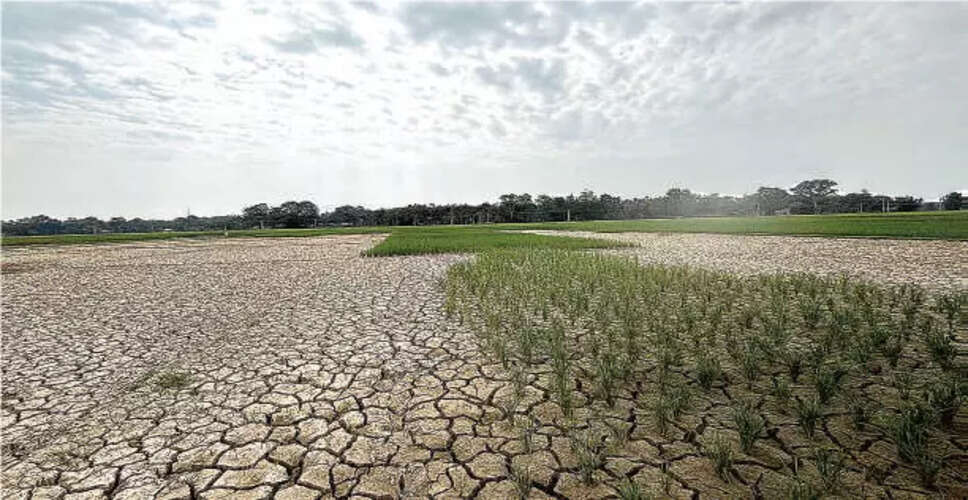
In several stretches of farmland, the drying surface soil has developed deep cracks, while heavy deposits of silt and sand have left farmers uncertain about their next crop cycle.
Sivasagar, Nov 10: Three months after the catastrophic floods, numerous regions in upper Assam are grappling with a worsening economic situation. Agricultural lands have become unsuitable for farming, crops are under stress, and farmers are facing challenges in sourcing fodder for their livestock.
The repercussions of the floods are increasingly visible in the affected regions. Many farmland areas exhibit deep cracks in the drying soil, and significant deposits of silt and sand have left farmers uncertain about their upcoming planting season. The lack of grass for cattle has exacerbated their difficulties.
Agricultural specialists have pinpointed Kamal Chapori, Bamunpukhuri, No. 1 Chintamoni Garh, and Nepali Khuti in Sivasagar district, along with Disang Pani in Charaideo, as some of the hardest-hit locations. However, there are still many areas that have not been officially reported.
Residents have shared that while some farmers have attempted to resume farming, the outcomes have been disappointing. Vegetables like bottle gourd and lai saak, which initially appeared to thrive, have started to show signs of distress, turning reddish within weeks.
“We are currently analyzing soil samples from these regions. In certain areas, siltation and deposition are as high as three to four feet. There are primarily two types of deposits – clay loam and sandy loam,” explained Dr. Arundhoti Bordoloi from Krishi Vigyan Kendra (KVK), Sivasagar.
“Management strategies will differ based on the type of deposition. For paddy cultivation in clay loam, standing water is essential. Without adequate water, paddy will not flourish,” she added.
Regarding the surface cracks observed in some fields, she noted that this issue has been prevalent in areas where floodwaters remained stagnant for extended periods, sometimes lasting until September.
To assist farmers in their recovery, agricultural officials have started distributing mustard seeds in regions where paddy was typically grown. However, the future remains uncertain.
“Paddy growth has stagnated in certain areas, and even mustard cultivation may not succeed there,” officials remarked. Conversely, farmers in some regions have successfully resumed vegetable farming with positive results.
The crisis extends beyond agriculture. The severe lack of grass and fodder has compelled some farmers to sell their cattle, with reports of animal deaths due to the scarcity. Residents in Chintamoni Garh are concerned that the ongoing distress could lead to significant socioeconomic challenges in the near future.
The poultry industry has also suffered greatly, with Sivasagar district losing around seven lakh poultry birds and ducks, while neighboring Charaideo reported losses of about one lakh birds, plunging thousands of farmers into financial hardship.
To aid the affected agricultural community, KVK Sivasagar and the agriculture department have mobilized resources worth over Rs 46 lakh, including seeds and fodder, along with providing technical support to help farmers resume their agricultural activities.
Despite these efforts, the extent of the damage is considerable. District agriculture officer Amrit Saikia stated that over 3,470 hectares of farmland in Sivasagar will need desiltation before farming can recommence.
The district administration has proposed financial aid of Rs 6.25 crore for 6,055 farmers to facilitate this process. “Funds will be directly transferred to the farmers’ bank accounts, allowing them to carry out desiltation based on their specific needs,” Saikia noted.
With vast areas of farmland still in need of restoration and livestock owners struggling to find fodder, the path to agricultural recovery poses serious economic challenges for communities affected by the floods.