
Upcoming Special Session of Indian Parliament: Key Bills on Redistricting and Women's Reservation
The Indian Parliament is gearing up for a pivotal three-day special session starting Thursday, where three significant bills will be introduced. These bills aim to redefine electoral boundaries, increase Lok Sabha seats, and implement women's reservation. The government promotes these changes as necessary reforms, while the opposition raises concerns about potential biases in the redistricting process. Key legislation includes the Constitution (131st Amendment) Bill, the Redistricting Bill, and the Union Territory Law (Amendment) Bill. As the session unfolds, the implications of these bills could reshape the political landscape in India. Stay tuned for updates on this critical legislative development.
| Apr 16, 2026, 09:37 IST

Significance of the Upcoming Special Session
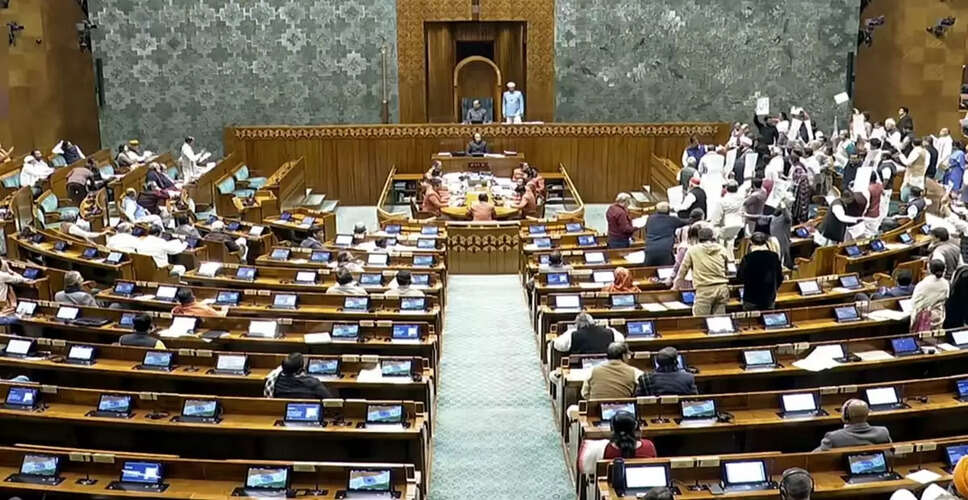
A crucial three-day special session of the Indian Parliament is set to commence on Thursday. During this session, the central government plans to introduce three significant bills that are expected to reshape the future of Indian politics and alter the structure of Parliament itself. While the government refers to this initiative as 'empowerment and reform,' the opposition has launched a campaign against it.
Three Major Bills to be Introduced
The primary aim of the bills to be presented during the session is to redefine electoral boundaries (redistricting), increase the number of Lok Sabha seats, and effectively implement women's reservation.
Constitution (131st Amendment) Bill: This bill, to be introduced by Union Law Minister Arjun Ram Meghwal, will pave the way for redrawing electoral boundaries. Notably, it will utilize the 2011 census instead of the 1971 census as its basis.
Redistricting Bill, 2026: This legislation proposes to increase the number of Lok Sabha seats from 543 to approximately 850.
Union Territory Law (Amendment) Bill, 2026: Home Minister Amit Shah will present this bill to align administrative and legal provisions with the proposed changes.
Details of the Three Bills
The three bills being introduced are the Constitution (131st Amendment) Bill, the Redistricting Bill, 2026, and the Union Territory Law (Amendment) Bill, 2026. The Constitution (131st Amendment) Bill, presented by Union Law Minister Arjun Ram Meghwal, will facilitate the redefinition of electoral boundaries and the redistribution of seats, using the 2011 census as a reference.
The Redistricting Bill, 2026, also introduced by Meghwal, aims to initiate a new redistricting process, increasing the number of Lok Sabha seats to around 850. Meanwhile, the Union Territory Law (Amendment) Bill, 2026, presented by Home Minister Amit Shah, seeks to adapt legal and administrative provisions to the proposed changes.
Women's Reservation Law
The Women's Reservation Act, also known as the 'Nari Shakti Vandan Act,' aims to provide 33 percent reservation for women in the Lok Sabha and state assemblies. Although this law was passed in 2023, its implementation is contingent upon the redistricting process. According to the draft of the constitutional amendment bill, to implement the women's reservation law before the 2029 parliamentary elections, the number of Lok Sabha seats will be increased from the current 543 to a maximum of 850 based on the 2011 census. Additionally, seats in state and union territory assemblies will also be increased to ensure 33 percent reservation for women.
Opposition's Stance vs. Government's Clarification
The opposition, led by the Congress party, has decided to oppose the redistricting bill. However, they have clarified that they are not against women's reservation but have raised objections regarding the redistricting process, claiming it is biased against southern states. They argue that redistricting should not be linked to the Nari Shakti Vandan Act.
In response, the government has assured that the redistricting will be conducted after consulting all parties. Union Finance Minister Nirmala Sitharaman stated on Wednesday, "There will be a delimitation committee for each state, which will consult all parties before any decision is made. So, what is there to fear? You seem to fear the Election Commission and Parliament. You fear every law that is passed while you do nothing here."