
Upcoming Release: Shalini Sharma's 'Trinity @ Bakloh' Explores Heritage and Humanity


A New Literary Journey Awaits
Subhash Mahajan
Dalhousie
The highly anticipated book “Trinity @ Bakloh”, written by Shalini Sharma from Bakloh, Himachal Pradesh, is scheduled for release on July 25, 2026, by a publishing house based in Delhi, Sabre & Quill.
Shalini Sharma, born on July 27, 1970, was raised in a military family, which allowed her to explore various parts of India, enriching her worldview. Her father, Colonel Dhan Raj (Retd.), and her husband, Captain (IN) Anil Kumar Sharma (Retd.), have been significant influences in her life, motivating her to write this remarkable book.
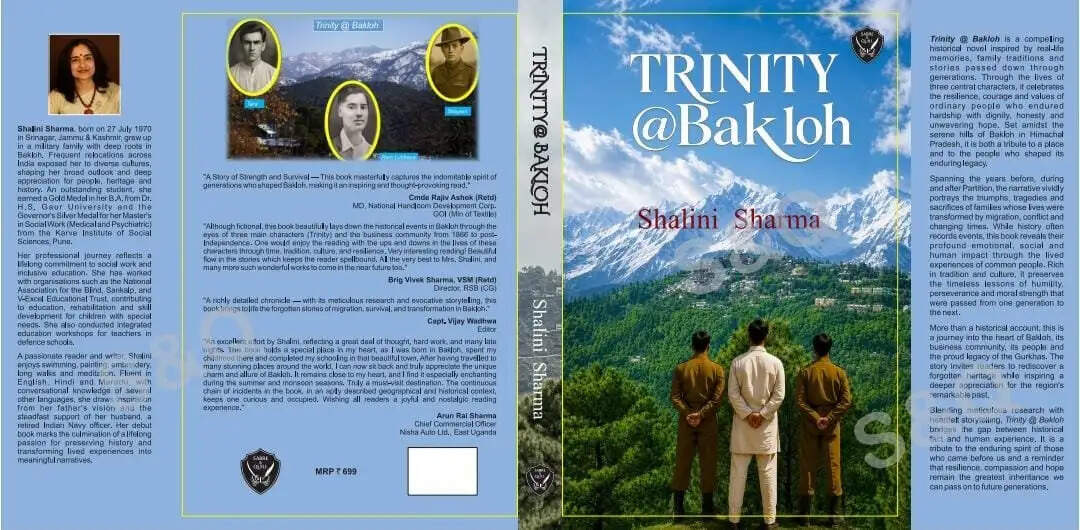
This book invites readers into the lives of three main characters, collectively referred to as the “Trinity,” along with their families. It intricately weaves themes of joy, sorrow, struggle, love, and sacrifice, all set against the picturesque backdrop of Bakloh, showcasing the resilience and cultural richness of its inhabitants.
With its cinematic narrative, “Trinity @ Bakloh” transports readers to the tumultuous times surrounding India's Partition, shedding light on the bravery, setbacks, and victories of everyday individuals whose lives were profoundly affected by historical events. It connects historical truths with personal experiences, providing a unique viewpoint on the emotional and societal impacts of significant occurrences often neglected in conventional history.
Moreover, the book honors the heritage of Bakloh and the Gorkha community, encouraging future generations to reconnect with the town's historical significance. It resonates with a wide audience, including those from the armed forces, the Gorkha community, and all corners of India, reflecting shared challenges and values.