
Upcoming Rajya Sabha Elections: Key Details and Significance
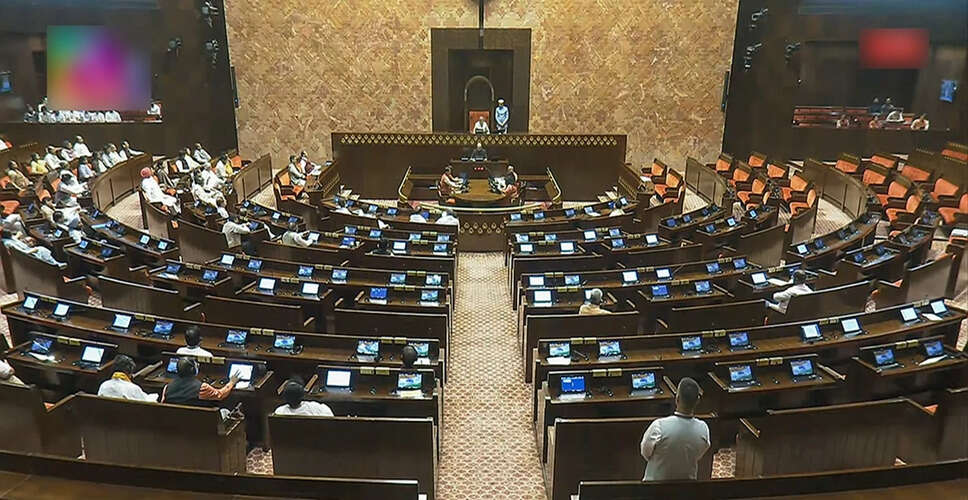
Understanding the Rajya Sabha Structure and Election Process
The Rajya Sabha's framework and its electoral process are distinctive features of Indian democracy. Unlike the Lok Sabha, which holds elections every five years nationwide, the Rajya Sabha follows a different approach. The Election Commission of India has announced voting for 37 Rajya Sabha seats across 10 states on March 16, 2026. This election reflects the continuity of the Indian parliamentary system, establishing the Rajya Sabha as a 'Permanent House'.
Election Schedule for March 16
Voting will take place from 9:00 AM to 4:00 PM, with counting commencing at 5:00 PM on the same day. The entire process is expected to conclude by March 20, 2026. These elections are necessitated by the expiration of terms for several current members this year.
Why Are Rajya Sabha Elections Held Every Two Years?
In contrast to the Lok Sabha, which can be dissolved and has a five-year term, the Rajya Sabha is a permanent body. This means it never ceases to function. Each member serves a six-year term, but not all terms begin or end simultaneously. Instead, one-third of the members retire every two years, prompting elections to fill those seats. This system ensures that the house is always composed of experienced members, allowing for uninterrupted operations. The upcoming elections will occur in ten states: Maharashtra, Odisha, Telangana, Tamil Nadu, Chhattisgarh, West Bengal, Assam, Haryana, Himachal Pradesh, and Bihar. Maharashtra will have the highest number of seats contested, with seven, followed by Tamil Nadu and West Bengal, each with six.
Leaders Whose Terms Are Ending
This year, several prominent leaders will complete their terms in the Rajya Sabha, including Sharad Pawar, Harivansh Narayan Singh, Priyanka Chaturvedi, Ramdas Athawale, Abhishek Manu Singhvi, Saket Gokhale, and Tiruchi Shiva.
The Rajya Sabha as a 'Permanent House'
Unlike the Lok Sabha, which can be dissolved, the Rajya Sabha remains intact at all times. The Lok Sabha's term lasts five years, after which all members are removed simultaneously, while the Rajya Sabha is always operational. It is also referred to as the 'House of Continuity'. According to Article 83(1) of the Indian Constitution, the rotation process works as follows: one-third of the members retire every two years. Elections are held only for the seats of retiring members, ensuring that a new electoral process is adopted every two years to fill these vacancies.
Purpose of This Arrangement
The design of the upper house of Parliament serves two main purposes: continuity, ensuring that there is never a time when either house of Parliament is inactive, and balance of experience, as the influx of new members every two years alongside the retention of seasoned members maintains a mix of 'youthful energy' and 'senior experience'.
Understanding Through an Example
If there are a total of 245 seats in the Rajya Sabha, the following pattern emerges: Year 1: 81 members retire and elections are held. Year 3: the next 81 members retire and elections occur. Year 5: the remaining 81 members retire and elections take place. Year 7: the cycle repeats as it did in Year 1.