
Upcoming Lunar Eclipse: Religious Observances and Guidelines
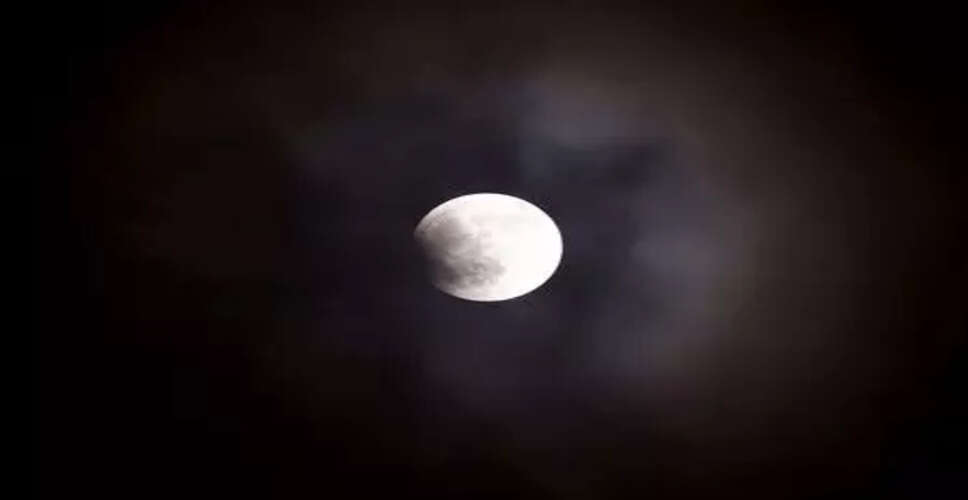
Lunar Eclipse Observance on March 3, 2026
New Delhi, March 3: The first lunar eclipse of 2026 is set to occur on Tuesday evening, prompting priests and temple officials in various states to announce closures and provide religious guidelines for the event.
Religious leaders have shared insights regarding the timing of the eclipse, the observance of the ‘Sutak Kaal’, and the necessary precautions for devotees.
In Uttar Pradesh, Acharya Ramvilas Chaturvedi noted that the lunar eclipse on March 3 is classified as a “rising eclipse.” He explained, “The lunar eclipse will commence at 3:20 P.M. and conclude at 6:47 P.M. It will be visible in the northeastern region where the Sun sets around 4–4:30 P.M., but it will not be observable in central or western India.”
He elaborated that the Sutak period, regarded as inauspicious in Hindu tradition, begins nine hours prior to the eclipse. During this time, religious rituals and temple activities are typically halted.
In Bihar, Satyendra Ji Maharaj from Maa Dakshineshwar Kali Temple remarked, “Today marks a total lunar eclipse. It will start at 3:20 P.M., with the Sutak period beginning nine hours earlier. Temple worship and deity darshan will be suspended during this time. Reciting mantras dedicated to your deity and guru during this period is believed to yield multiplied spiritual benefits.”
He also mentioned that in Bihar, the eclipse would only be visible for approximately 20 minutes. “Precautions are essential. Elderly individuals who require essential medications may take them. If food has been prepared before the eclipse, it should have tulsi leaves added and consumed only after the eclipse concludes,” he advised.
In Uttar Pradesh, Shailendra Tripathi, a priest at the Hanuman Temple, stated, “Idol worship and rituals are not permitted during the Sutak Kaal, hence we have closed the temple doors.”
Pandit Shyam Ji Pathak referred to this as the first lunar eclipse of 2026, indicating, “The eclipse will last from 3:20 P.M. to 6:48 P.M. Engaging in chanting and spiritual practices during this period is believed to bring success.”
Meanwhile, in Jharkhand, Manoj Kumar, a priest at Pahari Temple, mentioned, “Due to the lunar eclipse, the temple doors have been shut. The Sutak period begins nine hours before the eclipse.”
Throughout various states, temple authorities adhered to traditional customs by closing temple doors during the Sutak period and encouraging devotees to participate in prayer and mantra chanting at home. The eclipse has led to increased religious observance, with many followers fasting and engaging in spiritual practices in line with longstanding beliefs.