
Unveiling the Mysteries of GB Road: Delhi's Notorious Red-Light District

Introduction to GB Road
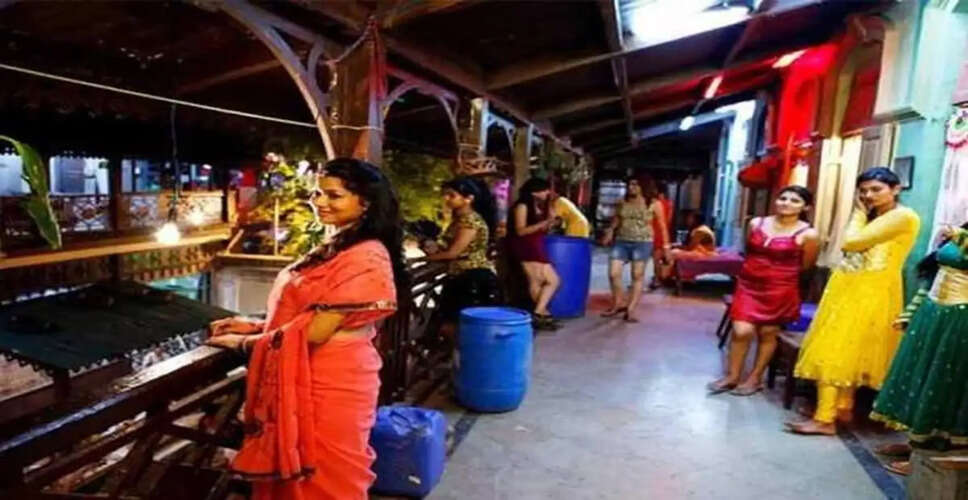
When discussing India's most infamous red-light district, GB Road immediately comes to mind. This area, bustling with hardware and auto parts shops during the day, transforms into a nightmarish scene for thousands of women as night falls.
The Ownership Mystery
A pressing question arises: who owns this extensive area? Is it controlled by a single individual or a syndicate, or is it merely a dark remnant from the British era? Today, we will delve into the enigmatic history of GB Road, a place where the dignity of women has been auctioned for centuries.
Historical Background
GB Road, officially known as Garstin Bastion Road since 1966, stretches 800 meters from Ajmeri Gate to Lahori Gate in Old Delhi's Shahjahanabad. This road, located alongside railway lines, is recognized as Asia's largest hardware market during the day, selling car parts, machinery, and plumbing supplies. However, as night descends, the ground-floor shops close, and over 100 brothels come to life on the upper floors. It is estimated that between 1,000 to 4,000 women and girls reside here, many of whom are brought from Nepal, Bengal, Karnataka, and Uttar Pradesh.
Who Owns GB Road?
Now, let's address the crucial question: who is the owner? In reality, there is no single 'owner' of GB Road. It is a public road under the jurisdiction of the Delhi Municipal Corporation (MCD). However, the ownership of the brothels varies, primarily held by private property owners or 'malkins' (madams). Historical accounts suggest that this situation stems from the British colonial era. During the Mughal period, Delhi had five distinct red-light districts where courtesans thrived in art and music, with Husn-e-Bazaar (now known as Chawri Bazaar) being a prime example. Following the 1857 uprising, the British shut down all brothels except one. British Commissioner John Garstin consolidated these five into one location, which was named after him. Thus, there is no singular owner of this area; most properties are privately owned, while others are built on government land.