
Unseasonal Rainfall Brings Relief to Delhi's Sweltering Heat
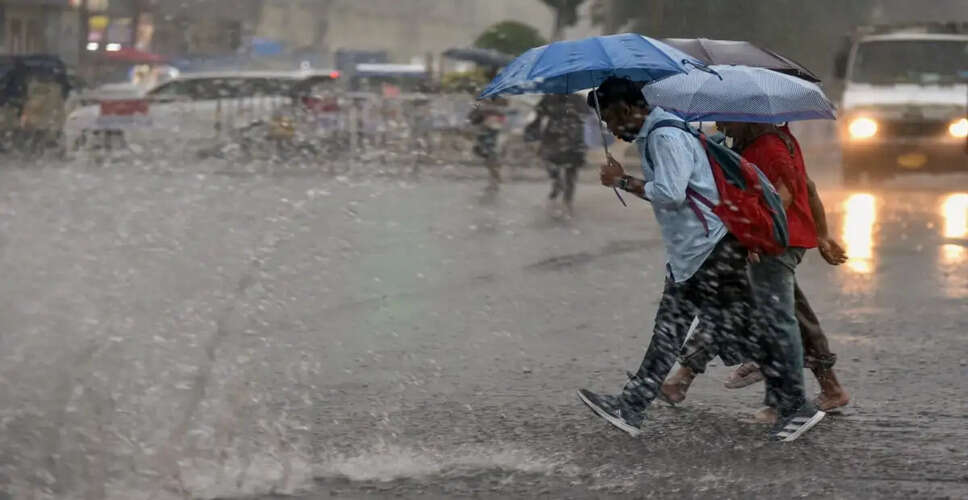
Weather Update: Rainfall Transforms Delhi's Atmosphere
Starting Tuesday night, rain accompanied by thunder dramatically altered the morning scene in Delhi and its neighboring areas. This unexpected downpour has provided significant relief from the early April heat while also clearing the air quality in the capital. Due to the influence of a Western Disturbance, a notable drop in minimum temperatures has been recorded in Delhi. On Wednesday morning, the minimum temperature was reported at 16.8 degrees Celsius, which is considerably lower than the average.
Temperature Drops at Key Locations:
Safdarjung: A decrease of 3.3°C, recording 16.8°C.
Palam: A significant drop of 4.1°C, reaching 15.5°C.
Ridge: The lowest temperature recorded here was 15.3°C.
The main weather monitoring center at Safdarjung reported 6.4 mm of rainfall until 8:30 AM over the past 24 hours. The last significant rainfall was on April 4, 2023, when 16.3 mm was recorded. Other monitoring stations reported 4.4 mm in Palam, 5.6 mm at Lodhi Road, and 3.6 mm at Ridge, with Ayanagar receiving the highest at 14.3 mm.
The India Meteorological Department (IMD) had forecasted thunderstorms and rain due to the Western Disturbance's impact.
Meteorologists indicate that extensive cloud cover has resulted from this disturbance, leading to the ongoing rainfall. Significant drops in minimum temperatures have been observed across various monitoring stations. In Safdarjung, the minimum temperature fell by 3.3 degrees Celsius to 16.8 degrees Celsius; in Palam, it decreased by 4.1 degrees Celsius to 15.5 degrees Celsius; Lodhi Road saw a drop of 2.4 degrees Celsius to 16.2 degrees Celsius; Ridge recorded a decrease of 1.9 degrees Celsius to 15.3 degrees Celsius; and Ayanagar dropped by 1.7 degrees Celsius to 16.4 degrees Celsius.
Overall air quality has shown remarkable improvement. By 9 AM, the overall Air Quality Index (AQI) was at 82, which falls within the satisfactory range. According to the Central Pollution Control Board, an AQI of 0-50 is considered good, 51-100 satisfactory, 101-200 moderate, 201-300 poor, 301-400 very poor, and 401-500 is deemed severe.