
Unraveling the Balochistan Crisis: India's Intricate Involvement in a Struggle for Independence
Understanding the Balochistan Situation
Have you ever considered why Balochistan, the largest and most resource-abundant province in Pakistan, frequently makes headlines for issues like insurgency and human rights abuses? Why are Baloch activists vocal in cities like Geneva, London, and New Delhi? More importantly, what role does India play in this complex scenario?
This article aims to dissect the Balochistan crisis, exploring its historical roots, the ongoing unrest, and India's multifaceted involvement—past, present, and future.
Historical Context of the Crisis
1947-48: The Accession Dispute
Balochistan constitutes about 44% of Pakistan's territory but is home to only 5% of its population. Despite its wealth in natural resources like gas, gold, copper, and uranium, it remains one of the poorest and least developed areas in the country. The quest for Balochistan's independence traces back to 1947, when the princely state of Kalat sought autonomy. However, in 1948, Pakistan annexed it, igniting the first Baloch rebellion.
Ongoing Insurgencies
Since then, Balochistan has experienced multiple uprisings—in 1948, 1958-59, the 1970s, and a resurgence since the early 2000s. Baloch nationalists accuse the Pakistani military of exploiting the region, extracting resources without equitable distribution, suppressing local culture, and committing enforced disappearances. Numerous Baloch activists, students, and intellectuals have vanished, with many alleging torture and extrajudicial killings.
The Present Situation
Rising Violence
The year 2025 marked a significant escalation in violence: the Baloch Liberation Army (BLA) hijacked the Jaffar Express train, leading to over 400 hostages and at least 26 fatalities. Protests erupted throughout Balochistan, met with severe crackdowns by security forces. On May 9, 2025, amid India-Pakistan tensions over the Pahalgam incident, Mir Yar Baloch proclaimed Balochistan's independence from Pakistan, seeking recognition and support from India, the United Nations, and the global community.
Insurgent factions like the BLA, Balochistan Liberation Front, and Baloch Republican Army have ramped up their attacks significantly since early 2025, executing over 70 coordinated operations targeting military installations, infrastructure, and key highways. These assaults have included bombings and temporary territorial seizures, particularly against Chinese nationals and projects linked to the China-Pakistan Economic Corridor.
Human Rights Issues
Reports of enforced disappearances, extrajudicial killings, and political oppression are rampant. The government's prioritization of security over development has only fueled local discontent.
Significance of Balochistan
Resource Abundance
Despite its wealth in gas and minerals, Balochistan remains the poorest province in Pakistan. Locals accuse the central government of exploiting resources while neglecting development. The China-Pakistan Economic Corridor (CPEC), a $60 billion infrastructure initiative, traverses Balochistan, with Gwadar Port as its centerpiece. However, residents claim they were never consulted, leading to increased resistance. Insurgent groups like the BLA have targeted Chinese engineers and Pakistani military forces.
India's Involvement: Reality vs. Accusations
Historical Claims
This brings us to the contentious issue of India's involvement.
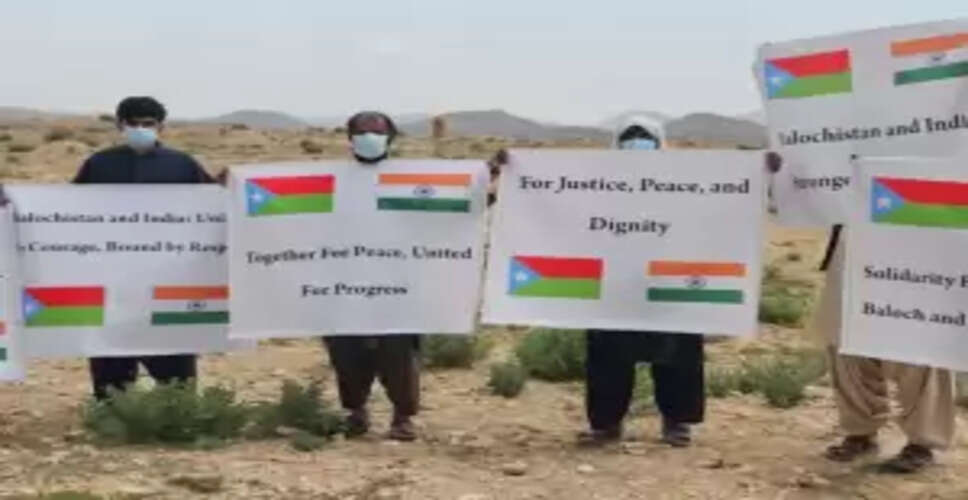
Pakistan has long alleged that India supports and trains Baloch insurgents via Afghanistan. The 2016 capture of Kulbhushan Jadhav, purportedly an Indian spy, was cited as evidence. India refutes these claims but acknowledges Jadhav's status as a former naval officer. Officially, India denies any interference in Balochistan's internal matters, labeling Pakistan's accusations as unfounded. However, it has raised concerns about human rights violations in Balochistan at international forums. In 2016, Prime Minister Modi highlighted Balochistan's plight in his Independence Day address, indicating diplomatic backing for Baloch rights within global frameworks. Since then, Baloch activists have increasingly sought Indian support on international platforms. India views the Balochistan situation through the lens of regional security, particularly concerning CPEC and China's expanding influence. Nevertheless, India is cautious to avoid direct confrontation with Pakistan.
The Balochistan crisis is deeply rooted in historical grievances, exacerbated by economic and political issues, and intensified by heavy-handed state responses. While speculation surrounds India's role, its current stance is primarily diplomatic—highlighting human rights concerns and monitoring regional developments closely. India's involvement remains largely diplomatic and strategic, advocating for Baloch human rights in international forums and amplifying their narrative globally. However, this is a delicate balance; any overt action risks dragging India into a proxy conflict and undermining its moral stance on issues like Kashmir.
The Balochistan crisis is ongoing, representing a complex struggle for identity, autonomy, and geopolitical interests. India's role—whether as a passive observer or an active participant—is continually evolving.
One thing is certain: the developments in Balochistan will significantly influence the future of South Asia.