
Unraveling a Terror Plot: Four Arrested in Major Security Operation
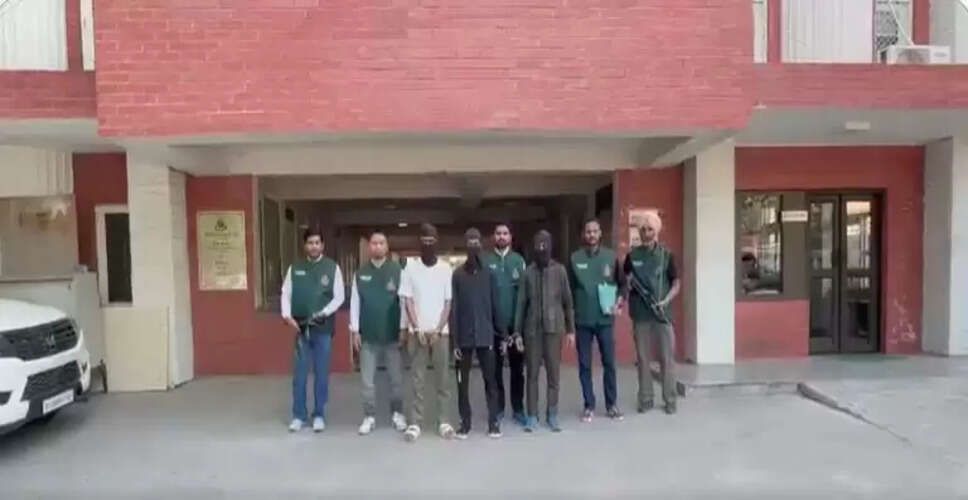

Major Arrests in Terrorism Investigation
New Delhi/Bhubaneswar: Authorities in Delhi have apprehended four individuals from Maharashtra, Odisha, and Bihar, suspected of plotting terrorist activities. These men reportedly conducted reconnaissance on sensitive sites and attempted to recruit others via encrypted online channels, according to officials on Saturday.
During the operation, law enforcement seized an Improvised Explosive Device (IED) along with other materials. Allegations suggest that two of the suspects were in the process of modifying a remote-controlled toy car to carry an IED for use in crowded areas.
The Special Cell of the police detained two suspects in Maharashtra and one each from Odisha and Bihar as part of a coordinated intelligence operation.
The four individuals were reportedly motivated by extremist ideologies aimed at establishing a Caliphate and were promoting narratives such as Ghazwa-e-Hind, according to police reports.
They were also allegedly inspired by the notion of a 'Lashkar from Khurasan,' which they utilized in their propaganda efforts to radicalize others, as stated by a senior police official.
The suspects were active participants in closed and encrypted social media groups where discussions about jihad, extremist beliefs, and weaponry took place. These platforms were allegedly used to identify, indoctrinate, and recruit new members.
One suspect reportedly shared a digitally altered image of the Red Fort adorned with a black flag to incite followers and indicate symbolic targets.
Investigations revealed that one of the suspects had visited Delhi in December 2025 to survey key locations, including the Red Fort and India Gate. The group had also discussed potential attacks on high-profile targets such as the Ram temple in Ayodhya, the Parliament House, and various military sites.
Security agencies suspect that the group aimed to strike crowded public venues and significant landmarks to instill fear and create psychological distress.
The four suspects—Mosaib Ahmad, Mohammad Hammad, Mohammad Sohail, and Sheikh Imran—come from modest socio-economic backgrounds. A case has been filed, and further inquiries are ongoing to uncover their associates, handlers, and the larger network involved.
Mosaib previously worked in Gulf nations as an auto electrician and was allegedly using his technical expertise to create a remote-controlled vehicle equipped with an IED.
Initial findings indicate that the use of a small remote-controlled device suggests a plan for a stealth attack in populated areas.
Investigators noted that the suspects had begun gathering materials, conducting reconnaissance, and coordinating their actions through encrypted communication channels before their interception.
Mosaib Ahmad, originally from Azamgarh in Uttar Pradesh, completed his education up to the 10th grade. He has held various jobs, including as a welder and auto mechanic, both in India and abroad, and was last employed at a private automobile workshop in Thane.
He participated in several online groups where discussions about the Lashkar of Mahdi and jihad were prevalent. He assisted co-accused Mohammad Hammad by modifying a remote-controlled toy car for IED assembly and shared its image within a closed group.
Mohammad Hammad, a Mumbai resident, is currently pursuing his 12th grade through correspondence. He joined a closed group around January 2026, where he interacted with Mosaib Ahmad and others.
In this group, discussions revolved around jihad and Ghazwa-e-Hind. He allegedly shared images of materials such as ball bearings, nails, and a remote-controlled toy car intended for IED construction.
He provided these materials to Mosaib Ahmad, who was responsible for assembling the IED due to his mechanical background.
Sheikh Imran, born in Bhubaneswar, Odisha, comes from a lower-class family and completed his education up to the 10th grade before working as a security guard and delivery person.
In 2024, he began listening to lectures from figures like Tareeq Jameel and Zakir Naik, which led him to adopt radical beliefs.
He connected with Mohammad Hammad and Mosaib Ahmad through social media and formed a closed group focused on jihad, khilafat, and Ghazwa-e-Hind, discussing plans to target the Ram Mandir, Parliament, and military sites.
He visited Delhi in December 2025 to survey the Red Fort and India Gate, promising group members he would arrange arms and physical training in Odisha while soliciting funds.
Mohammad Sohail, a plumber from Katihar, Bihar, completed his education up to the 10th grade.
Influenced by Israr Ahmed's speeches, he created multiple social media accounts to rally youth in the name of jihad. In March 2026, he allegedly urged followers to gather weapons and explosives for Ghazwa-e-Hind, even sharing his bank account QR code for donations.
Authorities have seized multiple mobile devices and digital equipment, which are currently under analysis to reveal the full scope of the conspiracy and any connections to other terrorist modules.