
Unmasking Banksy: New Investigation Suggests Artist's True Identity
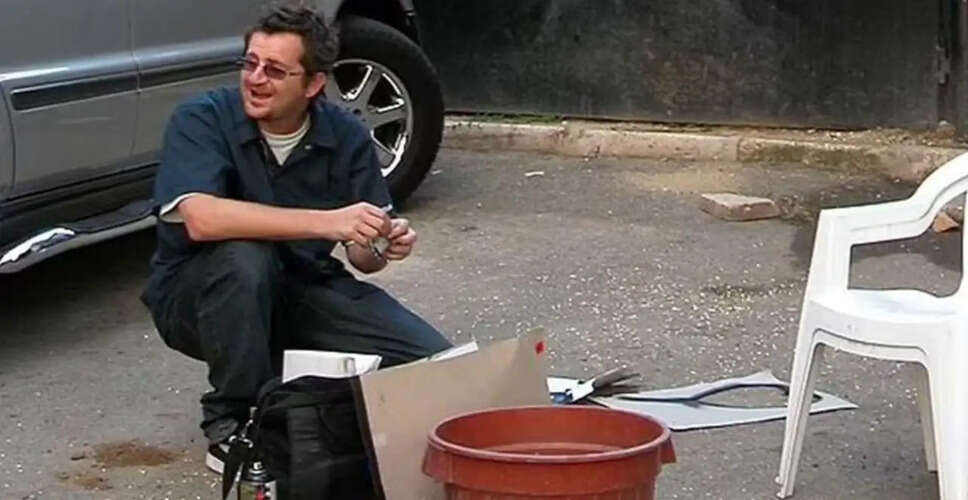
The Mystery of Banksy Revealed?
The enigmatic street artist known as Banksy has kept his identity a closely guarded secret for years, sparking intrigue in the art community. A recent investigation claims to have identified him as Robin Gunningham, a 51-year-old resident of Bristol. Banksy gained international acclaim for his thought-provoking graffiti and street art, which often convey powerful political and social messages. Despite his fame, he has managed to maintain his anonymity for an extended period.
According to the investigation, Gunningham adopted the alias David Jones in 2008, a common name in Britain that helped him blend into the crowd. The report suggests that this name change was a strategic move to evade recognition.
Who Is the Man Behind the Art?
To establish a connection between Gunningham and Banksy, reporters utilized various sources, including travel logs, eyewitness testimonies, and previous articles linking him to the artist's works. One significant aspect of the research highlighted a trip to Ukraine, where the artist reportedly interacted with locals and documented the war's impact through photography. Additionally, the investigation referenced a legal dispute involving Jamaican photographer Peter Dean Rickards.
Another crucial piece of evidence was a police report from 2000 by the New York City Police Department, which contained a handwritten confession related to graffiti activities. Gunningham's name had surfaced in earlier reports, including a 2008 article that also associated him with Banksy. The latest findings reportedly bolster these earlier claims.
The investigation also addressed a long-held theory suggesting that Banksy could be Robert Del Naja, the lead singer of the band Massive Attack. However, researchers dismissed this theory, noting that while Del Naja visited Ukraine in 2022, he did so alongside Gunningham.
The Reasons Behind Banksy's Anonymity
In response to the investigation, Banksy's lawyer, Mark Stephens, expressed skepticism regarding many of the claims made. He emphasized that the artist's choice to remain anonymous is primarily for safety, as he has faced threats from individuals obsessed with uncovering his identity. Stephens stated, "Working anonymously or under a pseudonym serves vital societal interests," highlighting the importance of protecting freedom of expression, especially when addressing sensitive topics like politics and social justice.
Reuters defended its decision to publish the investigation's findings, asserting that the public has a significant interest in knowing the identity of a cultural figure whose work has profoundly influenced global art and political discourse.
Among Banksy's most iconic works is the piece titled Girl with Balloon, depicting a young girl reaching for a red heart-shaped balloon. This artwork has become a beloved symbol in British art. In a remarkable incident in 2018, a framed version of this piece was sold at auction, only to be partially shredded by a hidden device immediately after the sale. Banksy later confirmed that he orchestrated this stunt, and the altered artwork was renamed Love Is in the Bin, which subsequently sold for $25.4 million in 2021, according to reports.