
Union Minister Emphasizes Multilingualism in National Education Policy
Minister's Clarification on National Education Policy
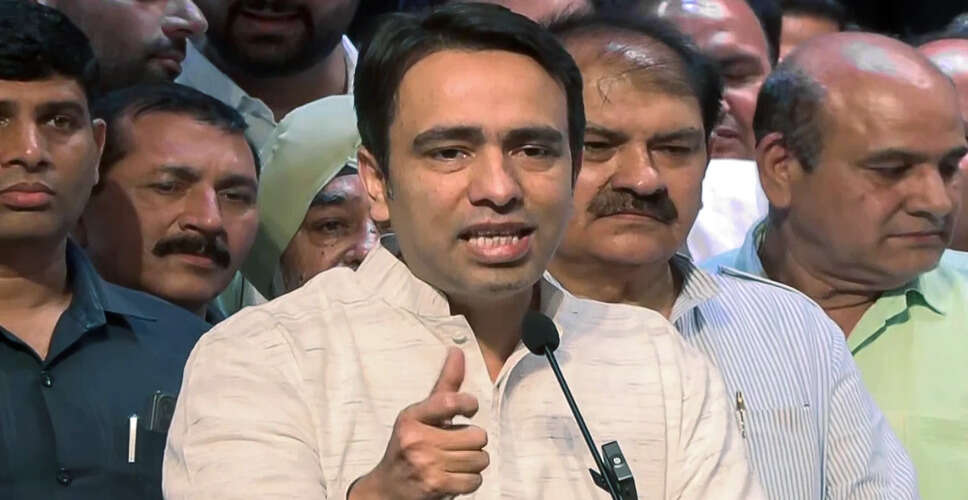
Union Minister of State for Education, Jayant Chaudhary, clarified that the National Education Policy (NEP) does not impose any single language, including Hindi, on any state. Instead, it actively promotes multilingualism. During the question hour in the Lok Sabha, he responded to supplementary questions, noting that while Tamil Nadu has raised some objections regarding NEP 2020, the central government has allocated ₹538 crores to the state under the Samagra Shiksha program, a significant initiative for school education.
Chaudhary emphasized that it is the responsibility of the state government to adhere to the established procedures and protocols for issuing Utilization Certificates (UC) concerning expenditures and further withdrawals. He reiterated that there has been no attempt to impose any language, stating that the three languages proposed in the NEP align with the two-language formula, offering complete flexibility. No language, including Hindi, has been mandated, and its full implementation rests with the state government.
The minister pointed out that Article 4.13 of the NEP explicitly promotes multilingualism, highlighting the clear benefits of early exposure to multiple languages in learning capabilities and outcomes. It instructs states to develop the capacity of schools to teach three languages, ensuring proficiency in at least two Indian languages by the age of 15, while the third language depends on local demand.
He clarified that the actual implementation of this policy is contingent upon the states. Furthermore, he mentioned that the government provides support for the appointment of language teachers under the Samagra Shiksha scheme, which is a new component added in Samagra Shiksha 2.0. Regarding the release of central funds for education, Chaudhary acknowledged that Tamil Nadu has expressed certain objections over time, primarily focusing on their concern that the new policy has been limited to a two-language formula, which forms the basis of their objections.