
Union Minister Criticizes Opposition for Blocking Women's Empowerment Bill
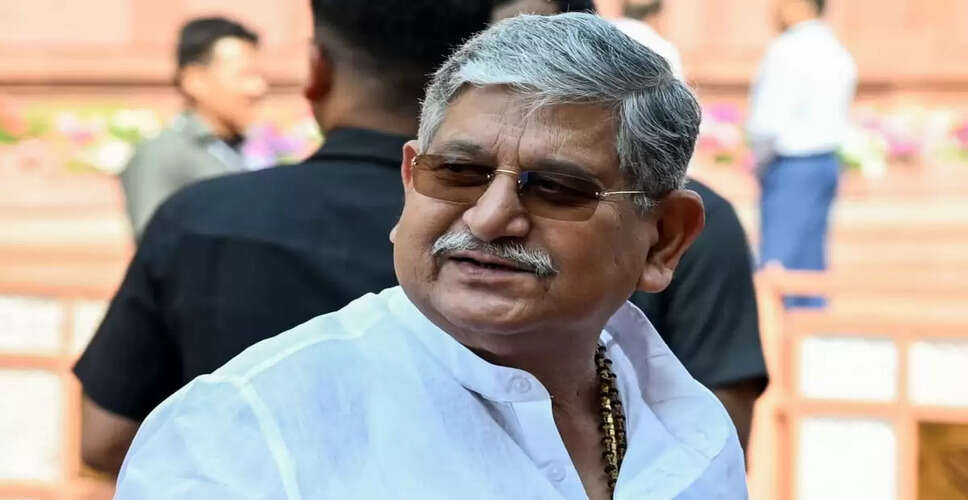

Minister's Accusations Against Congress
On Saturday, Union Minister Rajeev Ranjan Singh criticized the opposition in the Lok Sabha for the failure to pass the Constitution (One Hundred Thirty-First Amendment) Bill, 2026. He accused the Congress party of obstructing a significant initiative aimed at women's empowerment and emphasized that female voters would respond politically to this development. In response to opposition leader Rahul Gandhi's claim that the bill's defeat was a victory for democracy, Singh stated that the opposition was undermining a historic initiative launched by Prime Minister Narendra Modi to enhance women's representation.
Historical Significance of the Bill
Singh remarked to a news agency that the opposition's assertion that the bill's defeat marked a historic step was ironic. He explained that it was historic because it represented a failure of the Prime Minister's efforts towards women's empowerment in the country. The proposed legislation aimed to provide 33% reservation for women in Parliament, which constitutes nearly half of the population. By rejecting this bill, the opposition seemed to take satisfaction in denying justice to women.
Targeting Congress's Historical Opposition
The Union Minister further accused the Congress party of historically opposing significant social reforms. He stated that this has been the party's character, consistently attempting to hinder social change or revolution. Singh asserted that women voters across the nation would politically respond to the opposition's stance on this bill, declaring that the women of this country would cast their votes against the Congress party.
Outcome of the Bill Vote
These comments followed the BJP-led government's failure to secure the two-thirds majority needed to pass the constitutional amendment bill in the Lok Sabha. The bill was related to implementing reservations for women through delimitation. After extensive debate, the voting resulted in 298 members supporting the bill while 230 opposed it, leading to its defeat. Lok Sabha Speaker Om Birla confirmed that the bill did not pass due to falling short of the constitutional majority. The government had introduced three interrelated bills, including the delimitation bill and the Union Territory Laws (Amendment) Bill, but Parliamentary Affairs Minister Kiren Rijiju later stated that further consideration of the remaining bills would not proceed.