
Union Cabinet Approves Major Hydropower Projects in Arunachal Pradesh

Significant Investment in Renewable Energy
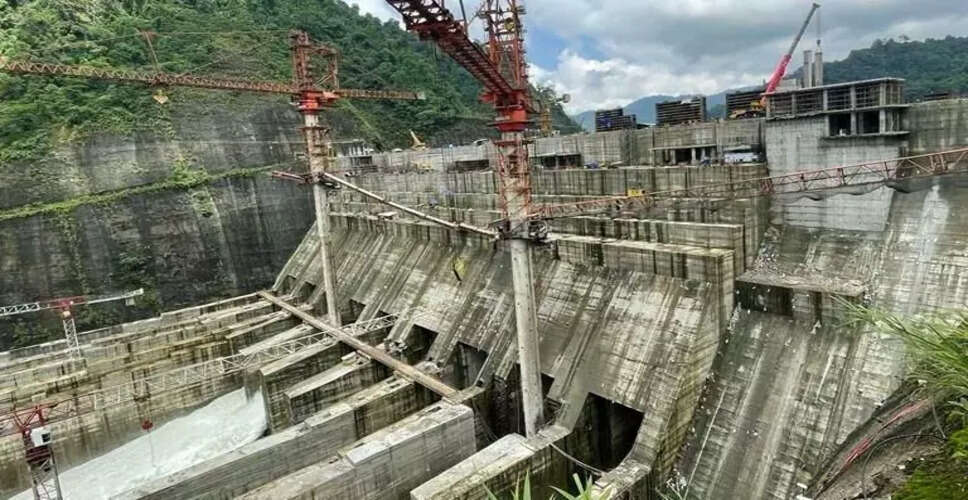
File image of 2000 MW Subansiri Lower HE Project (Photo: @nhpcltd/x)
Image used for representational purpose
New Delhi, April 9: On Wednesday, the Union Cabinet sanctioned a substantial investment of Rs 40,150 crore for the development of two significant hydropower initiatives in Arunachal Pradesh, marking a step forward in the government's commitment to renewable energy and regional infrastructure enhancement.
The Kamala Hydro Electric Project, with a capacity of 1,720 MW, will be constructed across the Kamle, Kra Daadi, and Kurung Kumey districts. This project will be a collaborative effort between NHPC Ltd, a state-owned entity, and the Arunachal Pradesh government, with an anticipated completion timeline of eight years.
According to an official announcement, the Cabinet Committee on Economic Affairs, led by Prime Minister Narendra Modi, has approved an investment of Rs 26,069.50 crore for the Kamala Hydro Electric Project. The project is expected to be completed within 96 months.
Once operational, the facility is projected to produce approximately 6,870 million units of electricity each year, aiding in peak demand management, balancing the national grid, and moderating floods in the Brahmaputra basin.
In addition, the Kalai-II Hydro Electric Project, which will have a capacity of 1,200 MW, is set to be developed on the Lohit River in Anjaw district. This project will also be a joint venture, this time between THDC India Limited and the Arunachal Pradesh government, with a target completion period of 78 months.
The CCEA has approved an investment of Rs 14,105.83 crore for the Kalai-II Hydro Electric Project on the Lohit River in Anjaw district, with an estimated completion time of 78 months.
Upon completion, this project is expected to generate around 4,853 million units of electricity annually, thereby enhancing power supply in the region and contributing to grid stability.
The Union government will also extend budgetary support for necessary infrastructure, including roads, bridges, and transmission lines, along with financial assistance for the states' equity shares.