
Understanding Why Trains Can't Stop Instantly

The Lifeline of Indian Transportation
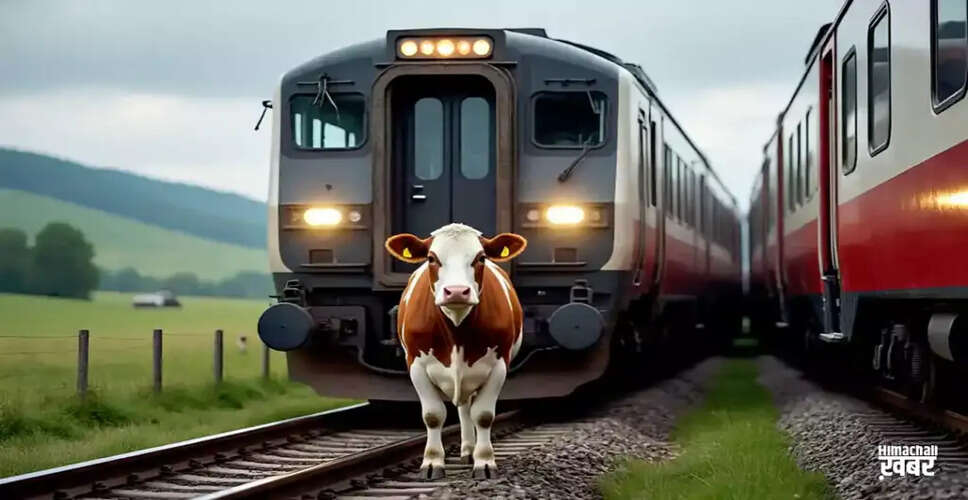
The Indian Railways is often referred to as the heartbeat of the country's transportation system, with many preferring to travel by train due to its comfort and affordability. However, you may have noticed that sometimes animals or people unexpectedly appear on the tracks. In such cases, the train driver may not apply the brakes immediately, leading to unfortunate incidents on the tracks.
Why Trains Can't Stop Quickly
Trains carry numerous coaches filled with hundreds of passengers and their luggage, resulting in significant weight. Once a train gains speed, halting it suddenly becomes a challenging task. The braking system operates through pressure in the brake pipes across all coaches.
To stop the train, brakes must be applied to each wheel, which takes time. Consequently, even if the driver engages the emergency brakes, the train may take nearly a kilometer to come to a complete stop, depending on its weight and speed.
The Dangers of Sudden Braking
This is why a train driver cannot simply stop the train on a whim. They must be vigilant and spot any obstacles on the tracks from a distance to apply the brakes in time. If someone suddenly appears on the tracks, the driver has limited options and must continue moving forward.
Moreover, if the train is navigating a curve, applying the brakes suddenly can be even more perilous, risking derailment of the coaches. In such scenarios, attempting to save one person's life could endanger the lives of hundreds of passengers onboard.
Visibility Challenges at Night
At night, the light from the train's engine only illuminates a short distance ahead, making it difficult for the driver to see far down the tracks. If someone is standing at a distance, the driver may not notice them. This is why drivers sound the horn while approaching areas where visibility is limited.
The driver's primary goal is to avoid any accidents involving animals or people. However, there are situations beyond their control that can lead to unfortunate outcomes.
Safety Precautions for Passengers
It is crucial for individuals to exercise caution when crossing train tracks and adhere to railway regulations whenever possible.