
Understanding the Upcoming Rajya Sabha Elections: Key Details and Dynamics

Overview of Rajya Sabha Elections
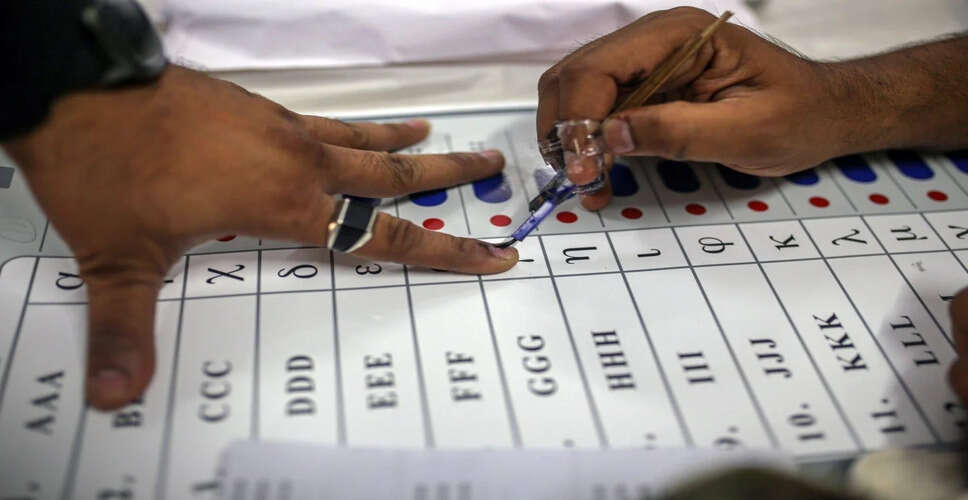
In New Delhi, the election of members to the Rajya Sabha, or Council of States, is conducted indirectly rather than through direct voting. Out of the total 245 members, 233 are elected by the members of the state assemblies (MLAs), while the remaining 12 are appointed by the President. This election process is based on the Single Transferable Vote (STV) system, which follows the principle of Proportional Representation.
Election Process and Winning Formula
How Voting Works:
- Each MLA ranks candidates on a ballot paper in their order of preference (1, 2, 3, etc.).
- Every MLA's vote carries a value of 100 points, although this may vary in some states.
- Voting is typically conducted using ballot papers, although electronic voting machines (EVMs) may also be used.
Winning Formula (Quota Calculation): To secure a win, a candidate must achieve a minimum number of votes, known as the quota. The formula is: Quota = [(Total Valid Votes × 100) / (Number of Vacant Seats + 1)] + 1, rounding up the fractional part.
- For instance, if a state has 200 MLAs and 5 seats are vacant, the quota would be calculated as follows: [(200 × 100) / (5 + 1)] + 1 = 3340 + 1 = 3341.
- A candidate must reach this point total to be elected. If they exceed the quota, the remaining votes are transferred to the next preferred candidate.
- If a candidate fails to meet the quota, the candidate with the least votes is eliminated, and their votes are redistributed. This process continues until all seats are filled.
Upcoming Elections on March 16, 2026
The Election Commission has scheduled voting for 37 seats on March 16, 2026, with counting occurring on the same day. Notifications will be issued on February 26, with the last date for nominations set for March 5, and the entire process concluding by March 20. These seats will become vacant due to retirements in April 2026 (from April 2 to 9).
Distribution of Vacant Seats by State
Total Vacant Seats: 37
- Maharashtra: 7
- Tamil Nadu: 6
- Bihar: 5
- West Bengal: 5
- Odisha: 4
- Assam: 3
- Chhattisgarh: 2
- Haryana: 2
- Telangana: 2
- Himachal Pradesh: 1
Notable Retiring Figures
Key Retirees:
- Maharashtra: Sharad Pawar (NCP-SP), Priyanka Chaturvedi (Shiv Sena-UBT), Ramdas Athawale (RPI-A), Bhagwat Karad, Fauzia Khan, among others.
- Tamil Nadu: Kanimozhi (DMK), Tiruchi Siva (DMK), M. Thambidurai (AIADMK), G.K. Vasan, etc.
- Bihar: Harivansh Narayan Singh (JDU, Deputy Chairman), Ramnath Thakur (JDU), Upendra Kushwaha (RLM), Premchand Gupta (RJD).
- West Bengal: Saket Gokhale (TMC), Ritabrata Banerjee (TMC), Bikash Ranjan Bhattacharya (CPI(M)), etc.
- Telangana: Abhishek Manu Singhvi (Congress).
- Assam: Rameshwar Teli (BJP).
- Chhattisgarh: K.T.S. Tulsi, Phoolo Devi Netam.
- Haryana: Kiran Chaudhary, Ram Chander Jangra (BJP).
Political Dynamics Based on Current Assembly Strength
- NDA (BJP + Allies) is expected to win 17-18 out of the 15 retiring seats (net gain of 2-3).
- INDIA Block (Congress + Allies) may see a reduction, winning only 15-16 out of 18 retiring seats (net loss).
- Significant shifts are possible in states like Maharashtra, Bihar, and West Bengal due to alliances and cross-voting. BJP is likely to benefit in states with a strong assembly majority (like Assam and Haryana), while the INDIA Block will remain strong in opposition states.
- Overall, the NDA appears to have a slight advantage, but party discipline and the strength of alliances will be crucial factors.