
Understanding the Significance of Seven Circuits in Hindu Weddings
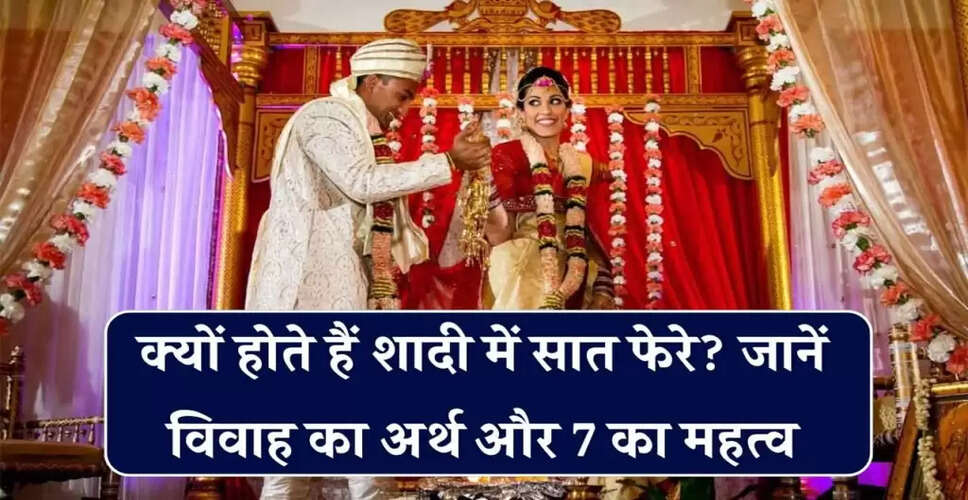

The Importance of Seven Circuits in Marriage

In Hindu traditions, the concept of taking seven circuits during marriage holds profound significance. Among the 16 major rituals in Hindu culture, the marriage ceremony is regarded as sacred and carries immense responsibility. It transcends being merely a social contract; it symbolizes a spiritual commitment that binds the couple for seven lifetimes. Thus, the act of taking seven circuits is not just a ritual but a promise to support each other throughout life.
The Deep Meaning of Marriage and Its Rituals
The term 'marriage' in Hindi originates from 'वि + वाह', which literally means to bear special responsibilities. While commonly referred to as 'shadi' or 'marriage', it lacks a direct synonym in classical terms. This ritual is intertwined with spiritual and moral obligations, making it more than just a social event.
The Vedic Significance of the Number Seven
In Hinduism, the number seven holds a unique place. Many significant elements around us are associated with this number—seven musical notes, the seven colors of the rainbow, the seven sages, seven seas, seven chakras, seven actions, and seven stars. This is why seven circuits are taken during marriage, symbolizing completeness, balance, and pure energy.
The Importance of Saptapadi and the Purpose of Seven Circuits
During the marriage ceremony, the couple takes the Saptapadi, or seven circuits, with fire as their witness. Through these circuits, they form a lifelong bond physically, mentally, and spiritually. Each circuit is associated with a specific vow that encompasses all aspects of life—dharma, artha, kama, moksha, health, prosperity, and love.
The Seven Vows of Marriage
According to Hindu marriage customs, along with the seven circuits, seven vows are also exchanged. These vows are not merely emotional but deeply represent social, moral, and spiritual responsibilities. They inspire the couple to respect each other, stand together through all circumstances, and live with honesty, loyalty, and love. This is why marriage is considered a bond that lasts for seven lifetimes.
FAQs about the Seven Circuits
Q1: Why are only seven circuits taken during marriage?
A: In Vedic beliefs, the number seven symbolizes completeness and pure energy. The seven circuits represent a commitment to unity and balance in seven aspects of life.
Q2: Does each circuit have a different significance?
A: Yes, each circuit carries a unique vow and commitment, such as nourishment, health, prosperity, unity, offspring, love, and trust.
Q3: Is the marriage considered complete after taking the seven circuits?
A: Yes, in Hinduism, the marriage is deemed complete after the Saptapadi, marking the beginning of the couple's journey as life partners.